
The 18th Century - When the World Discovered Scotland : History of Tourism - Part Two
Article Summary
The 18th Century ... When the World Discovered Scotland: History of Tourism – Part Two explores the period when Scotland began changing from a remote northern country visited primarily for practical reasons into a destination people deliberately sought out for history, culture, intellectual life, dramatic landscapes, literature, and Scottish heritage. Better roads, greater political stability, the Scottish Enlightenment, travel writing, Romanticism, and fascination with the Jacobites all helped lay the foundations of modern Scottish tourism. (USA Kilts)
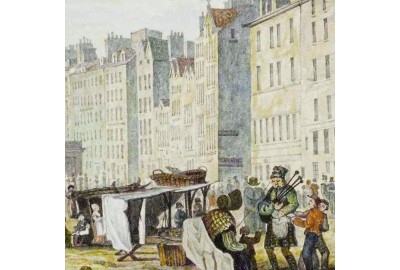
During the eighteenth century, the traditional European Grand Tour began expanding northward. Wealthy travelers who once concentrated on France and Italy increasingly ventured into Scotland, particularly Edinburgh, which had become one of Europe's great intellectual centers. The Scottish Enlightenment and figures such as Adam Smith, David Hume, James Hutton, Joseph Black, and William Robertson helped earn Edinburgh its reputation as the “Athens of the North.” Visitors today can get a feel for historic Edinburgh by descending beneath the Royal Mile into Mary King’s Close, where preserved streets and homes reveal centuries of everyday city life. (USA Kilts)
Explore The Real Mary King’s Close
Edinburgh's landscape became part of its appeal as well. Georgian and neoclassical architecture transformed the city while its volcanic hills and crags reinforced comparisons with ancient Athens. Travelers can experience that combination of city and wilderness by hiking Arthur’s Seat, an extinct volcano in Holyrood Park offering panoramic views across Edinburgh, including the Old Town and New Town. (USA Kilts)
Explore the hike up Arthur’s Seat
The Highlands and Hebrides gained international attention through Samuel Johnson and James Boswell, who traveled through Scotland together in 1773. Their subsequent books described Highland communities, castles, islands, customs, hospitality, and extraordinary landscapes such as Staffa and Fingal's Cave. In many ways, their widely read accounts functioned like early Scottish travel guides, helping outsiders imagine Scotland as somewhere worth exploring rather than simply a difficult wilderness on Britain's northern edge. (USA Kilts)
That perception intensified with the rise of Romanticism. Mountains, mist-covered lochs, waterfalls, ruins, folklore, and Highland culture... once regarded by many outsiders as forbidding... became sources of beauty and emotional fascination. Writers including Sir Walter Scott, Robert Burns, James Macpherson, William and Dorothy Wordsworth, and John Keats helped transform Scotland into both a real destination and an imagined landscape of history, freedom, nature, and adventure. The article recommends reading works such as Scott's Waverley and The Lady of the Lake, Burns's poetry, Macpherson's Ossian, and the Wordsworths' Scottish travel writings before visiting. (USA Kilts)
Robert Burns became one of Scotland's earliest drivers of literary tourism. Admirers traveled to places connected with his life and poetry, including Alloway Kirk, Brig o' Doon and his birthplace. Today, travelers can visit Burns Cottage in Alloway, the small thatched home where Scotland's national poet was born in 1759, now part of the Robert Burns Birthplace Museum managed by the National Trust for Scotland. (USA Kilts)
Explore Robert Burns’ birthplace and Burns Cottage
The eighteenth century also planted the seeds of modern Scottish heritage tourism. Following the Jacobite defeat at Culloden in 1746, Highland culture faced enormous political and social disruption. Yet as the Jacobites ceased to pose a political threat, their story became increasingly romanticized. Tales of Bonnie Prince Charlie, loyalty, exile, clan culture, Highland dress and the Jacobite Rising captured the public imagination, eventually turning battlefields, castles, caves and glens into destinations for people seeking a personal connection with Scotland's past. The article's advice for travelers interested in this history is wonderfully uncomplicated: go to Culloden. (USA Kilts)
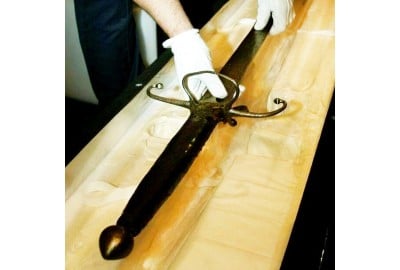
For travelers wanting a more intimate look at Jacobite history, the article also recommends the West Highland Museum in Fort William, whose collections include Jacobite artifacts, documents, personal objects and unusual hidden portraits of Bonnie Prince Charlie. (USA Kilts)
Explore the West Highland Museum in Fort William
By the end of the eighteenth century, Scotland possessed nearly all the ingredients necessary for a modern tourism industry: improved roads, celebrated landscapes, expanding hospitality, political stability, internationally respected intellectual culture, popular travel literature, Romantic fascination with the Highlands, and growing interest in Scottish history and identity. The stage was set for the nineteenth century, when Sir Walter Scott, George IV, Queen Victoria, railways, Highland Games, castles and the tartan revival would help turn Scotland into one of the world's great tourist destinations. (USA Kilts)
Read the full USA Kilts article: The 18th Century – When the World Discovered Scotland: History of Tourism – Part Two