
Clan Cochrane traces its documented history to medieval Renfrewshire, where the family took its name from the lands of Cochrane near Paisley. Over the centuries, the Cochranes rose from regional landholders to become an influential noble family associated with military service, politics, engineering, and naval history.
Clan Cochrane Crest, Motto, and Heraldry
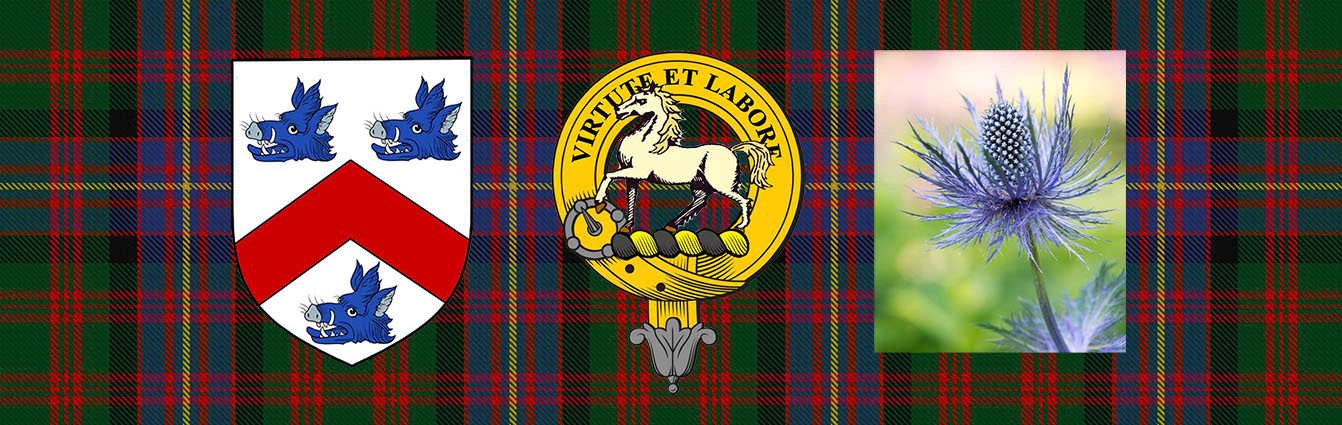
The Cochrane Clan Crest is blazoned as: "A horse passant Argent." That is, a silver (white) horse in the act of walking with one foreleg raised.
The clan motto is Virtute et Labore "By Valour and Exertion" (By Courage and Work)
The Clan Cochrane plant badge is the Sea Holly.
The Cochrane coat of arms is blazoned as: "Argent, a chevron Gules between three boars' heads erased Azure, armed and langued Gules."
That is, a white field (white and silver are the same color in heraldry) with a red chevron at center separating three blue boars' heads with jagged bottom edges (erased). A detail not always depicted in art is that the boars should have red tusks and tongues. “Armed” in this case refers to the armament of a boar, his tusks, while “langued” refers to the tongue.
The Cochrane Tartan:
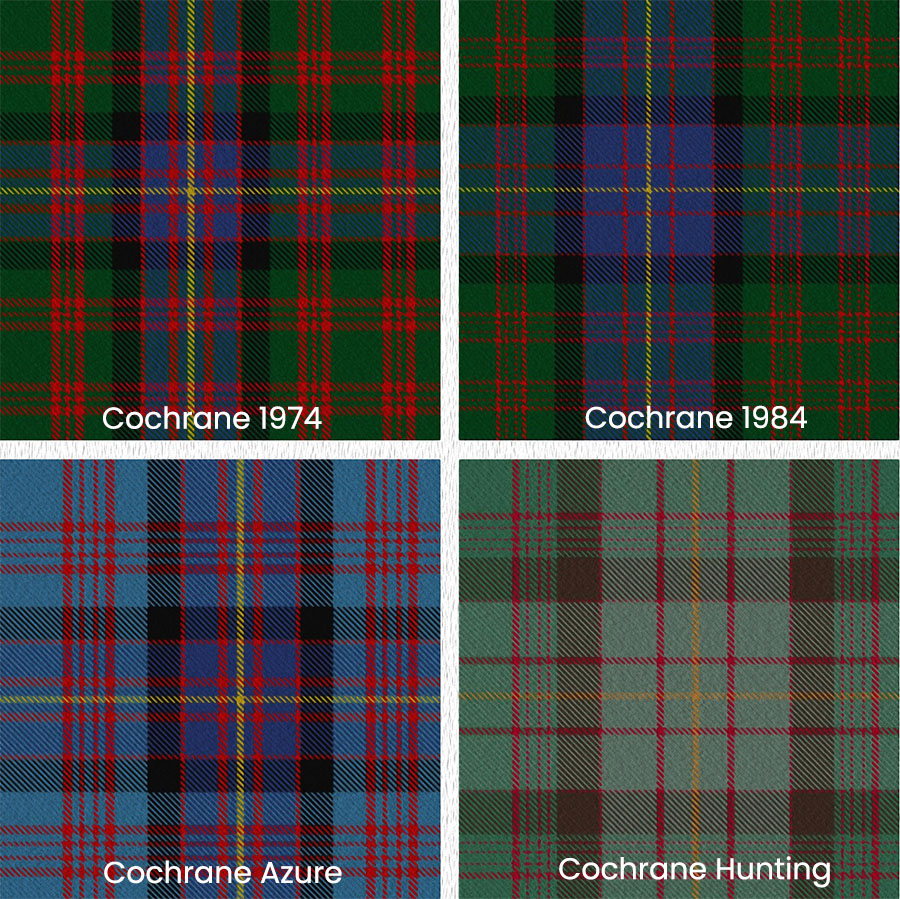
The Cochrane tartan history is a bit hard to track. According to tartan historian James D. Scarlett, the Cochrane tartan was based on a sett shown in an historical family portrait. However, published accounts do not identify the portrait itself, and the original source for this claim has not been established. The design was later modified by the 14th Earl of Dundonald in 1974. Then in 1984 the 15th Earl restored the earlier four-red-stripe version which is the version generally woven today.
In all there are five registered Cochrane tartans----
- Cochrane
- Cochrane (1974 variant)
- Cochrane (1984 variant)
- Cochrane Hunting (credited to the 15th Earl of Dundonald and recorded in 2014)
- Cochrane Azure (a recreation of a sett first worn by the 12th Earl Dundonald. Also credited to the 15th Earl, 1985)
In the view of some sources, the sett may be based on the old district tartan for Lochaber, which also provided a base for the MacDonald and the Cameron of Erracht tartans. This is a complex story, so we recommend visiting the Scottish Register of Tartans to explore more.
Where Does the Cochrane Name Come From?
Cochrane is a territorial Scottish surname derived from the lands of Cochrane in Renfrewshire.
Early records use several spellings, including Coveran, Coueran, Coughran, and Cochran. Such variation was normal in medieval Scotland, a time when spelling was not standardized and clerks often recorded names phonetically (common across Europe really).
The original meaning of the place-name is uncertain. Gaelic, Norse and Brittonic explanations have all been proposed. For instance, the Welsh (Brittonic) words for coch, “red,” and ran, “brook.” Clan tradition also connects the name with phrases meaning “brave man” or with an ancient battle cry.
However, all of these explanations have to be seen strictly as clan folklore as none can be conclusively proved through surviving medieval evidence. And of course none of this is a slight against the clan. It merely demonstrates a frustrating aspect of Medieval history we run to so often. It even has a name- the “strong fellow” fallacy.
Cochrane Castle and the Family Lands
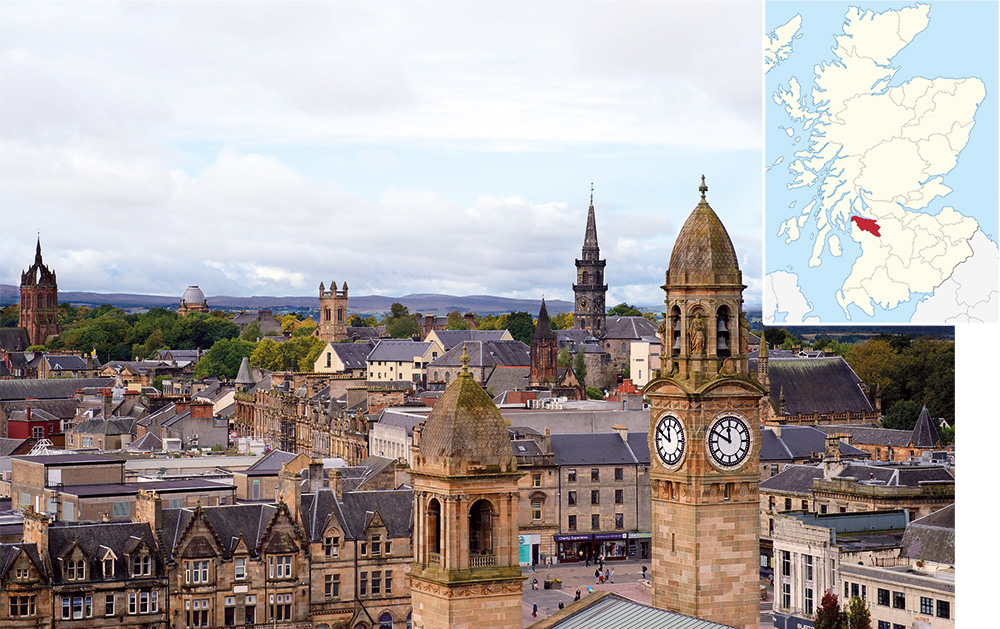
Cochrane Castle was the historic seat of the chiefs of Clan Cochrane and stood on the family's ancestral lands near Paisley in Renfrewshire. The Cochranes are recorded as landowners in the area from the thirteenth century, and it was from these lands that the family took its name and established its influence before later rising to become the Earls of Dundonald.
Although the original medieval stronghold was replaced by a tower house in the late sixteenth or early seventeenth century, the estate remained the family's principal residence for generations. The castle was ultimately demolished in the nineteenth century, leaving only fragments today, but it remains the site most closely associated with the origins and early history of Clan Cochrane. If you consider visiting you may find your adventures in Paisley itself more exciting, but there's nothing like walking the lands your ancestors did, even if their old home is a mere ghost.
The Earliest Records of Clan Cochrane
Clan lore holds that their ancient progenitor was a Viking who settled in the territory now known as Renfrewshire sometime between the eighth or d tenth centuries. However, this is basically legend. The clan name is rooted in the land being derived from the lands of Cochrane near Paisley.
The documented history of the family truly begins in the thirteenth century with a man named Waldeve de Coveran who was a witness to a legal charter signing in 1262. A later William de Coveran (or a similarly spelled form of the name) appears in connection with the submissions made to the famous Ragman Roll ordered by Edward I of England in 1296.
Though interesting, these records do not provide a complete family genealogy. However they handily show that people bearing the territorial name were established in western Scotland by the late medieval period and were already at the heart of goings-on.
The Cochranes would remain closely associated with Renfrewshire and gradually increase their position among the region’s landholding families over the centuries.
Elizabeth Cochrane and the Blair Succession
One of the most important events in Clan Cochrane history occurred when the senior family line continued through an heiress.
After the failure of the direct male line in the 16th century Elizabeth Cochrane, a daughter and co-heiress of William Cochrane of that Ilk, inherited the family estates.
Around 1600-01, Elizabeth married Alexander Blair who then assumed the Cochrane surname and arms, helping preserve the identity of the landed family through the female line. Their eldest surviving son, William Cochrane, was born in 1605 and later became the first Earl of Dundonald.
This practice, which might seem to fly in the face of our usual understanding of primogeniture and patronymics, was not unusual among Scottish landed families. When a daughter inherited an important estate, a marriage agreement could require her husband or children to adopt her family name and heraldic identity. This preserved the continuity of the estate and family line.
Some later accounts apparently confuse Alexander Blair with his son. Alexander was Elizabeth’s husband. Their son William became the family’s principal heir and played the central role in its rise to the peerage.
William Cochrane and the Earldom of Dundonald
The Cochranes owed their rise to a mix of military service, royal favor, landholding, marriage alliances, and political influence accumulated over several generations.
Kicking it into high gear was William Cochrane who became a soldier, landowner, and royal servant during the seventeenth century. He was first raised to the peerage as Lord Cochrane of Dundonald. In 1669, he was created the first Earl of Dundonald.
The Earldom of Dundonald then became the principal title of the chiefs of Clan Cochrane. This is why the chief is traditionally identified as the Earl of Dundonald rather than simply as Chief Cochrane.
The Earls of Dundonald
The Earls of Dundonald became one of the most prominent branches of the Cochrane family.
Members of the family served as soldiers, politicians, administrators, engineers, and naval officers. Their fortunes varied over time, and the family experienced financial difficulties and political disputes as well as periods of influence.
The title nevertheless survived, and the Cochranes produced several figures whose careers reached far beyond Scotland.
Thomas Cochrane, Tenth Earl of Dundonald
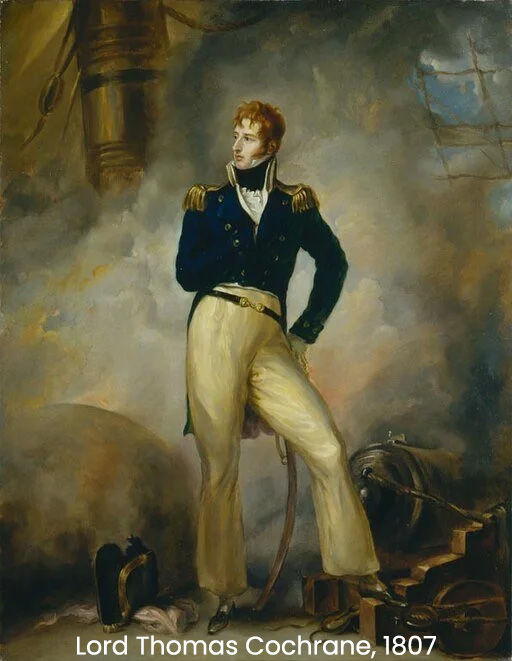
Perhaps the most famous member of Clan Cochrane is Lord Thomas Cochrane, tenth Earl of Dundonald and known to naval history as "the sea wolf."
Born in 1775, Cochrane became one of the most daring naval commanders of the age of sail. He built a reputation through surprise attacks, aggressive tactics, and victories against larger enemy forces.
His best-known early success came in 1801 while commanding HMS Speedy. Cochrane captured the much larger Spanish vessel El Gamo after a close engagement in which bold maneuvering helped overcome the difference in size and firepower.
His British career was damaged by the Stock Exchange Scandal of 1814. Cochrane was convicted, removed from the Royal Navy, and expelled from Parliament. The case remained controversial, and he was later pardoned and restored to naval rank.
Cochrane subsequently served overseas and helped organize naval forces connected with independence movements in Chile, Brazil, and Greece.
His career made him an international figure and later helped inspire fictional naval heroes like Horatio Hornblower and Jack Aubrey.
Who were the “Fighting Cochranes”?
Thomas Cochrane was certainly the greatest of the "Fighting Cochranes." But this nickname was actually coined in the mists of time as an honorific based on the remarkable concentration of military officers produced by the family over several centuries. Members of the wider Cochrane family served in the British Army, Royal Navy, government, and imperial administration. Others became engineers, inventors, and public officials (perhaps their fight was against bureaucracy?) .
If you would like to learn more, get a copy of Alexander Cochrane's 1983 book The Fighting Cochranes which chronicles over 600 years of Cochrane service in the army and navy.
Clan Cochrane in Appalachia
People bearing the Cochrane surname emigrated from Scotland during several periods of migration, but particularly during the eighteenth century. Over generations, Cochrane families settled in Canada, the United States, Australia, New Zealand, and other parts of the Scottish diaspora.
One notable member of the family, Sir John Cochrane of Ochiltree, was deeply involved in an ambitious Scottish colonization scheme for Carolina.
Sir John Cochrane (c. 1621–1707) was a prominent Scottish Covenanter, son of William Cochrane, 1st Earl of Dundonald, and brother of William Cochrane, 2nd Earl of Dundonald. After the Glorious Revolution, he was created Earl of Dundonald (1690) and served on the Scottish Privy Council after William III came to the throne.
In late 1682, he and Sir George Campbell of Cessnock sought the support of King Charles II for a proposed settlement of Scottish emigrants. The Lords Proprietors reserved a large tract of land for the enterprise, consisting of thirty-two parcels of 12,000 acres each (totalling 384,000 acres), a truly colossal amount.
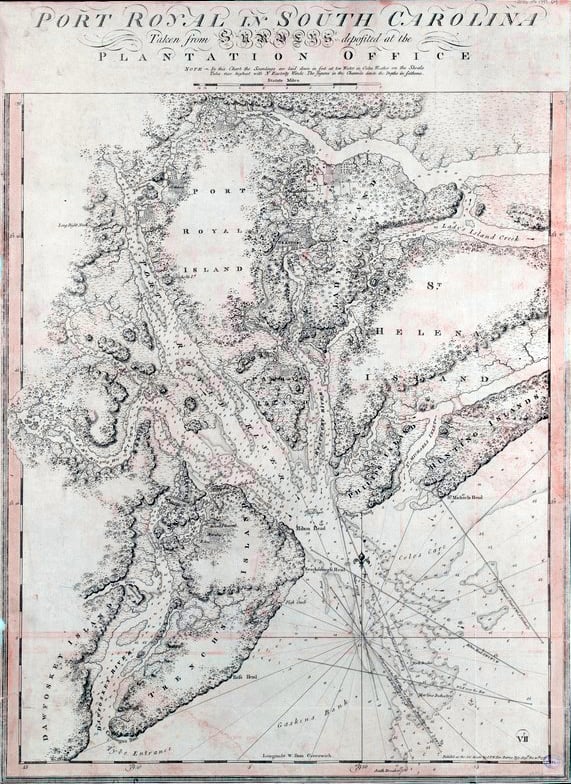
Although political events delayed this grand adventure, it eventually contributed to the Scottish settlement at Port Royal, South Carolina, under Lord Cardross. Cochranes were thus part of a broad community of Scottish settlers in the American South which in time would evolve its own unique culture. More so, place names across the USA readily show the influence of settlers bearing the family moniker.
Clan Cochrane Today
Today, the chief of the name and arms of Cochrane is represented by the Earl of Dundonald.
The modern clan draws its identity from its Renfrewshire origins, its connection with the Scottish peerage, its heraldry, and the achievements of notable Cochranes around the world.
The family’s history shows how Scottish clans could survive changes in inheritance, continue through the female line, adopt new surnames through marriage agreements, and eventually become part of the nobility.
To get involved with Clan Cochrane, visit the Clan Cochrane Society website.