Clan Douglas History: Origins, Power, and Modern Facts
Clan Douglas ranks among the most powerful and well-documented families in Scottish history.
Closely associated with the Wars of Scottish Independence, royal service, and dramatic conflict with the crown, the Douglas name appears repeatedly in medieval and early modern records.
At the same time, some commonly repeated origin stories of the clan may be mere legend.
What are the Symbols of Clan Douglas?
The various symbols of Clan Douglas evolved to emphasize their resilience and (theoretical) loyalty to the Scottish crown.
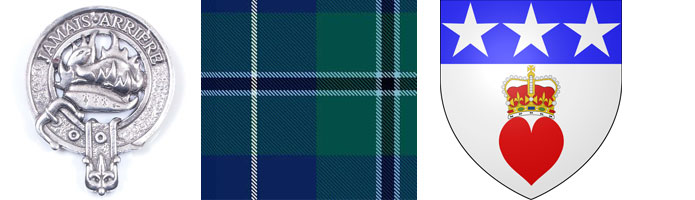
The Clan Douglas Crest is a salamander wreathed in flames, typically green (vert), resting on a medival heraldic hat known as a chapeau. In medival myth, the salamader was believed to be born in flame (probably the result of people seeing slamanders fleeing burning firewood). Thus the creature symbolizes survival and the ability to endure the flames of adversity.
The Motto of Clan Douglas is Jamais Arrière (French for "Never Behind"), signifying the clan's leadership and courage in battle.
The Douglas Coat of Arms features a red heart (Gules) topped with an imperial crown, representing the "Good Sir James" Douglas’s mission to carry King Robert the Bruce’s heart to the Holy Land.
The Douglas Plant Badge is the Rue (Ruta graveolens), chosen for its hardy nature and symbolic association with endurance. Their war cry is "A Douglas! A Douglas!". The clan’s traditional pipe music is Dumbarton's Drums.
Tartans: The primary Douglas tartan is known for its deep, understated palette of dark green, blue, and black, often with fine white stripes - a classic that is easy to regonize across a field. There are many variants however making it easy for Clan Douglas members to find an option that fits their personal style while still represeing the clan.
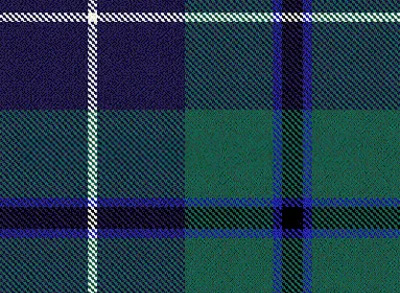
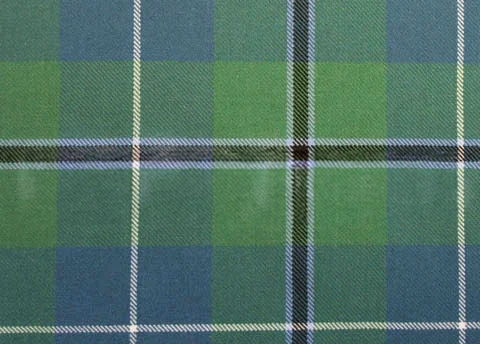

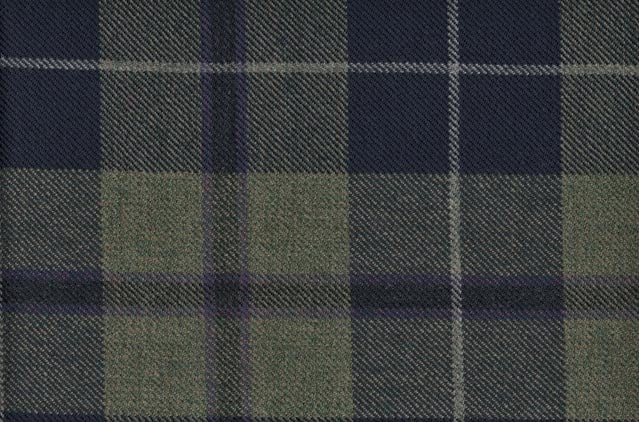
Douglas Tartan - Hebredian Collection

The Misty Origins of the Clan Douglas
According to the lore, Clan Douglas’s prime ancestor was one Sholto Douglas, a warrior of dark complexion who allegedly helped King Solvathius win a critical battle in 767.
As the story goes, Solvathius was in a heated melee against Donald Bane. At a critical moment in the battle, the king spotted a dark warrior cleaving the enemy and shouted "Sholto Douglas!" ("Behold the dark Douglas!").
In Gaelic the name Sholto usually is translated as "sower," signifying fertility, growth, and seed-bearing. It has a loose connotation with dark hair, possibly because fertility and dark soil are closely related (?). Some sources interpret the meaning as "teal duck."
Interestingly the name “Douglas” translates to "dark water" or "dark stream"; derived from the Gaelic words dubh (dark/black) and glas (stream/river/water/blue/green/black). So our legendary hero could be called “Soil-dark Duck Hair of the Dark River” if we wanted to be silly about it.
Nobody can say if the legend of Sholo is factual. However the name Sholo is a naturally evocative name for an ancestor; a progenitor of strength whose natural fertility led to the growth of a large and strong family.
Supposedly, Sholo was granted lands in Lanarkshire. We can say for certain that this area had been occupied by Flemish settlers. As with other clan origin legends, it is most likely that the Douglas’s origins were with humble people who gradually coalesced into a family structure and entered history by being at the right place at the right time. But that makes for a boring story, doesn’t it?
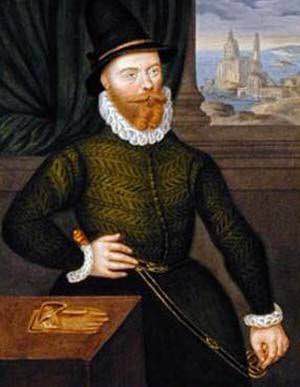
The earliest clearly documented figure associated with Clan Douglas is Sir James Douglas (c. 1286–1330).
Sir James Douglas was the first to be identified as “the lord of the Douglas family” and was a close ally of Robert the Bruce (Robert I of Scotland) during the Wars of Independence .
After The Bruce’s death, Sir James Douglas carried the king’s embalmed heart in a silver casket, intending to take it on crusade and bury it in Jerusalem. However, Sir James was killed in 1330 while fighting in Granada Spain, his quest of loyalty unfulfilled.
The Rise of Clan Douglas in Medieval Scotland
Following their service to Robert I, the Douglas family accumulated influence and power. They were granted extensive estates, including the royal forest of Selkirk, as rewards for loyalty to the crown. By the late 14th century, Douglas influence had grown so powerful that it posed a direct challenge to royal authority. This imbalance of power led to one of the most dramatic episodes in Scottish history.
The Fall of the Black Douglases - The Black Dinner and It’s Aftermath
If you are familiar with the "Red Wedding" scene in George R. R. Martin's Game of Thrones series, then know that this real episode of Scottish history is what inspired it.
The so-called "Black Dinner" took place at Edinburgh Castle on November 24, 1440. It stands to this day as one of the most infamous acts of political assassination.
Following the assassination of King James I in 1437, Scotland was ruled by a regency council on behalf of the young James II, who was a mere six years old at his ascension. Power was shared uneasily among three Scottish nobles: Sir William Crichton (the Chancellor), Sir Alexander Livingston of Callendar, and Archibald Douglas, 5th Earl of Douglas. When Archibald died in 1439, his title and immense power passed to his 16-year-old son, William Douglas, the 6th Earl.
Crichton and Livingston feared the growing influence of the Douglas clan. They saw the young, untested William and his brother David as a threat to their own control over the young king.
And there was also a hands-off conspirator from inside the Douglas clan itself; James "the Gross" Douglas, great-uncle to the brothers.
The conspirators invited the young Earl William (age 16) and his younger brother David (age 12) to a grand banquet at Edinburgh Castle, under a solemn promise of safe conduct and a guise of friendship and reconciliation. The 10-year-old King James II was present and reportedly enjoyed the company of boys his own age, oblivious to the dark plan unfolding.
As the dinner neared its end, the atmosphere shifted dramatically. A servant placed a covered dish on the high table in front of the Douglas brothers and dramatically revealed the head of a black bull. This was a traditional Scottish symbol and an unambiguous omen of death.
It was also the signal to attack. Armed retainers seized the Douglas boys (along with a friend, Malcolm Fleming of Cumbernauld).
The story goes that the young King James II pleaded for their lives as the boys were dragged out of the hall and subjected to a hasty, mock trial on trumped-up charges of treason. They were summarily found guilty and beheaded in the castle courtyard on Castle Hill.
The killings, a gross violation of medieval hospitality and trust, shocked the kingdom.
The "Black Dinner" did not crush Douglas power, if that was ever the real goal in the first place. The earldom passed to James Douglas who conveniently then allied with Crichton and Livingston to dominate the court.
The feud between members of the royal family and the Black Douglases festered for over a decade. The young King James II, who was supported by his mother and her family, grew up determined to settle the score and reassert royal authority.
The Murder of William Douglas - Medieval Revenge or Just Scottish Politics As Usual?
James, made 7th Earl after the Black Dinner, died leaving his son William as the 8th Earl. William became the most powerful magnate in southern Scotland.
Tensions escalated when it came to the King's attention that William had entered into a formidable alliance with Alexander Lindsay, the "Tiger" Earl of Crawford, and John of Islay, Lord of the Isles. Such an alliance could be seen as the precursor to an aggressive power grab – even a usurpation.
In an attempt to resolve the crisis, James II invited William Douglas to Stirling Castle under a royal letter of safe conduct in the winter of 1452. In all likelihood, the King only intended to pressure Douglas into breaking the alliance. However, what followed would be an eerie echo of events ten years earlier.
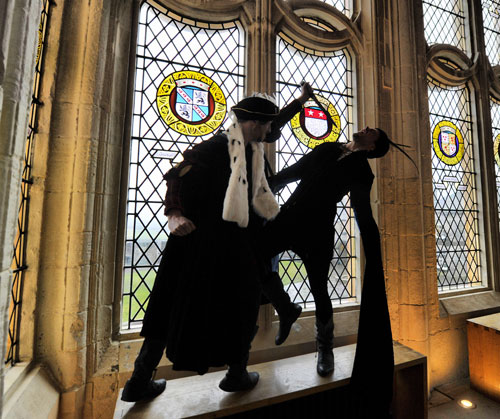
On February 22, 1452, after dinner, King James and Earl William met privately to discuss the alliance. The King demanded that Douglas dissolve the league, but the Earl repeatedly and defiantly refused, stating "I might no, I will no".
In a fit of rage, James, known for his temper, drew his dagger and stabbed Douglas in the neck and shoulder. The King's attendants then joined the attack, finishing off William. The earl sustained numerous stab wounds, and Sir Patrick Gray allegedly "struck out his brains with a pole ax". His mutilated body was unceremoniously thrown from a window into the garden below, now known as the Douglas Garden.
Was it another political assassination? Or revenge? Either way, it sent shockwaves through the kingdom. Douglas's brothers, including James Douglas, who became the 9th and final Earl, went into open rebellion against the Crown. The revolt, which was conducted more like an inter-clan feud, peaked with the Battle of Arkinholm in 1455. The King's forces, led by the "Red" Douglas Earl of Angus, defeated the rebel Douglases. The remaining Douglas brothers were killed or executed (except the 9th Earl who fled to England). Their lands and castles were declared forfeit by the Scottish Parliament and permanently annexed by the Crown. No single noble family would ever be strong enough to rival the King again.
The Douglas forfeiture also meant that the Douglas family could no longer function as a single political entity. Even so, members of the wider Douglas family continued to shape Scottish government.
The Red Douglases
The Red Douglas cadet line of the clan had been founded by George, first earl of Angus (c. 1378–1402/1403).
George was the illegitimate son of William Douglas, 1st Earl of Douglas, and Margaret Stewart, the Countess of Angus in her own right. His legitimacy was a non-issue in the power struggles of the day thanks to his powerful connections.
After the death of his father's legitimate son, James, 2nd Earl of Douglas, at the Battle of Otterburn in 1388, his mother resigned her title in his favor. In 1389, King Robert II officially granted George the Earldom of Angus, creating a new line of the title.
His status was further cemented in 1397 when he married Princess Mary Stewart, the daughter of King Robert III of Scotland, a strategic alliance arranged by his influential mother. The King also bestowed upon him extensive lands and rights, including the lordships of Abernethy and Bonkill, to support his royal wife.
George was succeeded by his son, William Douglas, 2nd Earl of Angus. Though his own life was cut short, George Douglas's marriage into the royal family established the long-lived and influential Red Douglas line, which would play a significant role in Scottish history for centuries to come.
Clan Douglas in the 16th Century: The Infamous Regent of Scotland
The fifth Earl of Angus was Archibald ‘Bell the Cat’ (a nickname based on his courage in a conspiracy to eliminate certain unliked nobles at court) who eventually rose to be Lord Chancellor of Scotland. Archibald’s grandson, the sixth earl, married the widow Margaret Tudor and thus made himself guardian of her son, the young James V.
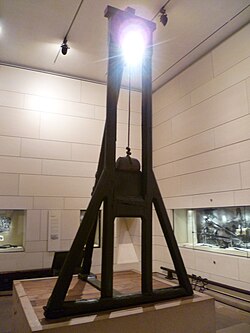
James, Earl of Morton and younger brother of the seventh earl, was one of the murderers of Mary Queen of Scots's secretary, David Rizzio. James was also deeply implicated in the assassination of Mary’s second husband Lord Darnley. James served as Regent during the infancy of James IV, but fell from power and was executed in 1581 by use of the infamous ‘Maiden’, an early Scottish form of guillotine; a device that ironically he himself had helped introduce to Scotland.
Clan Douglas in Modern Times
William, the eleventh earl was a staunch Catholic. During the Civil War, he supported Charles I. Created first Marquess of Douglas in 1633, he kept Douglas Castle in luxurious style. William fought with Montrose at Kilsyth and at Philiphaugh in 1645 where he escaped the onslaught of the Covenanter cavalry.
The titles of Marquess of Douglas and Earl of Angus devolved to the Dukes of Hamilton after the second Marquess Douglas married into that family in 1660.
Other family lines include the earls of Morton, and the Marquesses of Queensberry (famous for their rules for boxing). The Douglas-Hamiltons are the heirs to the house of Douglas, but are barred from matriculating as Chiefs because of their hyphenated surname. The family seat is at Lennoxville near Haddington.
The last chief of Clan Douglas, The 1st Duke of Douglas, Archibald Douglas, died without a direct heir in 1761, ending that line.
The heir presumptive is the Duke of Hamilton (surname Douglas-Hamilton), but Scottish heraldry rules prevent someone with a double-barrelled name from being chief of a single-surname clan, as he's also chief of Clan Hamilton.
Thus Clan Douglas is armigerous, meaning it does not currently have an official chief recognized by the Lord Lyon King of Arms. The unofficial leaders are therefore the directors of the Clan Douglas Society (CDSNA) which helps guide the clan and its septs (related families).
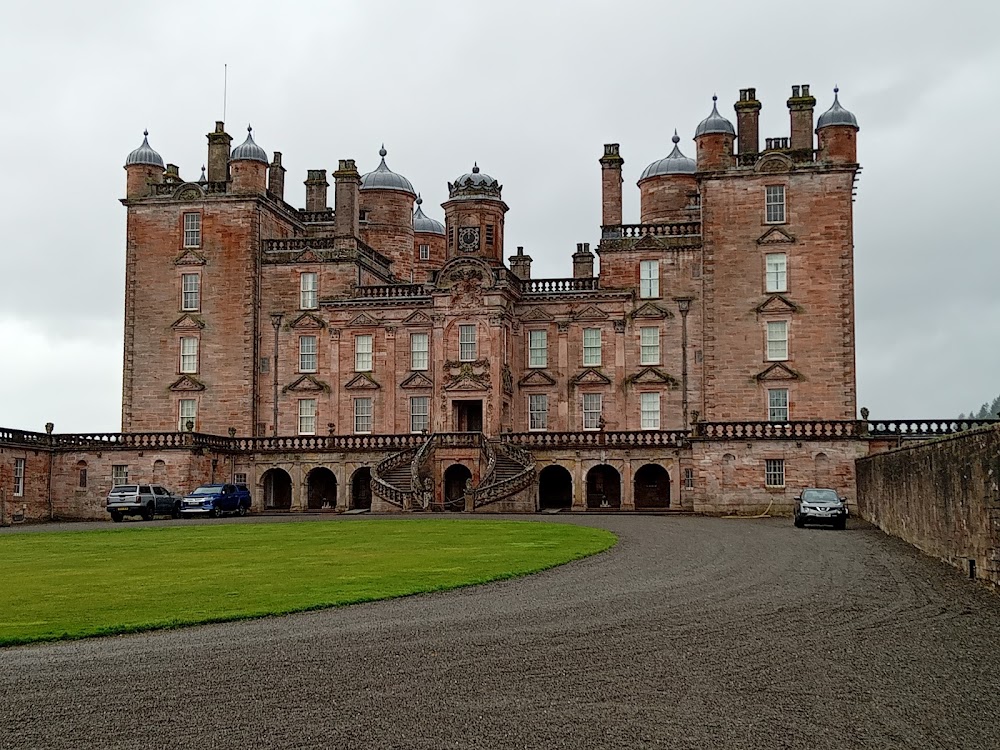
Being armigerous, the Clan does not have an official seat. However, Drumlanrig Castle holds significant Douglas history and memorabilia – worth a visit for Doulas history and much more!