
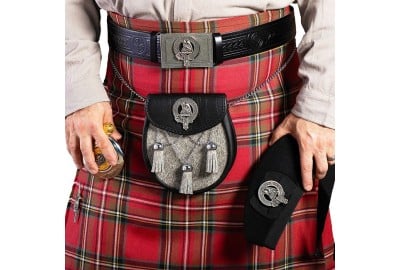
Ready to buy your first kilt? Awesome! Congrats! But we know it can feel like a lot.
- Which tartan should you wear?
- Do you have to be Scottish?
- What kind of kilt is best for you?
- How do you measure?
- Which accessories do you actually need?
- How much should you budget for a kilt?
The good news is that once you understand the basics, Highland dress isn't nearly as complicated as it looks.
This guide will walk you through everything from choosing your tartan to putting on the finished outfit so you can wear your kilt with confidence. Let's do this.
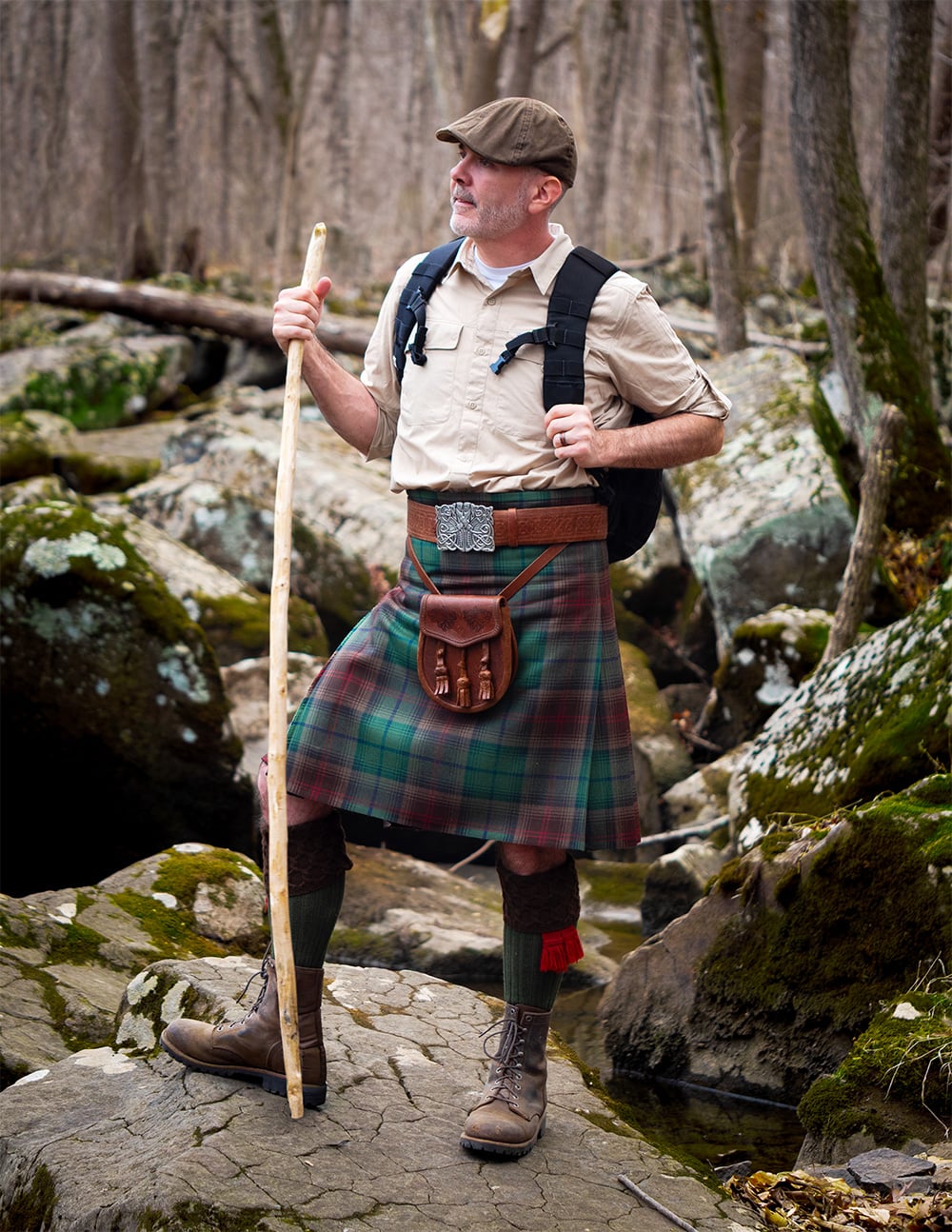
Step 1: Choose Your Tartan with Confidence
Anyone can wear the kilt. In a sense you could say there are three types of gents who wear kilts:
- Those whose name is connected with a clan tartan.
- Those whose name is a sept of a clan.
- Those with or without Celtic heritage who wear universal or district tartans.
Obviously if you fit the first or second category, choosing your first tartan is easy. Just go with your favorite version of your clan tartan (there is usually more than one option!).
What about the third though?
"Can I wear a kilt if I'm not Scottish or don't have a clan?"
.....is one of the most common questions we get from guys who are fans of the culture, but maybe have a loose connecton to the heritage.
You don't need Scottish, Irish or Welsh ancestry to wear the kilt. Naturally, gents with some ancestry in the Celtic nations may feel an even stronger draw to the aesthetics, but kilts and tartan are Scotland's gift to the world.
Here's the only rule you should follow to the letter: Be a sincere student of the culture.
The kilt, and Highland Dress in general is a National Dress, yes. But it is also the most flexible one in the world. (you don't see guys wearing leiderhosen daily, do you?) People have been blending it with other fashions and cultural influences for ages. You can to. But you owe it to yourself and to those you meet (because people are going to chat you up when you wear the kilt, guaranteed) to know the roots of the art of the kilt.
More specifially, do not worry about having a vague connection to Celtic heritage. For instance, lots of gents with Scottish ancesty do NOT have a clan.
This is why though many tartans represent specific clans and families, there are hundreds of tartans that anyone can wear. National, regional, military, commemorative, occupational, and fashion tartans are all fair game and even those of us with a Clan often collect them because so many are beautiful.
"Can I wear a tartan other than my clan's official tartan?"
Absolutely! The longer you make the kilt a part of your wardrobe and lifestyle the more you will be tempted to expand your tartan collection to include all sorts of designs you like. Nothing wrong with that at all. Variety is part of the fun. You are NOT disrespecting your clan by wearing an alternative tartan. That is a myth.
Not Sure Which Tartan Is Yours?
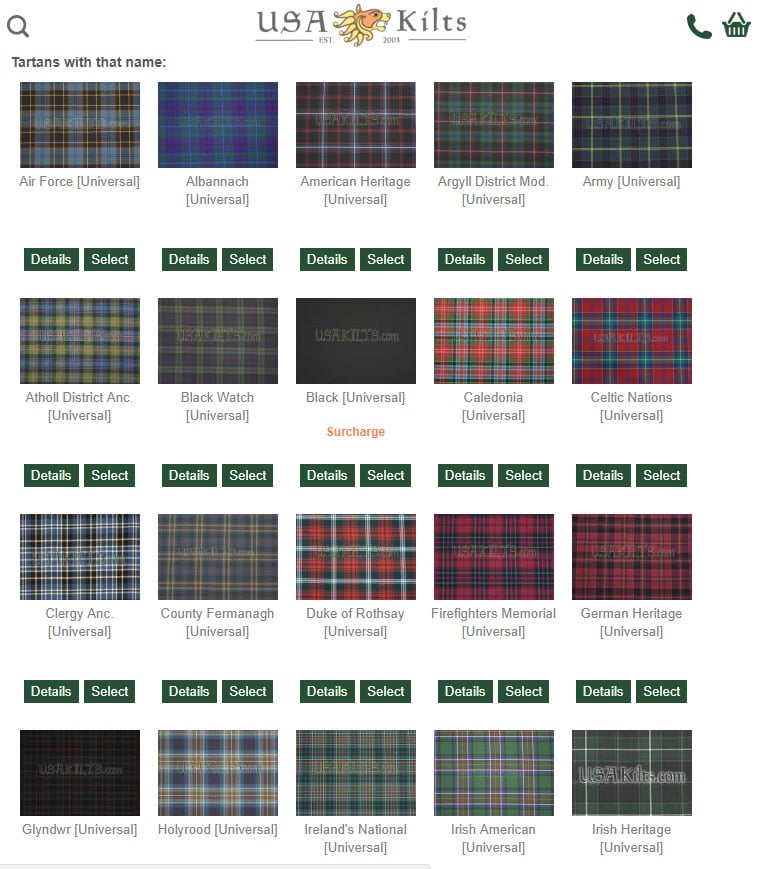
The easiest place to start is our Clan & Tartan Finder. Enter your surname into our Search bar at the top of the page. We'll help you see whether there's a clan connection. Remember to try different spelling variations since standardized spelling was not a thing until the modern age.
Looking for something without a clan affiliation? Some of our most popular universal tartans include:
Helpful Resources:
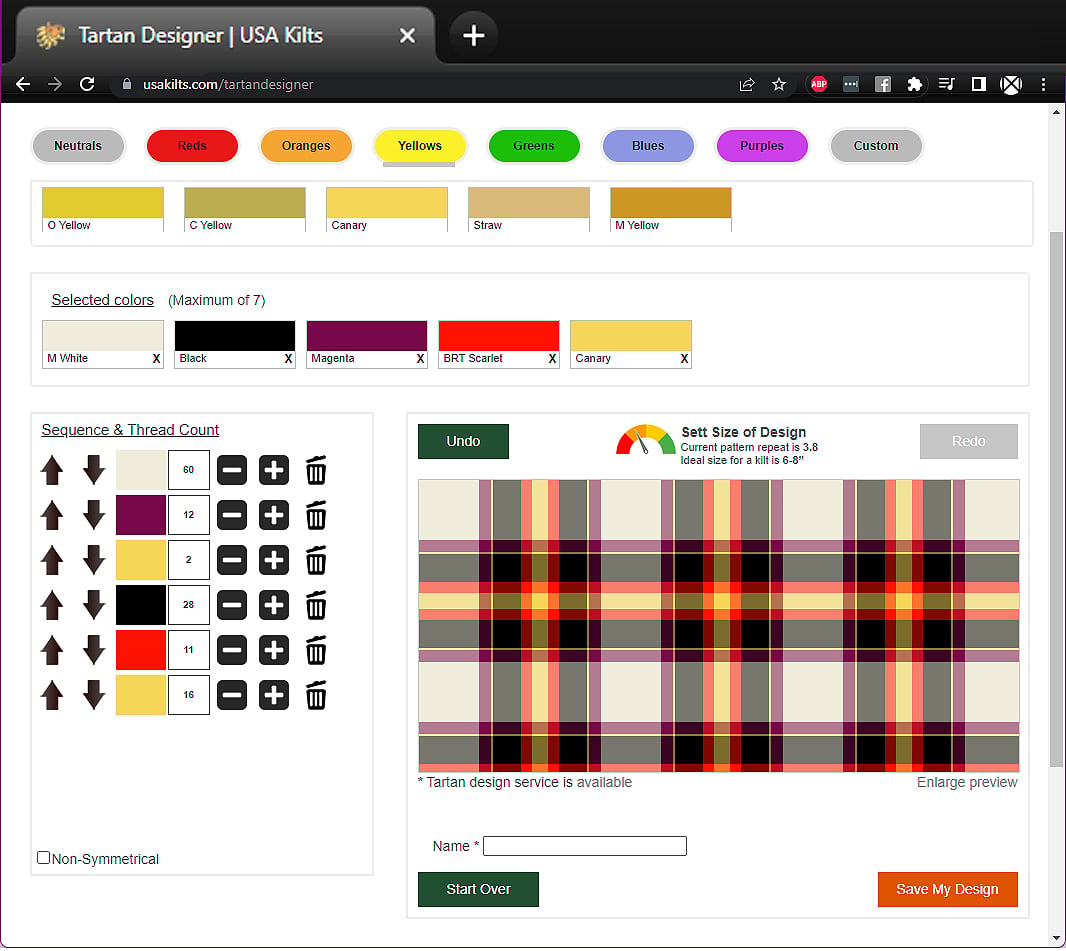
Step 2: Pick the Right Kilt for the Occasion
Not every kilt is built for the same job. Just like you wouldn't wear a tuxedo camping, you probably wouldn't wear your casual utility kilt to a black-tie wedding.
Here's a simple way to think about it.
Best Kilt by Activity:
|
If You want a kilt for... |
We Recommend... |
|
Festivals, hiking/athletics, everyday "t-shirt" casual wear |
Casual Kilt |
|
Burns Suppers, nice dinners, daytime summer weddings, |
Semi-Traditional Kilt |
|
Formal weddings, banquets, St. Andrew's dinners, |
Traditional 8-Yard Wool Kilt |
What's the Difference? (technical differences between kilt models)
|
Kilt Style: |
Casual |
Semi-Traditional |
Traditional 5- or 8-Yard |
|
Best For: |
Everyday very casual |
Smart daywear |
Nice day wear to Formal occasions |
|
Material: |
Poly-viscose |
PV or lightweight wool |
100% Scottish wool |
|
Weight: |
Lightweight |
Mid-weight |
Traditional weight |
|
Care: |
Easy maintenance |
Spot clean / dry clean |
Dry clean |
|
Look: |
Relaxed |
Classic |
Full Highland dress |
|
Pleat Swish |
Low |
Fair |
Best/Classic |
Note: What is "pleat swish"?
This refers to how the kilt moves with you when you walk. More material in the pleats (the back of the kilt) means you get a better swing as you move. It just looks awesome. In fact, that 'swish" is one of the reasons the eight-yard kilt was invented in the first place!
Step 3: Measure Twice. Fit Once.
Okay so this is the least fun, yet single most important step to buying your kilt.
Unlike jeans off the rack or cheap mass-produced kilts (like you might see on Amazon or at a rennaisane fair), USA Kilts products are all made to measure......exactly to measure. So you do not want to screw this up, my lad. That said, it's actually not that hard to do.
Important Note: Your Jeans Size Doesn't Matter.
Kilts are worn at your natural waist (around your belly button) not down on your hips where modern jeans sit. Add in vanity sizing, and your pants size can easily be several inches smaller than your actual waist measurement. Trust the tape measure, not the tag.
The Three Measurements We Need
1. Waist
Measure around your natural waist, right about belly-button height.
Keep the tape snug, but don't suck your stomach in. Do not be self-conscious here. We'd rather make the kilt fit the body you actually have.
If you are on an aggressive weight loss program, contact us for advice on when is the best time to take your measurements and place your order.
2. Hips
Measure around the widest part of your hips and seat (yes this is the butt measurement).
Keep one finger under the tape so it's comfortably loose.
3. Length
There ar a few ways toi do this, but here's an easy one you can do solo...
Kneel on the floor with good posture.
Measure from your natural waist straight down the side of your leg to the floor, then subtract one inch. A properly fitted kilt should finish right at the middle of your kneecap. If you are doing this by yourself, consider using a yard stick instead of a measuring tape.
Watch Rocky walk through the measuring process step-by-step in this video.
REMEMBER: if you are even a little unsure about your measurements, our customer service team is happy to help.
Step 4: Put the Outfit Together
How Does the Kilt Work with the Other Parts of the Outfit?
Here are the basics.
Where Should the Sporran Hang?
Center it over the front apron. The bottom of the chain or strap should leave the sporran hanging about three finger widths below the belt buckle. If you are not weating a belt, it's more like a little over a hands-width form the top edge of the kilt. Essentially the sporran should be hanging around where your bladder is.
Where Does the Kilt Pin Go?
On the wearer's right side (where the fringed edge of the front kilt apron is) about two-three inches up from the hem and about two inches in from the fringe. This varies a bit depending on the size and shape of your kilt pin, so eyeball it and go with what looks right. The main thing is not to have it too close to the bottom edge.
One important note: Only pin the front apron. Never pin both aprons together. This will restrict how the kilt hangs and moves. Despite what you might have heard, the kilt pin is only a wind weight, not a closure mechanism.
How High Should Kilt Hose Sit?
Fold the tops over so they finish about two inches below your kneecap.
The flashes should peek out on the outside of each leg.
Where Does the Sgian Dubh Go?
Traditionally, it's tucked into the hose on your dominant-hand side with just the top of the handle showing.
Don't Want to Build an Outfit Piece by Piece?
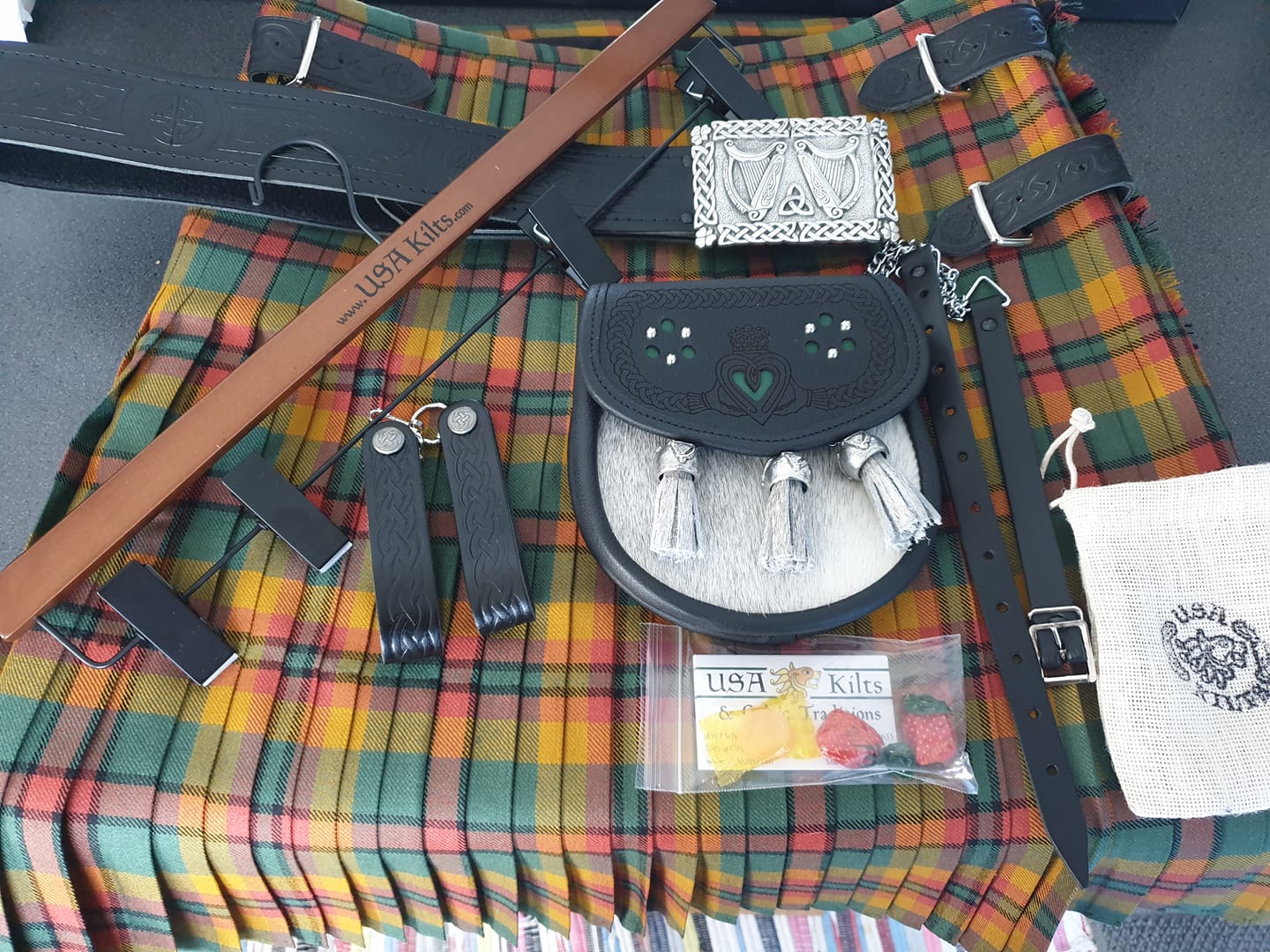
Hey! That's exactly why we created our Kilt Packages! Whether you're heading to the pub, a Burns Supper, or your own wedding, we've already matched our kilts with occasion-approriate accessory options to make crasfting your look easy. You'll save 10% or more and have a sharp head-to-toe outfit, once and done.
Popular Kilt Packages:
Frequently Asked Questions
What do you wear under a kilt?
Whatever you're comfortable wearing. That's it.
Going "regimental" is part of Highland folklore not strict tradition, no matter what you heard. The majority of modern kilt wearers choose boxer briefs, compression shorts, or athletic underwear. Don't believe it? Well, we actully conducted a survey to find out. Here are the results of our What's Under The Kilt Survey.
Can I wear a kilt if I'm not Scottish?
Absolutely.
Kilts are enjoyed around the world by people of every background. If you don't have a clan tartan, there are hundreds of universal, national, military, commemorative, and fashion tartans available for anyone to wear.
Why is my kilt size different from my jeans?
Because kilts sit higher.
Modern pants ride on your hips and are often vanity-sized. Kilts sit at your natural waist, so the number on your measuring tape is almost always the correct size to order, not the number inside your Dockers.
What's the difference between a 5-yard and an 8-yard kilt?
As the names imply, the biggest difference is the amount of fabric.
An 8-yard kilt has deeper pleats, more movement (swish), and the traditional drape you'll see at formal Highland events. A 5-yard kilt is lighter, cooler, and more affordable, making it an excellent choice for everyday wear, festivals, and warmer climates. If you are on a budget but want a wool kilt, the 5-Yard is a great option (many non-kilt wearers you meet won't spot the difference).
USA Kilts offers two different models of eight yard kilt:
- Top-Stitch 8-yard Kilt - a small line of stitching is visible at the top of each pleat upon close inspection. Faster and easier for us to sew, so a bit cheaper for you.
- Premium 8-yard Kilt - our most tradtional model. All stitching is hidden.
The quality in each model is the same and you always have your choice of any tartan. The only difference is in the construction.
How long should a kilt be?
A properly fitted kilt should finish at the middle of your kneecap.
Above the knee is usually consderd to sort even tough this was the fashionable length many years ago. Similarly if the kilt covers your kneecaps completely, it's too long. It simply is not flattering (and looks more like a woman's skirt).
Quick rule of thumb..... when you kneel on the floor, the bottom edge of the kilt should lightly brush the ground.
Which side does the kilt pin go on?
Always on the wearer's right-hand apron.
Pin it through the top layer only, about two inches from the bottom hem and two inches in from the fringe.
You're Ready.
So yeah, buying your first kilt doesn't have to be intimidating.
Pick a tartan you love, take accurate measurements, and get the best kilt you can afford (as Rocky says "without taking out a mortgage!")
Most of all, if you do not opt for a full Kilt Package, be patient. That is, don't stress about getting every accessory on day one. Most Highland wardrobes are built over time and a lot of the fun is in the collecting!
If you're still not sure which direction to go, give us a call. We do this every day, and we'd much rather answer your questions before you order.
After all, the best kilt is the one you always look forward to wearing.
