
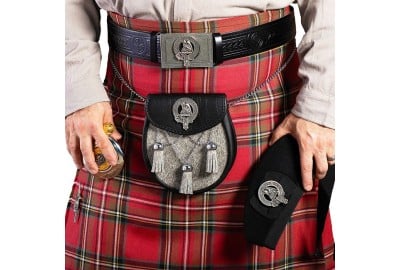
Does your family name have a tartan?
Here's how to find out using the USA Kilts website, even if you're not sure which Scottish or Irish clan your ancestors belonged to.
So, you've got some Celtic blood and you are wondering what tartans you can wear.
Maybe you know for sure you belong to a certain clan.
Maybe your grandfather always swore the family was descended directly from William Wallace.
Maybe you've been digging through your family tree and found a Scottish ancestor…. or more than one but with different names.
Or maybe you've just decided you want a kilt and figure you ought to see if there's a family tartan before picking one based just on the look. All valid places to start!
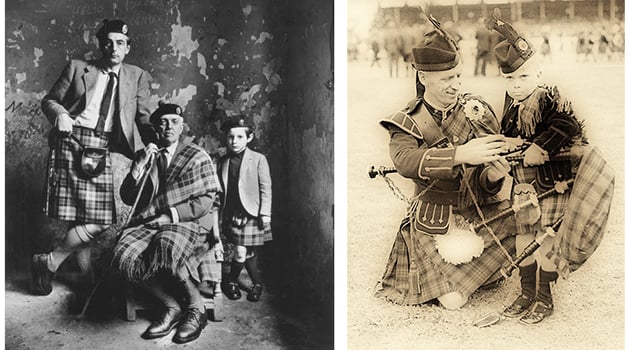
First a quick level-set….
Not every Scottish or Irish surname has its own tartan. Some families are associated with larger clans, others have connections to particular regions, and some names don't have a documented tartan connection at all.
That is all perfectly fine. You are still allowed to wear the kilt.
But let’s say you want to explore, see what options you have based on your family tree. At USA Kilts, we maintain a searchable collection of tartans. 90% of the time, if a tartan is offered by a reputable mill in the UK we can get it for you.
Finding one associated with your family is usually pretty straightforward. Here is how to use our site to search for your own family tartan and what your search results will mean to you.
How Do I Find My Family Tartan by Last Name?
The Search Bar at the top of the USA Kilts official website allows you to input just about anything… not just products, but also family names. It’s really that simple and direct.
For more direct access, you can use our Tartan Gallery which includes specific search buttons for browsing tartans or clans. Here you’ll find our complete database. Tartans as well as Clan Crest accessories and related Blog articles are all searchable.
You can search by…
-
Surname
-
Clan
-
Irish family name
-
Welsh family name
-
Scottish District
-
Irish County
-
Military branch
-
And a lot more (everybody’s favorite category!)
Here’s an example. Let's say your surname is Wilson.
You might expect to find a Wilson tartan, but the results could also point you toward Clan Gunn instead. That's because Wilson is one of the surnames associated with Gunn through what's known as a clan sept. You may also get results related to a universal tartan as well. For instance if there was a tartan called the “Wilson Institute for the Study of Haggis” that would also show up.
Nine times out of ten though you will get clan tartan options, clan sept options, and any district tartans associated with the name. For example if “Wilson” is found a lot in Ayershire, you’d see the Ayershire District tartan.
Once you have all the various tartans in front of you, take some time to explore them.
You can use the filters to the left of the page to help narrow your search.
Once you select a tartan, you will see a write-up about the “Sett” (ie. tartan design as defined by colors and threadcount) such as how old it is and family names associated with it.
You will also see the various products available in that specific cloth.
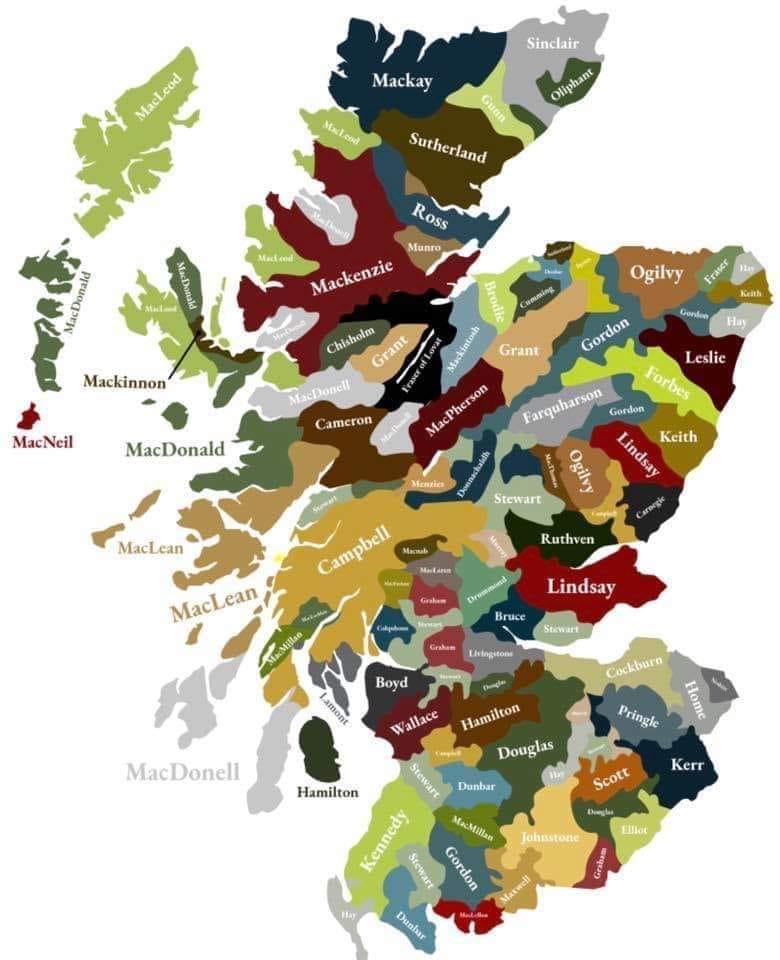
What If I Get No Results Searching on My Family Name?
If your name doesn't turn up anything, try a different spelling.
Remember:
-
Standardized spelling is a modern invention.
-
Many immigrants to the Americas changed their names, or had their names changed by shipping companies personnel when they boarded (that this happened state-side at Ellis Island or Castle Garden is actually a myth).
MacDonald and McDonald, for instance, are worth checking separately. Older family records (especially in Scotland) aren't always consistent about spelling, and tartan names do not necessarily match the version of your surname your family uses today.
When you find something promising, click through and look at the tartan information. Check the clan associations, any listed sept names, and which fabrics are available.
Does USA Kilts Keep All the Tartans In Stock?
No. Finding a tartan in our database doesn't necessarily mean we have that fabric sitting on a shelf ready to ship. Poly viscose fabric is kept in stock. Wool fabric is ordered from the UK on a per-order basis. There are just too many tartans for us to do otherwise!
How Do I Know If My Family Had a Scottish Clan?
A lot of gents will assume that if their last name is not a big and famous clan name like MacGregor, Campbell, Fraser, etc., they must not have a legitimate clan connection. It’s actually a bit more complicated.
Scottish clans were not limited to a specific surname or the direct lineage of a chiefly family line.
In fact they were communities, usually centered around a chief, with multiple families connected through land, marriage, personal (political, let’s be honest) loyalty, or simply the need for protection. This is where Septs come in.
Septs and Man Rent
A family could live on a clan's land for generations without sharing the chief's surname.
According to the oldest practices of the Clan System, these families would “pay” the chief for the use of the land and for his protection through Man Rent.
Specifics varied, but under man-rent a family would offer service by a certain percentage of their male members for a certain amount of time. This could be physical labor or other forms of work. In the event of a war/feud, these men would be called up to fight alongside the rest of the clan.
The logic was that fighting for the clan was also acting in your own self interest…. It was your land and cattle that might be at risk as much as it was the chief’s or anyone else’s. Man rent was really a way of guaranteeing mutual aid.
Clan loyalty and participation in man rent was sealed with a sacred oath. This was a far cry from the coerced service of the medieval feudal system or serfdom. In fact, it’s worth noting that in the oldest days clan chiefs were not hereditary by default but were in fact often elected by a consensus of close family members, other leaders, and respected elders.
Over time, some of the very strongly associated loyal families became known as “septs.” 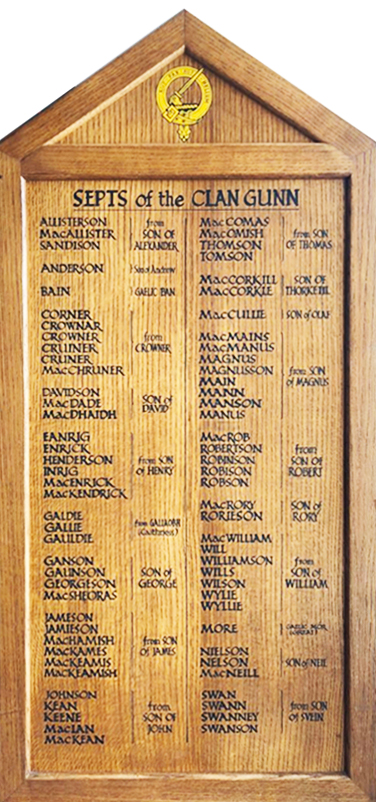
In the 19th century during the resurgence of Scottish nationalism and heritage culture, many clans actively sought out names they knew had links to the clan in the old days. They also occasionally “adopted” names due to some history. The result was codified official lists of septs for each clan.
So for an example of a sept, let’s take Wilson again. The name appears on sept lists associated with Clan Gunn. So if your last name is Wilson, Gunn is a tartan you are entitled to wear.
Does that mean every Wilson in the world is descended from or connected to Clan Gunn? No.
Wilson is a patronymic surname, meaning it developed from someone's father's name. Ie. “son of William.” Naturally, there were plenty of men named William, and their descendants didn't all live in the same part of Scotland or swear an oath to a chief. In fact, looking at our tartan Gallery reveals that Wilson is also considered a Welsh name falling under the umbrella of Williams.
So this is why knowing where your ancestors came from can be just as important as knowing their surnames.
If your family came from Caithness or Sutherland, for example, a Gunn connection might be worth investigating. If they came from somewhere else entirely, you'd want to do a little more digging before assuming that connection applies to you.
Genealogical research is going to be key if your family doesn’t already have a strong family tree link they have preserved.
How strong does my connection to a clan have to be to wear the tartan?
Do the genealogical links to the clan have to be perfect? Does the connection have to be crystal clear? Not at all. Record keeping of family names can be spotty in the old country, often relying on very old church/parish records of births, marriages and deaths. It is not uncommon for Americans doing personal genealogy to run out of clues when they “hop the pond.” Heck, many native Scots themselves do not know the details of their old family roots.
If your evidence feels good enough, you have a passion for the kilt, and you are a sincere student of the clan’s story….go ahead and enjoy your tartan.
And wearing your clan tartan to events where others may recognize it will lead to some great conversations… they may even help further your heritage exploration!
What If My Last Name Doesn't Have a Tartan?
As we mentioned above… don't worry about it.
It’s a common misconception that every Scottish family had its own tartan going back hundreds and hundreds of years. That is simply not true.
The system of official, named clan tartans we are familiar with today was more or less invented in the late 18th and 19th centuries.
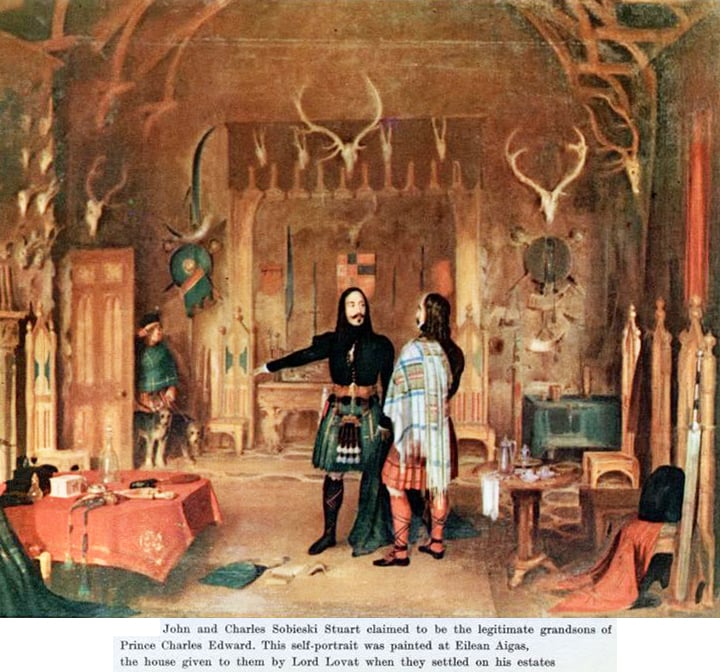
The major players who brought it into being were the members of the Highland Society of London, Sir Walter Scott, and a couple of conmen known as the Sobieski Stuarts (John Carter Allen & Charles Manning Allen).
That story is for another time. Suffice to say, throughout most of Scotland’s history people wore a rich variety of tartans, often mixing more than one in a single outfit.
What to Search for If You Do Not Find Your Exact Surname in the USA Kilts Database…
-
Try maternal and any non-paternal branches. Every line that goes through a mother, grandmother, or female ancestor.
-
Districts, counties or cities your relatives have mentioned (esp. for Irish).
-
Consider universal or fashion tartans you like.
What is a District Tartan?
District tartans represent geographic areas rather than individual families. They're particularly useful when you know your family came from a certain part of Scotland but can't establish a connection to a specific clan. And just FYI there are some great city tartans too!
Can I Wear My Mother's Clan Tartan?
Absolutely.
We hear this question a lot, usually from someone who has a Scottish connection through their mother's family, a different surname from their father’s.
There's no rule that says you can only wear the tartan associated with your paternal line.
Let's say your father's family is Irish, but your mother's maiden name is Stewart. You've researched her family, found a Scottish connection, and would like to wear a Stewart tartan.
That's perfectly fine.
You can also wear a tartan associated with your grandmother's family, or another branch of your ancestry simply because it means something to you. Frankly, the emotional connection is often considered more important these days than the genealogical one.
Some people have several Celtic family connections and own tartan kilts to honor each of them.
And remember… Despite what some older traditionalists might say, you are never required to wear only your clan tartan.
These opinions tend to come from gents who are used to only using a kilt for occasional special events. Those who choose to wear the kilt more often, even daily, almost always collect a wide variety of tartans…. some clan-related, some not.
Can I Wear a Clan Tartan If I'm Not Related to the Clan?
Yes.
And this is something we've talked about quite a bit on the USA Kilts YouTube channel. The overwhelming majority of commercially available clan tartans aren't restricted in that way.
You don't need to take a DNA test, produce a family tree going back to the 1500s, or get written permission from a clan chief to wear most clan tartans.
If you like a tartan and want to wear it, go ahead.
Do so with respect. We recommend learning a bit about the clan so if you talk to a clan member, you can express sincere interest and admiration.
The clan system was about relationships and community, not just genetics. People joined clans through marriage and alliances. Families moved into clan territories. Some people adopted the surname of a chief, while others maintained their own family names.
Do Irish Last Names Have Their Own Tartans?
Some do, but Irish tartans are a little different from Scottish clan tartans.
In Scotland, we have a vast number of tartans, ranging from clans and families to landscapes and civic organizations.
Meanwhile, Ireland has long had a few surname-associated tartans, but not many. Today county tartans are the mainstay.
These tartans, designed to represent each of the Irish counties such as Cork, Kerry, Galway, and Donegal, were first introduced in the 1990s.
So, an old tradition? No. But nevertheless, a very popular one. Modernity doesn't make these tartans any less meaningful.
To find an Irish tartan on the USA Kilts website, start by searching your surname in our Tartan Galleries. The most common names found in each county are listed in the tartan entries. If nothing comes up, you may need to rely on family history to zero in on your tartan.

What if you don't know the Irish county of your ancestors?
If all else fails, you have the same solution many Scottish customers have... Universal tartans.
We offer Ireland's National tartan as well as a variety of setts which are associated with Irish culture.
You also have the options of solid Kelly Green, St. Patrick Blue or Saffron, each of which has been used for Irish kilts since the 1890s.
Another excellent option for anyone, Scottish, Irish or Welsh, looking for a beautiful and earthy kilt design is tweed. Yes, tweed has been used for kilts since the Victorian days and has recently seen a boost in popularity.
And again we must repeat…. there are zero rules. Having a tartan that symbolizes your heritage story is a “nice to have” not a “you must have.”
Do Welsh Families Have Their Own Tartans?
Yes.
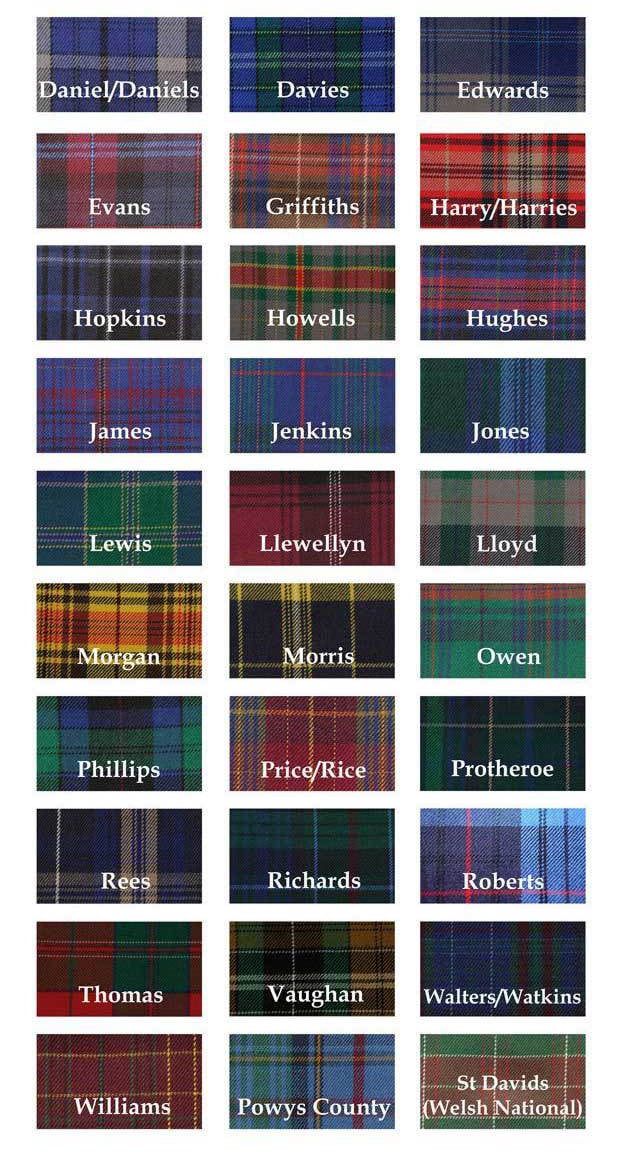
If your family name is Jones, Davies, Williams, or another Welsh surname, simply use our search tool to find it. Or just enjoy browsing the gallery. We also offer the various national Welsh tartans such as Pride of Wales and Saint David.
Like Irish county tartans, Welsh tartans are a relatively new tradition having first been developed in the 1990s. The tartans each represent a major family line, but there is no clan structure in Wales as there is in Scotland.
What If My Family Has Mixed Celtic Heritage?
What if I am part Scottish, part Irish or part Welsh?
Then you've got options!
It's pretty common for Americans to have ancestry from several different places, especially if their families have been here for generations.
Maybe your mother's family came from Scotland, your father's side has Irish roots, and your grandmother was Welsh.
THEN which tartan do you wear?
You can choose whichever part of your heritage you'd like to recognize.
You might find a tartan associated with one family surname, or you might prefer a national or regional tartan that represents a broader connection.
This is one reason we developed our own universal tartans like the American Dream tartan and our America’s 250th Collection. These designs recognize the beauty, variety and honor of the unique experiences of Americans.
You don't need to settle on a single identity just because you're buying a kilt.
What If I Don't Know Which Clan My Family Belonged To?
Start with what you know.
If you have a Scottish surname, search it in our tartan galleries. Matches will appear as clan tartans that either correspond to your name, or for which your name is a recognized sept. tartans for districts where your name was common will also come up. Don’t forget to try alternate spellings.
If you need to do more detective work, try asking your family for leads:
-
An old family Bible
-
Immigration records
-
Birth and death certificates
-
Anecdotal information about where your ancestors were born
For instance, knowing your family came from Ayrshire is more useful than simply knowing they came from Scotland.
Yes, this can get complicated. And it’s why professional genealogical sites like Ancestry.com exist.
Okay but what if I have connections to more than one clan? Which tartan do I wear then?
Any of them.
If you want to be strict about it, opt for the tartan/clan that is traceable through your father’s line; the patronymic name.
We recognize that there may be reasons this may not work for you. Some we have encountered include:
-
You have a stronger celtic connection on your mother’s side.
-
You were adopted.
-
You feel a lack of connection to your father’s side due to family trauma.
In cases like these, we recommend trusting your gut. That’s it.
Your kilt and tartan should bring you joy.
Your tartan should make you feel empowered and inspired.
Your kilt should make you feel connected to the culture you love.
Your kilt should make you feel confident as a strong individual.
What's the Difference Between Ancient, Modern, Hunting, Muted and Weathered Tartans?

Style and mood.
These are color palettes developed over the years to give gents more options.
Regardless of the color palette, every version of a clan tartan is legitimate.
Which one are you supposed to buy? The one you like.
Occasionally a clan chief will express a preference for one version over another to be worn at official functions, but you get to decide how much you adhere to that and it does not affect ordinary day-to-day wearing.
Some palettes will look nicer in certain contexts. For instance, a weathered or muted palette may go perfectly with tweeds for an autumn afternoon. A nice bright modern palette tartan may look stunning at a formal evening event like a party or formal dinner.
Modern tartans typically use richer stronger colors closer to primary colors. The overall appearance is often more saturated.
Ancient tartans generally use softer “washed out” shades intended to suggest the appearance of older organic dyes . NOTE: The Ancient version of a tartan is NOT actually older than the Modern one.
Weathered tartans take the subdued look a bit further using browns, muted greens, umber reds and other earthy colors to suggest fabric that's faded over time.
Muted tartans are essentially jewel-toned renditions of the tartan.
Wilson’s of Bannockburn tartans are renditions in a palette that is a reconstruction of the colors used by one of the original tartan mills. The palette was developed by Wilson’s in the late 18th through the early 19th centuries and has a unique beauty with very specific tones for each color. WB renditions, sometimes also called “olde colors”, are like a cross between Ancient and Muted and are a favorite for reenactors and history nerds (like me).
Hunting tartans are actually their own thing. They are a separate tartan from a clan’s main one. The caprice being that the hunting tartan was developed to feel more appropriate for country estate activities like grousing, deer stalking, etc. In fact,m they are just another fashion option. Not all clans have a hunting tartan. Occasionally a hunting tartan becomes so much more popular than the original clan tartan that it is all you see!
Dress tartans can be unique designs (Macleod Dress “loud Macleod”) or just a version of the official clan tartan with white as the base instead of whatever color is usually used (Stewart Dress). They are not required for formal occasions. At some point someone just thought they looked nice in low-light evening settings. They are far more commonly used by women for kilted skirts than for men's kilts.
What Is a Universal Tartan?
Tartans not associated with a clan, family, civic or governmental body or a business are usually called “universal” or “fashion” tartans.
They have always been around. In fact the category includes some of the oldest tartans we know of such as Glen Affric (the oldest Scottish tartan specimen yet discovered) or Culloden 1745 (a repro of an actual artifact from the battle of Culloden).
More often “universal” or “fashion” calls to mind sett designs created just for the beauty… just for the art of the thing. Often they are created by individuals to memorialize something or some place. The most famous example is probably Isle of Skye.
Point being, these tartans are intended for anyone to wear without hesitation.
