Sir Walter Scott and George IV's Visit to Scotland
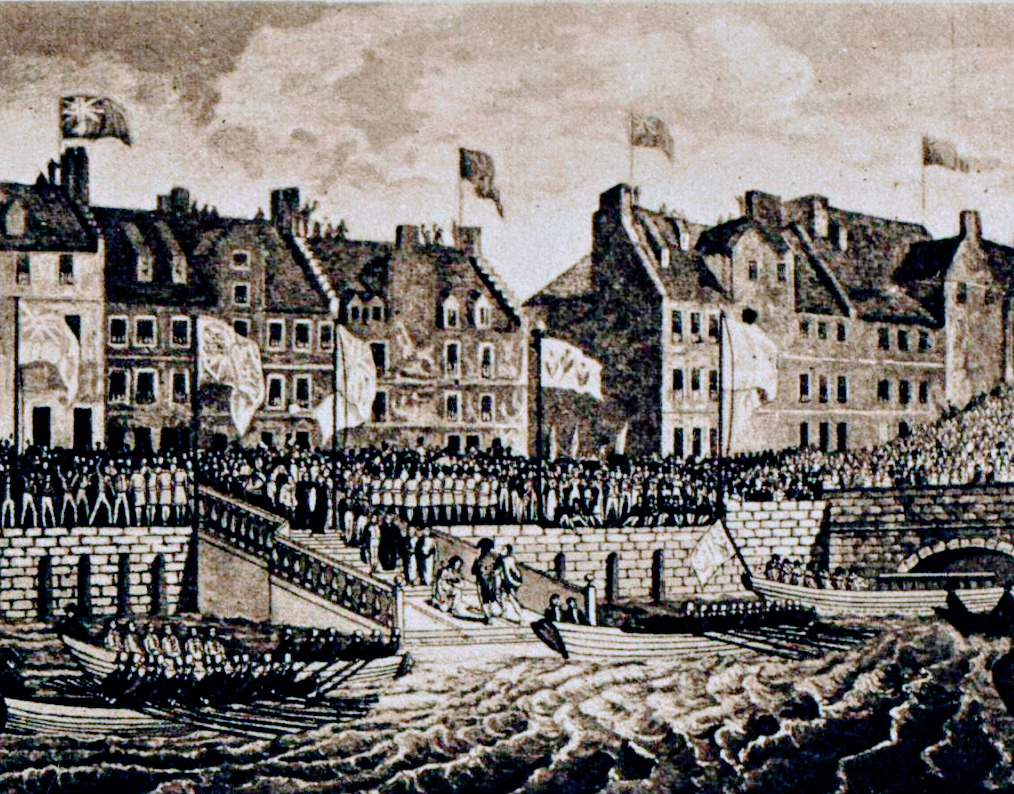
In August of 1822, King George the Fourth did something no British monarch had done in 140 years. He went to Scotland.
And rest assured - this was a watershed moment for Scottish history. It is easy to write it off as frivolous pomp. But in fact, it marked a moment when Scottish pride and patriotism reached a height not seen in 200 years. And it cemented the image of Scotland’s national character that we still have today.
So how did it happen and why?
King George IV's trip to Scotland was exceptional. It was the first by a reigning monarch since Charles II.
Now, to be clear, the trip was certainly politically motivated for the English. In 1820, Scotland was in the grips of an economic recession and seething with resentment. This erupted into the Scottish Insurrection (also called the Radical War) of 1820. So Parliament wanted George to go as a show of good faith on the heels of his coronation.
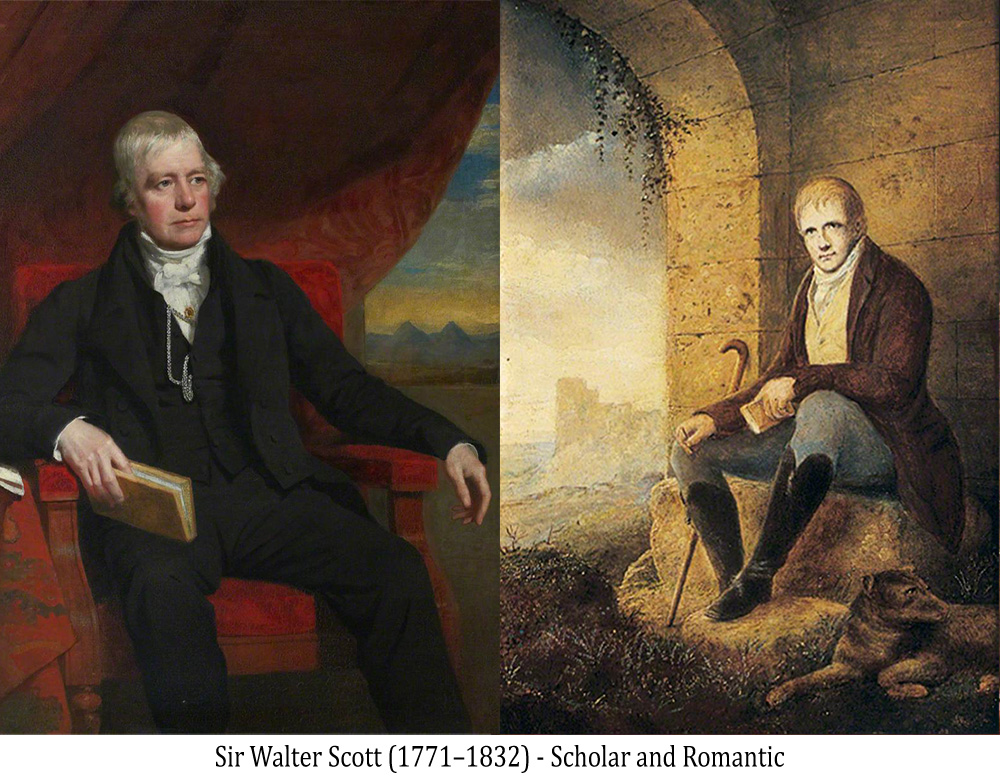
George wasn’t convinced at first, but one man was able to inspire him. Sir Walter Scott.
George had met Scott earlier and the two had something of a friendship. It was George who had allowed Scott to undertake the recovery of the crown jewels of Scotland, which had been presumed lost or stolen.
So, getting Scott to motivate the King and orchestrate the royal pageant was a genius move. He was already the most powerful force for Scottish culture in the world.
Scott’s novels, Waverley (1814) and Rob Roy (1818), while not exactly historically accurate, were rollicking yarns that were enormously popular. He also wrote another eight Scottish novels as well as epic poetry. The man was driven.
In his writings, Scott transformed political differences between England and Scotland into cultural ones. He personalized history - using it as a backdrop to tell an intimate story of adventure. He basically humanized the image of the Scottish Highlander and Highland values.
Scott posited that while England was a force for rationalism and progress, she lacked soul. And that, conversely the Highlands though not as technically advanced, had real heart and humanity. He tried to imply that the two cultures could compliment each other.
We are quite familiar with this approach today. For instance, in Waverley, the protagonist is a young Englishman who encounters a Highland clan, The MacIvers, and their chief Fergus MacIver. Fergus is the ultimate Highlander. And young Waverley eventually follows him into battle as a Jacobite.
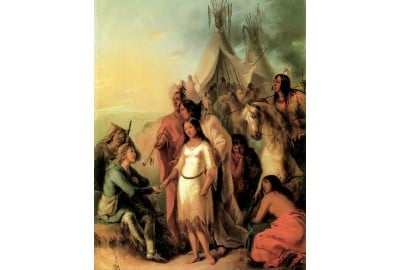
If this sounds familiar, it’s probably because you’ve seen movies like Dances with Wolves, The Last Samurai or even Avatar. Scott did it first.
Inventing Scotland
You see, Scott was part of a dedicated group of Scotsmen who desperately wanted their homeland to have a legitimate sense of identity. They wanted respect from the world, and they wanted Scotsmen to stop trying to be quite so English.
Scott’s works were an attempt to make the rest of Britain see his homeland as a great and noble nation...more so...a distinctly moral culture founded on natural laws and personal honor. What’s not to like about that?
Scotland had ceased to be a threat to the British crown a long time ago, so it was permissible...and then slowly...even fashionable...to romanticize the Highlander as a noble, chivalric sort of free man, untainted by the corruption of urban life, money and slowly creeping industrialization.
This romantic vision and the passion for anything Scottish that resulted has since been labeled 'Highlandism' by historians.
The sad irony of course is that Highlandism was growing as a cultural force at the very same time that the real Highlands were suffering severe poverty. The Clearances, where landlords forced tenants off their land to make way for English sheep, were well under way (one reason for the pesky Radical War business we mentioned earlier). Many Highlanders faced stark choices - join the military, emigrate overseas, or starve.
Scott himself said he wrote Waverley and his other works in an attempt to preserve some image of a way of life he saw on the verge of extinction. As Scott was growing up, tourism to the Highlands was becoming a thing. People went north seeking a trip back in time to see primitive ways of life amid sublime and picturesque scenery.
So Scott was catching a growing trend and ratcheting it up into a craze. He, as well as his friends in the various Celtic Societies, wanted to use Highlandism as a way to help Scotland as a nation.
Scotland’s pride was at a low ebb. Highlandism was helping to change that. Adopting Highland dress gave Lowland Scots a way of distinguishing themselves from their neighbours in England at a time when the country had never been more anglicised.
The Royal Treatment
Scott and his associates realized that some sort of “royal patronage” of the art of being Scottish, if you will, would go a long way towards fulfilling their goals. And so, when the idea of the King going north came about, they jumped on it.
This was the perfect excuse for Scots to show off and say to England and the world:
“We are here. We matter. We are a great people, regardless of what you or anyone has done to us."
Were they playing to his ego? Absolutely! George was...well...not the most impressive of monarchs. As Prince Regent he had been largely resented and ridiculed as a playboy. And this certainly did not stop when he gained the throne. And as thrilled as most Scots were at the idea of an official royal visit, there were plenty of people in both Scotland and England who saw all this as a farce and just another example of the King’s childish self indulgence.
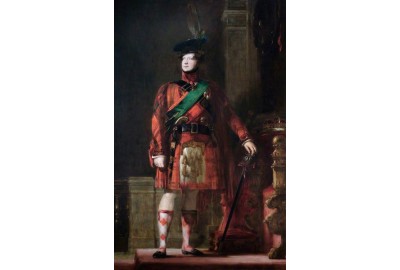
Actually, George threw himself into the role. When Scott argued that he was a legitimate heir of the old Stuart line of kingship, he was quite ready to believe. George shelled out for his own lavish Highland garb. That included a kilt of bright red Tartan, later known as Royal Sewart, as well as a dirk, broadsword and Murdock pistols. All tolled, it cost about £1,354 pounds. That’s 120,000 pounds in today’s money.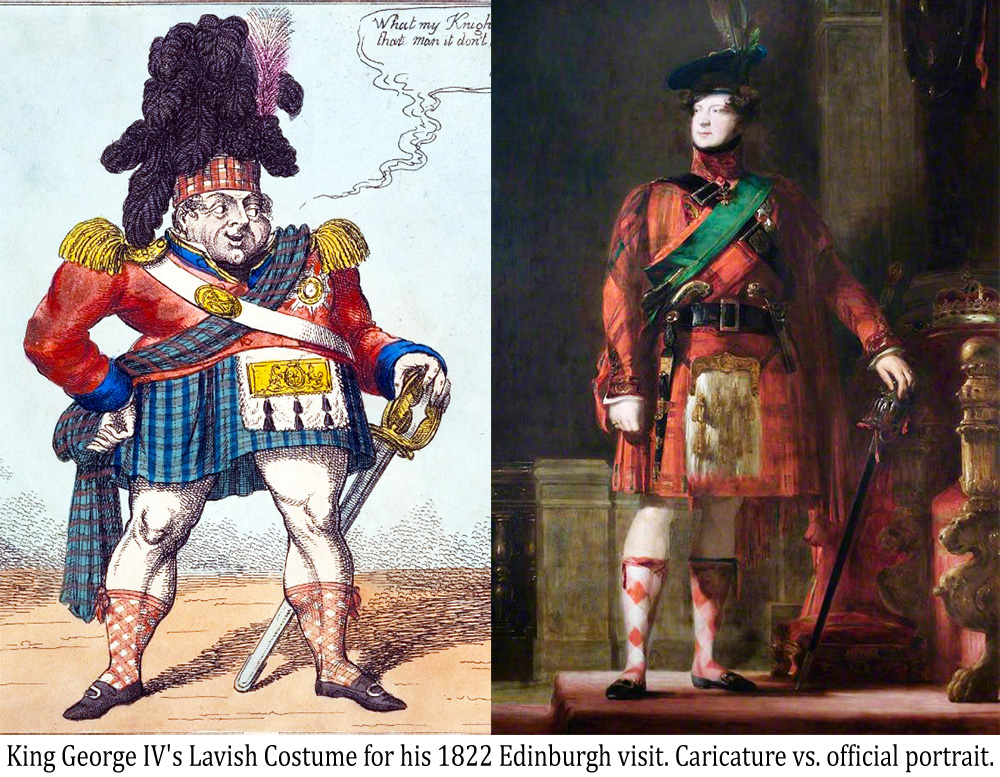
Like a great many people from all walks of life, George wanted to see himself as a Highlander - even as a Jacobite. And though many people mocked him, the people of Scotland, or at least Ediburgh, LOVED him for it. George validated them. You could say that Sir Walter and 'Georgey-porgey' really kickstarted the modern Scottish tourism industry. They also engendered our modern concept of Clans, and of clan tartan as a “thing”. (we have other articles about that)
To put it simply they made Scotland, and being Scottish, COOL.
The Royal Visit Itself
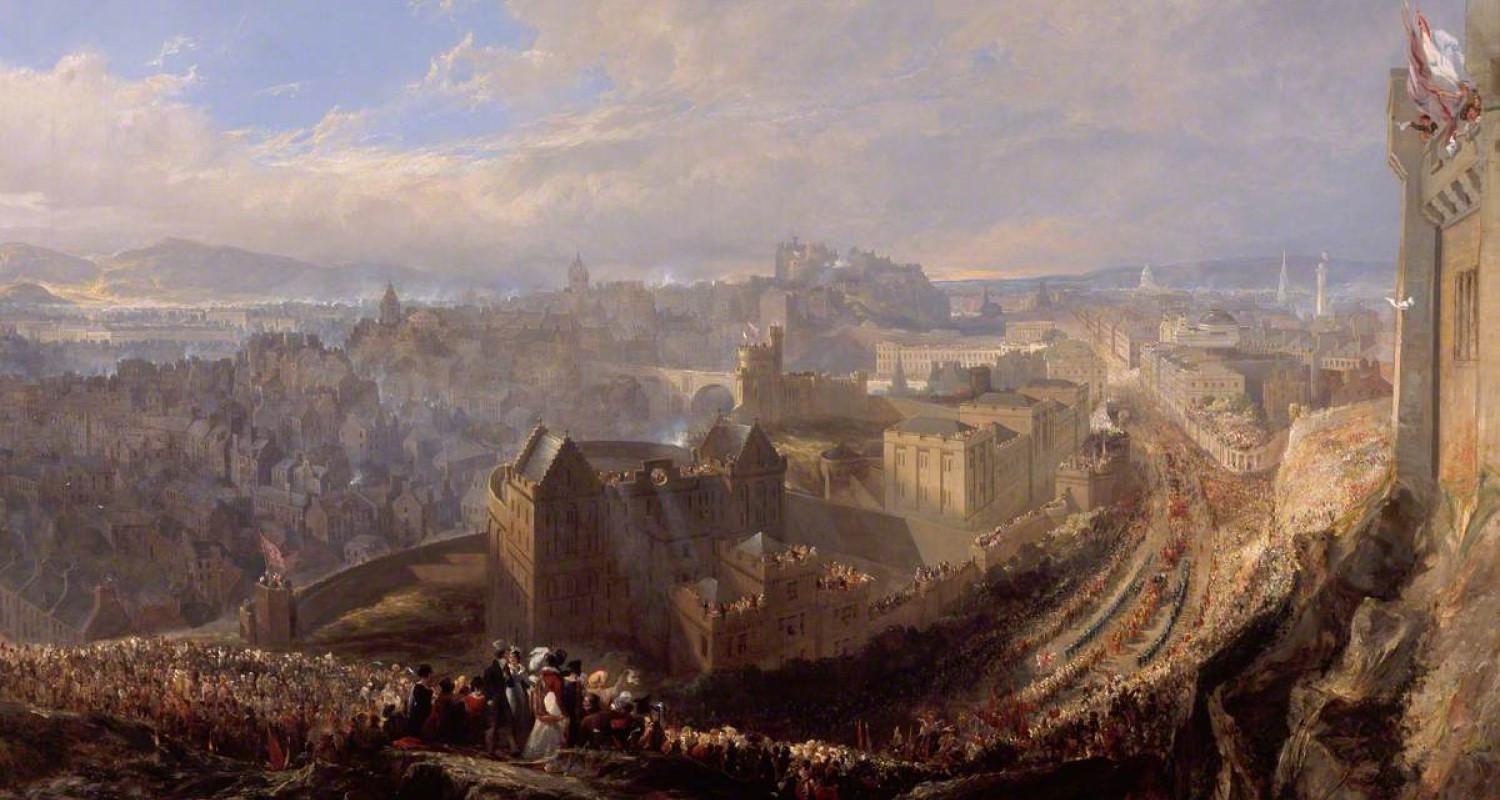
Okay, so as to the visit itself...it was simply breathtaking. This was the ultimate in regal pageantry with trumpting heralds, flashy uniforms and costumes, banquets, a 'Gathering of the Clans' for the King's benefit. And acres upon acres of tartan. In fact, people were desperate to get some.
For example, a "Grand Ball" was hosted by the Peers of Scotland. Sir Walter publicized that this was a "Highland Ball" and therefore "No Gentleman is to be allowed to appear in anything but the ancient Highland costume."
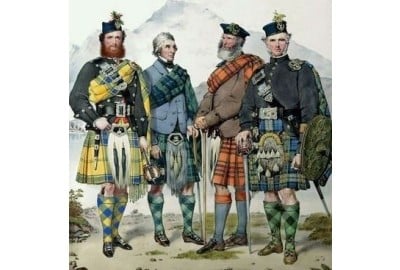
Suddenly, the elites of the Lowlands were desperate to know if they had even one drop of Highland ancestry. And tailors across Edinburgh were mobbed with orders for kilts and Highland dress, or anything that could be imagined to be highland dress. This was the birth of the so-called revival suit. And it is where most of our modern kilt fashion got its start.
Meanwhile, every actual Highland Chief and laird wanted to strut his stuff. Despite the fact that many had kicked off their tenants in favor of sheep, they attended the proceedings with as many retainers as they could muster. And they were all uniformly kilted, naturally. Many clan tartans were locked into place in 1822.
More so, if you had to point to one moment when the national dress of Scotland was born, this is it. This was rather ironic since the increasingly urbanised Lowlanders were adopting the dress and trappings of a rural people whom they had formerly despised.
But thanks to Sir Walter every Scot could now, if he chose, be a Highlander, at least in his imagination. It would take a huge Hollywood budget to even come close to visualizing how this day looked. But luckily, we have a first-hand account to help us imagine the spectacle. It comes from Robert Mudie’s ‘Historical Account of His Majesty's Visit to Scotland, Edinburgh, 1822.’ The entire pamphlet is available to read online. Here are some excerpts...
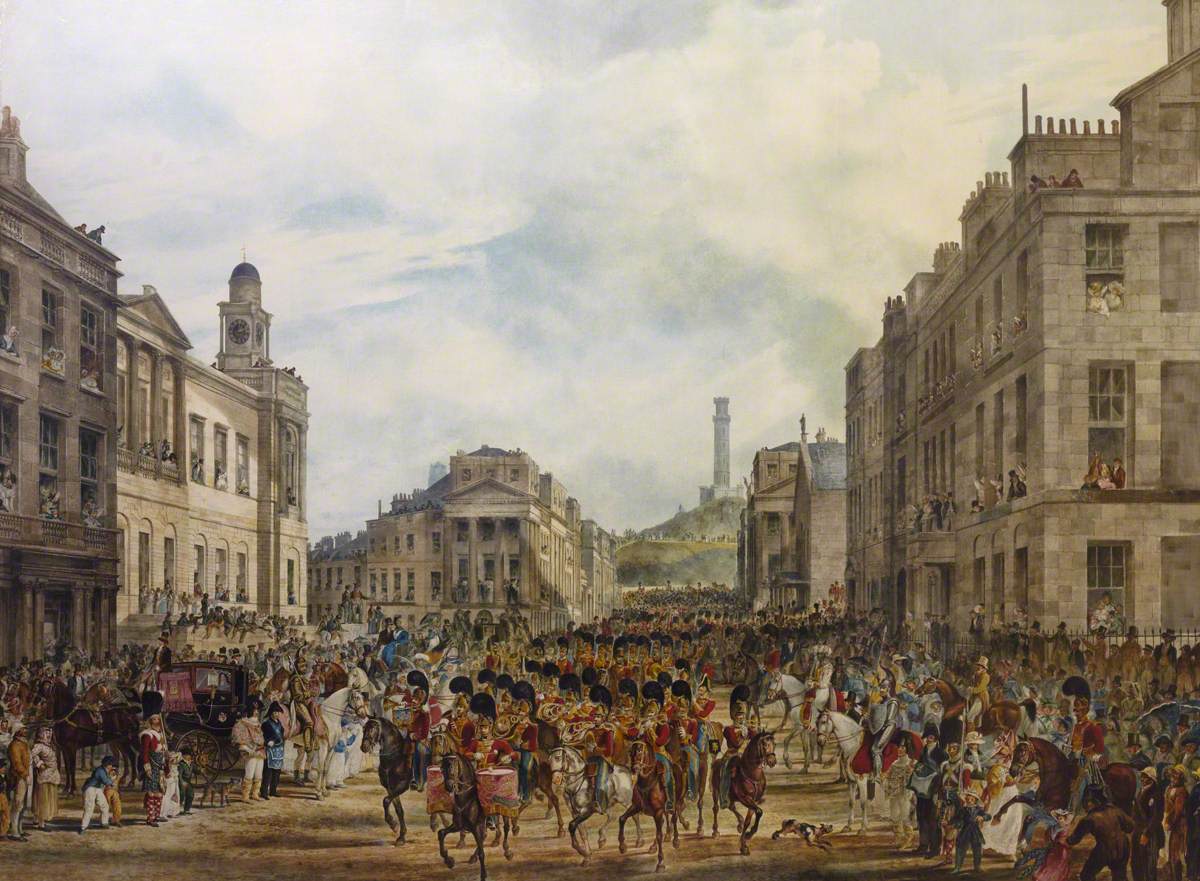
At an early hour on Thursday the 22d of August, the city presented a scene of extraordinary bustle, in consequence of the arrangements which had been agreed upon for his Majesty's procession to the Castle.
The windows and balconies of the High Street, as far as the eye could reach, were all covered with green, red or scarlet cloth and thronged to excess.
The sky was overcast with heavy clouds [and] showers threatened the postponement of the royal pageant. Notwithstanding the state of the weather, immense crowds flocked in from the surrounding country to witness a spectacle so interesting to the feelings of Scotsmen. [An] accumulating multitude occupied its streets.
The city was enlivened by the appearance of the different trades, marching with their banners displayed to the sound of martial music. The society of glass-blowers was particularly conspicuous. The officer at their head wore a glass hat, with a glass sword and targe; and each member carried a long glass rod.
About one o'clock the different public bodies had taken up the ground assigned to them. Reaching from the precincts of the Abbey to the Castle-hill, they were in lines two deep, and in many places three. To a man they were well dressed; and had crosses on their breasts, with heather or thistles in their hats.
We observed Sir Walter Scott, dressed in the Windsor uniform, walking up the centre of the street along with two other gentlemen. As he advanced, he cast a glance of lofty enthusiasm upon the marshalled bands of hardy burghers, whose military appearance must have been associated, in his mind, with awful but proud recollections. A number of those assembled did homage to the genius of the worthy Baronet, by loudly cheering him . . .
The Knight Marischal was mounted on a black Arabian horse, richly caparisoned. His dress was a white satin cloak, over a richly embroidered doublet of white and gold, with a white plume in his hat. On each side of him walked a Henchman, habited in rose-coloured satin.
The Lord Lyon was superbly mounted on an Arabian horse. He wore a long and superb mantle of crimson velvet, lined throughout with white silk. In his hand he held his baton of office, flowered with golden thistles.
When the King arrived at the barrier-gate, he alighted from his carriage on a raised platform, covered with crimson cloth, where the Lord High Constable and Lord Cathcart were stationed to receive him. The keys of the Castle were then tendered to his Majesty by Lieutenant-General Sir Alexander Hope, besides a numerous body of officers.
His Majesty walked with a firm step along the drawbridge, till coming to the inner-gate. He stepped into another carriage, which stood waiting. The grenadier company of the 66th regiment forming his guard of honour. The carriage was surrounded by the principal nobility and gentry, the Lord High Constable walking alone by the King's right hand. The procession moved slowly through the winding passages of the Castle, till it came to the half-moon battery.
The King ascended to a high platform, and presented himself to the view of his admiring subjects. At this moment a royal salute was fired from the guns on the ramparts. The bands played 'God save the King', and the soldiers on the different batteries presented arms.
The King remained on this elevated situation a considerable time, cheered by the amazing multitude who occupied the Castle-hill. One of his attendants expressed an apprehension, that the King would get wet.
'O, never mind,' replied his Majesty, with great animation, 'I must cheer the people;' and taking off his hat, he waved it repeatedly, and gave three cheers, which were heard at some distance. The people, whose enthusiasm was now wound up to the highest pitch, again made the air resound with their loudest acclamations.
The thick fog that brooded over the landscape deprived his Majesty of the full enjoyment of a prospect unequalled, perhaps, in variety and magnificence. But the same circumstances cast an air of sublimity. The broken outlines of crags and cliffs, and stupendous buildings, peered out from amidst the gloom with a wild and most romantic effect.
The King surveyed this singular prospect with the most marked interest; and, turning to his attendants, exclaimed, 'This is wonderful! - what a sight!'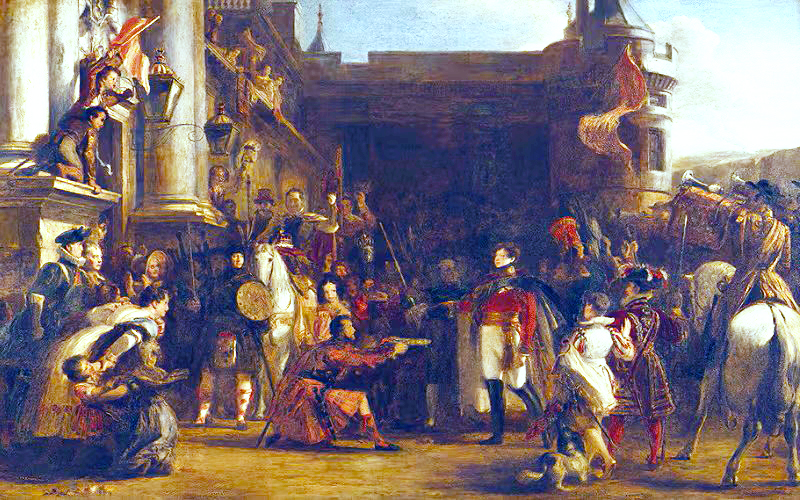
Conclusion
In closing I’d like to make one other small point in favour of King George. One of the many delights he sampled during his visit was Scottish whisky, which was still technically illegal. George was happy to throw his support behind the Excise Act of 1823 which solved this injustice.
So what do you think? Was the Royal Visit just so much pomp and circumstance? Or was it a legitimate honoring of Scottish culture and values?
Did Sir Walter Scott “invent” Scotland, as some historians suggest? Or would a rebirth of Scottish identity have happened without him? Without “Highlandism”?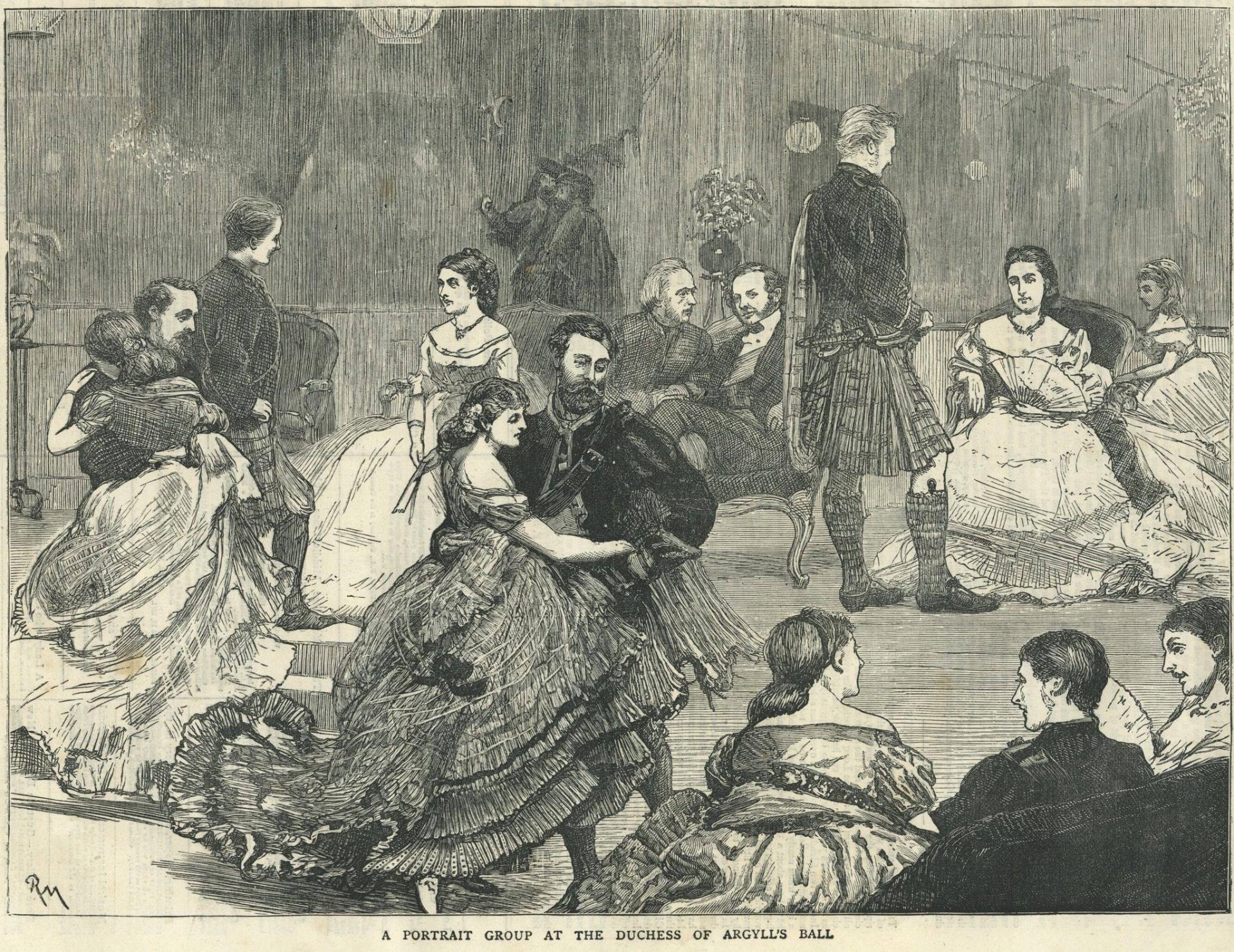
Summary:
Historical Context & Occasion
-
In August 1822, King George IV made the first visit to Scotland by a reigning British monarch in about 140 years; the previous visit was by Charles II.
-
The visit had political motives: Scotland was experiencing economic hardship and political unrest (e.g., the Radical War), so Parliament encouraged the trip to build goodwill.
-
Sir Walter Scott, a celebrated Scottish author and cultural figure, was appointed to organize and stage-manage the visit.
Sir Walter Scott’s Role
-
Scott used his knowledge of Scottish history and romantic writing to shape the pageantry of the visit and present a unified cultural identity.
-
He planned ceremonies, festivities, and public rituals that blended historical symbolism with theatrical spectacle.
Pageantry & Symbolism
-
The celebrations included lavish processions, receptions, and events in Edinburgh and beyond.
-
Scott encouraged Scottish symbols like tartan and Highland dress to be prominently worn by participants.
-
King George IV himself wore a richly made Highland outfit (including tartan), reinforcing Scottish cultural imagery.
Cultural & Social Impact
-
The visit fueled a resurgence in pride for Scottish heritage and helped transform tartan and the kilt into national symbols embraced across Scotland.
-
Demand for tartan and Highland dress soared, contributing to a broader revival of Scottish cultural identity.
-
The spectacle influenced how Scotland’s national character and traditions were viewed both internally and abroad.
Enduring Legacy
-
The 1822 visit is widely regarded as a defining moment in cementing the modern image of Scotland’s national dress, traditions, and cultural pride.