
The History of Tourism in Scotland: From Ancient Pilgrimages to a World-Class Destination
Scotland has long captured the imagination of travelers. Towering mountains, windswept coastlines, ancient castles, mysterious lochs, and centuries-old traditions create an atmosphere unlike anywhere else in the world. Today, millions of visitors journey to Scotland each year to experience its rich heritage, vibrant cities, Highland landscapes, whisky distilleries, golf courses, and world-famous festivals.
Yet Scotland's appeal as a travel destination did not emerge overnight. It evolved gradually over thousands of years, shaped by religion, commerce, politics, literature, transportation, and evolving ideas about leisure. Not to mention imersing yourself in your own personal heritage tory.
The story of tourism in Scotland is, in many ways, the story of Scotland itself. Every era left behind monuments, traditions, and cultural landmarks that continue to attract visitors. Medieval pilgrims walked across the country to sacred shrines centuries before sightseeing became fashionable. Noble families traveled north during the Enlightenment to explore landscapes they had only read about. Victorian railway passengers transformed remote Highland villages into thriving holiday resorts. More recently, films, television series, and global events have introduced Scotland to entirely new generations of travelers.
Unlike many destinations where tourism developed primarily around beaches or favorable weather, Scotland's appeal has always rested on something deeper. Its history, myths, landscapes, architecture, and living traditions all blend together to create an experience that feels authentic and timeless. Visitors from the USA can truly immerse themselves in stories that stretch back over a millennium. Or at least appear to.
Understanding how tourism developed across the centuries provides valuable insight into why Scotland remains one of Europe's most beloved travel destinations. This series of articles is your quick overview of why we go, why we see what we see, and how to do a bit of personal "time travel" while on holiday.
Travel For Survival: Ancient Scotland
Long before anyone considered themselves a tourist, people traveled across Scotland for the most practial of reasons. Merchants transported goods between settlements, farmers moved livestock across seasonal grazing lands, soldiers marched through strategic mountain passes, and religious leaders visited isolated communities to spread Christianity.
Travel in early Scotland was demanding. Thick forests covered much of the landscape, roads were little more than worn tracks, and the fickle weather made journeys dangerous. Rivers often lacked permanent bridges, forcing travelers to rely on ferries or shallow crossings.
Despite these obstacles and the primitive images we see in modern media, Scotland was far from isolated.
Communities traded with Ireland, Scandinavia, England, and continental Europe. Archaeological discoveries reveal imported pottery, jewelry, weapons, and luxury goods that demonstrate Scotland's participation in extensive trading networks. These early movements of people and goods laid the foundations for the transportation routes that would later serve travelers and pilgrims.
Many ancient paths eventually became military roads under Roman occupation in the lowlands. Although the Romans never conquered all of Alba, they established forts, camps, and roads that improved movement across certain regions.
Meanwhile, various tribal peoples such as the Picts, Gaels, Britons, and later the Norse settlers developed their own networks connecting villages, religious centers, and trading posts. Often using the coasts and waterways as thoroughfares.
EXPLORE IT TODAY:
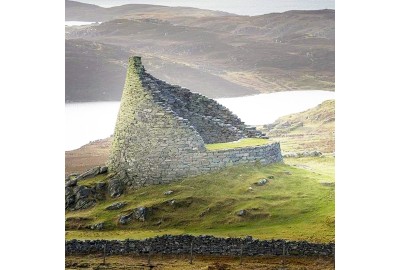
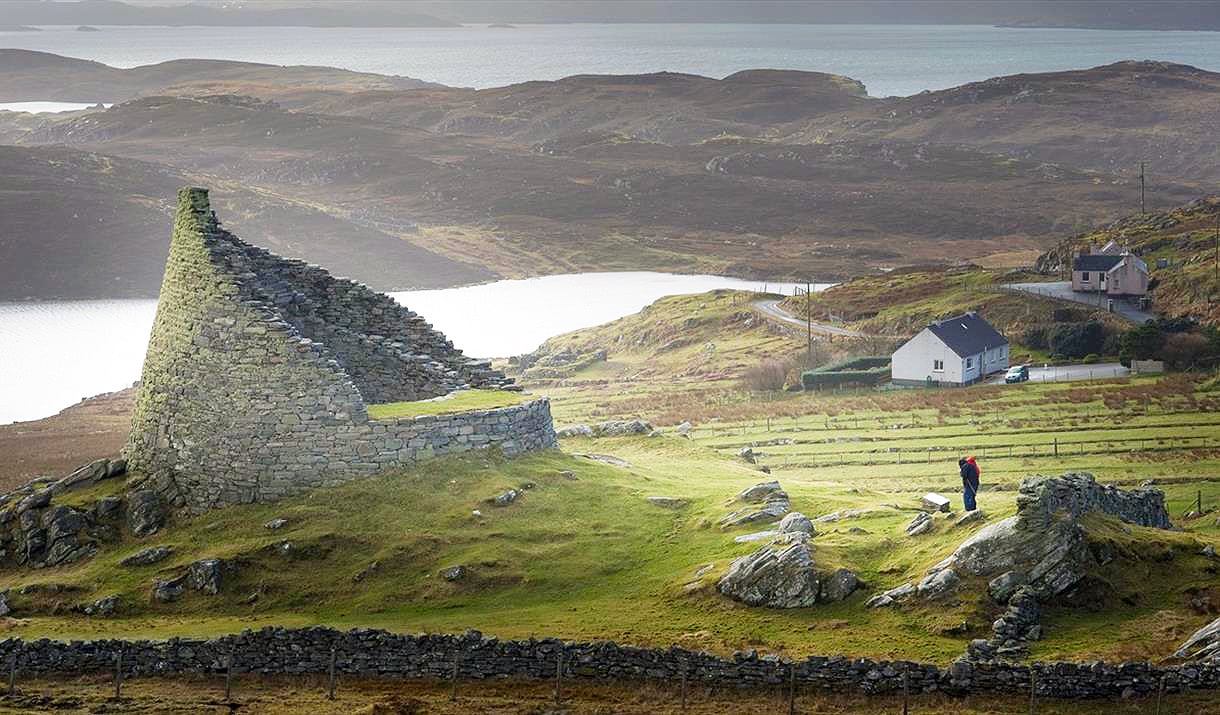
There are plenty of fascinating relics of ancient Scotland to explore including Pictish sites and the mysrterious Clava Cairns. However, one item not many Americans think to explore is a broch house. These were once a mainstay of ancient Celtic life... one part fortress - one part farm house, and still the subject of intense study. They can be up to 2,200 years old! You can explore a remarkably well-preserved, real Iron Age drystone broch house at Dun Carloway Broch on the west coast of the Isle of Lewis.
Sacred Journeys: Pilgrimage in Medieval Scotland
“Organized” long distance travel in the medieval period more often than not was about religion.
Christian pilgrimage was an important part of European life. Believers traveled vast distances to visit shrines associated with saints, miracles, or holy sites. Scotland possessed several destinations that attracted seekers from both within Britain and overseas.
Among the most famous was St Andrews.
According to tradition, relics of Saint Andrew, one of Jesus' apostles, were brought to eastern Scotland during the early medieval period. Regardless of their authenticity, the relics transformed the church and supporting town of St Andrews into Scotland's foremost religious center. By the twelfth century, pilgrims were venturing here from across Europe.
The journey itself formed part of a spiritual experience. Travelers walked for weeks or months, stopping at monasteries, inns, and churches along designated routes. Local communities benefited economically by providing food, lodging, horses, and supplies.
This “religious tourism” stimulated local economies and helped connect people with news of the outside world.
The most important Scottish pilgrimage destinations included:
-
Whithorn, associated with Saint Ninian
-
Iona, founded by Saint Columba
-
Dunkeld Cathedral
-
Melrose Abbey
-
Paisley Abbey
Monasteries in particular became centers of hospitality with many maintaining guest houses specifically designed for pilgrims. Monks recorded journeys, copied manuscripts describing distant places, and welcomed visitors from throughout Europe. You might say these religious institutions helped establish Scotland's earliest hospitality traditions. Although we should never discount the innate customs of hospitality all tribal societies throughout history have enforced. It was a matter of survival... the guest you let over-winter this year may be helping you next winter. Scotland certainly inherited some of these cultural attitudes from the Norse, but I digress.
As much as trade or perhaps more so, pilgrimage encouraged improvements in roads, bridges, ferries, and accommodations. Communities along popular routes developed services that later benefited merchants and secular travelers. The bones of the country were being formed.
Even after the Protestant Reformation of the sixteenth and seventeenth centuries made pilgrimage a taboo, many of these now ancient routes remained important transportation corridors.
EXPLORE IT TODAY:
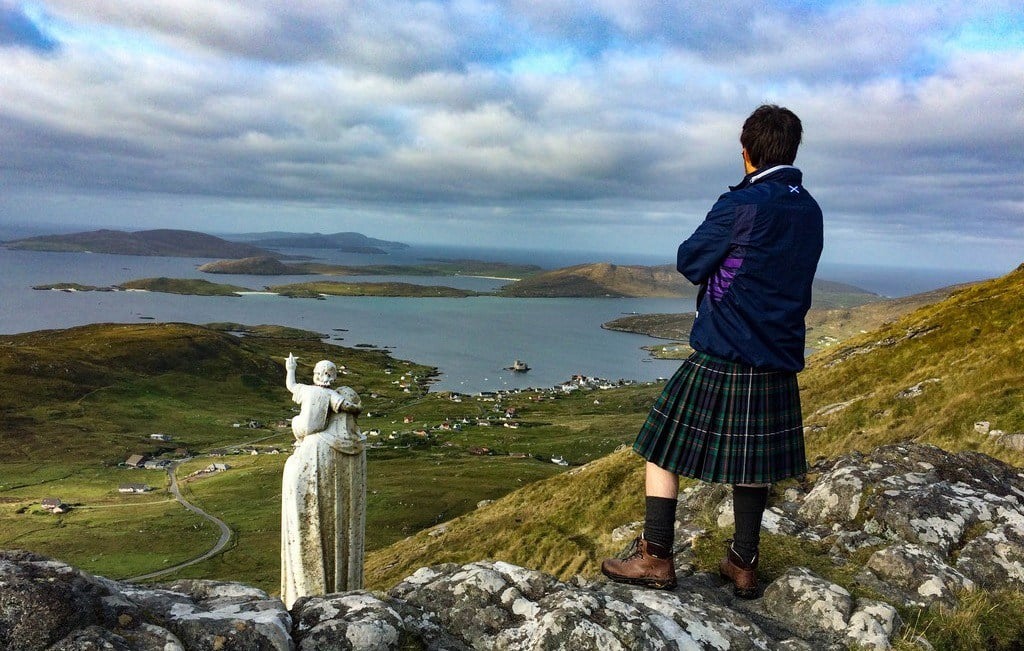
Retracing some of the old pilgrim’s routes and visiting their destinations can be a very rewarding way to structure a visit to Scotland. Here is The Guardian's article on taking a modern pilgrimage.
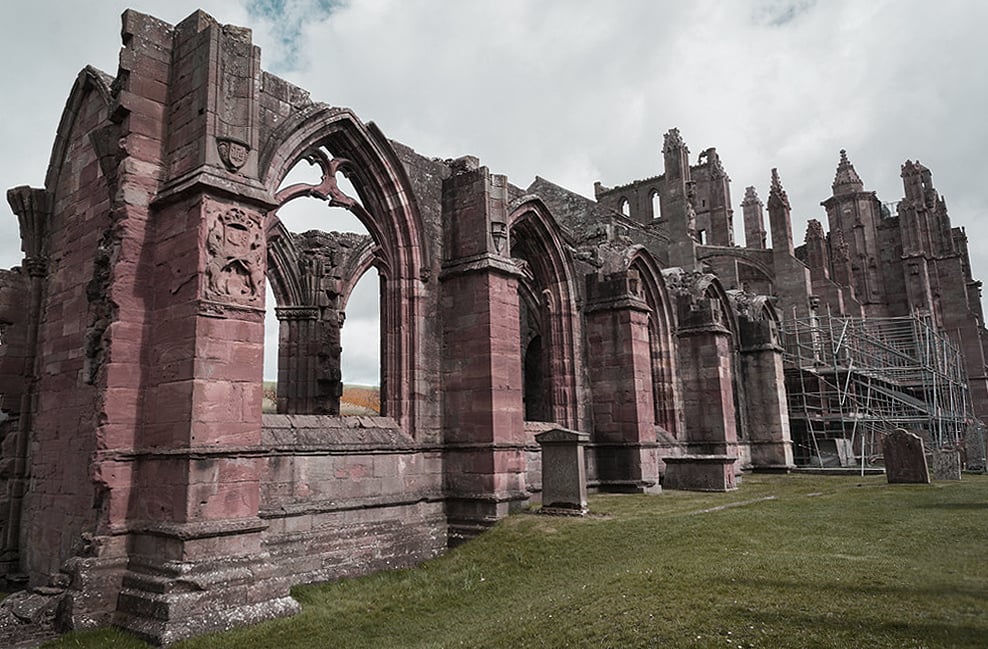
There are plenty of monastary sites you can still visit like Pluscarden Abbey in Moray (still active), the restored Iona Abbey, and the stunning ruins of Melrose Abbey and Inchcolm Abbey.
Scotland Through Foreign Eyes
Foreign diplomats, scholars, and merchants also visited Scotland during this long period. And it should be mentioned that Scotsmen did travel abroad as well. The Highlands may have been relatively isolated, but Scotland generally was not. She developed very strong connections to France, for instance.
Although their numbers remained relatively small, the foreigners left us written descriptions that provide valuable insights into medieval and Renaissance Scottish society. These accounts often emphasized Scotland's dramatic scenery, mighty castles, and distinctive customs. Such observations would later become central themes in travel literature.
One of the best-known examples is the French chronicler Jean Froissart, who traveled through Scotland in the fourteenth century while gathering material for his Chronicles. Received at the court of King David II, Froissart wrote about the hospitality he encountered, and the rugged character of the people and landscape. His widely-read accounts helped shape how medieval Europe viewed Scotland… as a land of powerful nobles, dramatic scenery, and tenacious resilience. Some things never change.
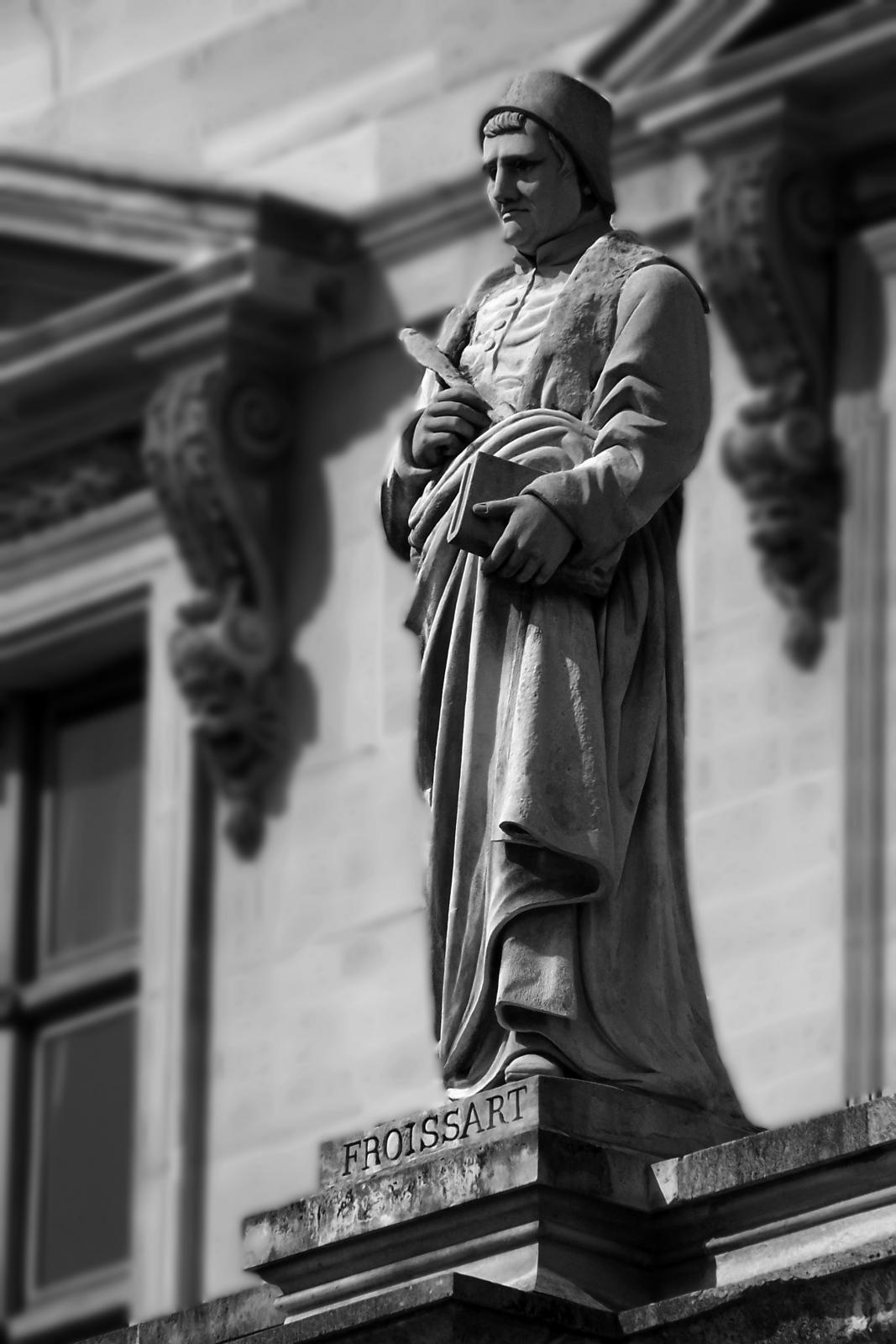
And of course the other common theme was emphasizing the sheer wildness of northern Scotland, portraying it as an untamed natural frontier… the very edge of the world. Ironically, this later became one of Scotland's greatest attractions!
EXPLORE IT TODAY:
One of Froissart's main topics was life in royal courts and the emerging culture of Chivalry. For a taste of that and so much more, it is hard to beat Stirling Castle.
The Renaissance and Expanding Curiosity
The Renaissance transformed attitudes toward travel throughout Europe.
Education increasingly emphasized firsthand observation rather than relying solely on ancient texts. Scholars traveled to universities, artists sought exotic inspiration, doctors sought out new cures, and wealthy families encouraged exploration as part of intellectual development.
Scottish universities became increasingly important centers of learning during the Renaissance and early modern period. Long-established institutions such as St Andrews (1413), Glasgow (1451), and Aberdeen (1495) attracted students from across Britain and continental Europe, while the University of Edinburgh, founded in 1583, reflected the growing influence of Renaissance humanism and the Protestant Reformation.
In the centuries that followed, Edinburgh would become one of Europe's leading intellectual centers during the Scottish Enlightenment.
Roads, Inns, and the Slow Improvement of Travel
Until the eighteenth century, transportation remained the greatest obstacle to widespread travel.
Road conditions varied enormously. Many routes became nearly impassable during winter, while heavy rains frequently turned dirt roads into deep mud. River crossings posed additional challenges, especially in remote Highland regions.
Travelers often relied on horseback rather than wheeled vehicles.
Where inns existed, their quality differed considerably. Some provided comfortable meals and beds, while others offered little more than shelter from the elements.
In the highlands, this was just a matter of life. The ancient subsistence lifeways of the Highlanders, guided by the Clan System, felt timeless. Few had any reason to want, or envision change.
Small market towns such as Doune in Stirlingshire (Perthshire) were their main contact with the outside world. Here they would buy supplies and goods (including weapons made of German steel) and traded cattle.
In the lowlands, market towns were growing and commerce was expanding rapidly. Coaching routes connected by inns linked major cities like Edinburgh and Glasgow while harbors facilitated coastal travel and access to global trade.
What really brought these two worlds together would be war.
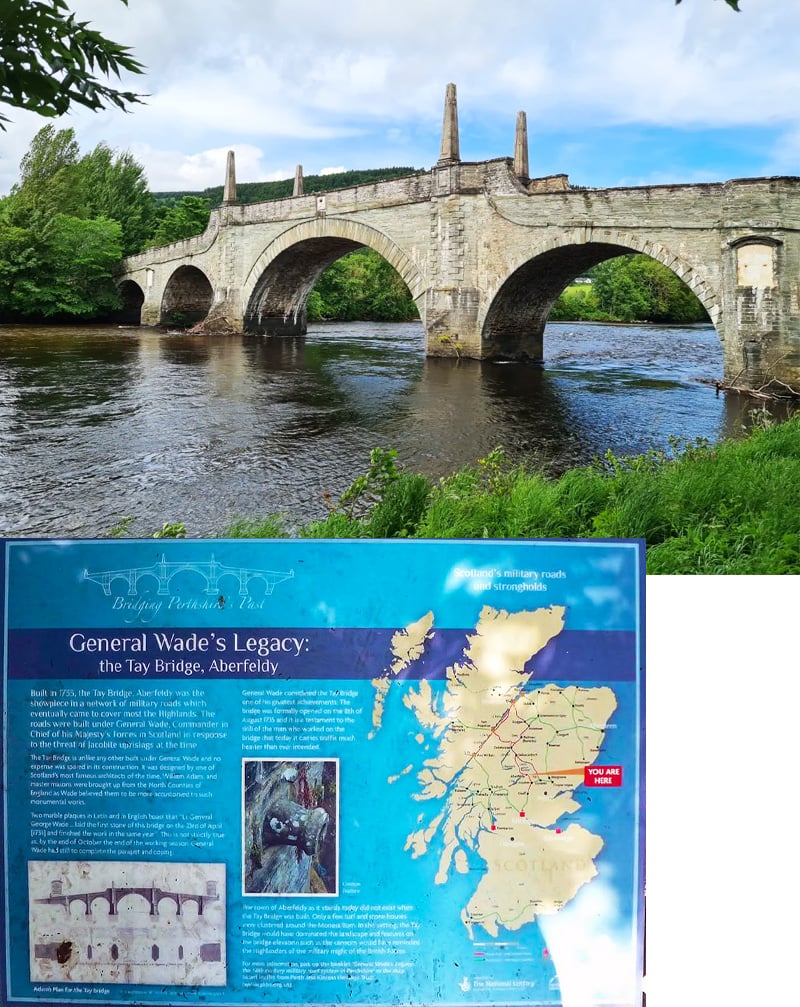
The Legacy of Wade's Roads...
The Jacobite rebellions of 1715 and 1745 made clear to loyalist Scottish authorities as well as the British government, the need for more roads.
In the early 1700s, the Highlands were difficult for Hanoverian troops to reach. After the Jacobite Rising of 1715, the government launched one of the most ambitious engineering projects Britain had yet seen.
General George Wade, appointed Commander-in-Chief in Scotland in 1724, was tasked with building a network of military roads that would allow soldiers to move quickly through the Highlands, linking forts, barracks, and strategic passes.
Between 1725 and 1740, his crews built about 250 miles of road and 40 bridges. His successor, Major William Caulfeild, expanded the system to nearly 900 miles by the 1760s.
Although Caulfeild ultimately built the lion's share of the roads, Wade still got the credit. Take this popular verse for example:
"Had you seen these roads before they were made, you would lift up your hands and bless General Wade."
By 1745, these simple yet effective roads were strengthening government control, supplying remote garrisons and making it far more difficult for Jacobites to move strategically. Some believe they were crucial in the defeat of the Bonny Prince's forces.
It’s ironic that today we will walk, hike and drive through the misty Highlands and dream of our Jacobite forebears on roadways which were conceived as a tool to deconstruct their way of life.
EXPLORE IT TODAY:
Edinburgh Emerges as a Cultural Capital
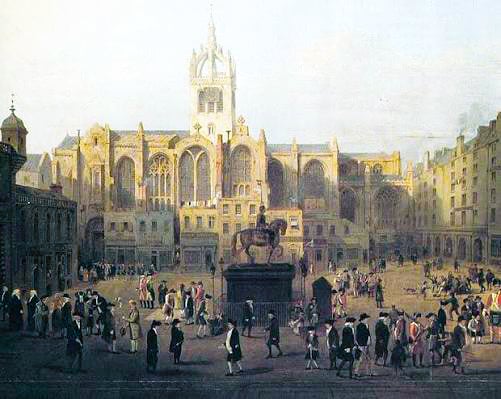
By the late seventeenth century, Edinburgh had established itself as one of northern Europe's most influential cities. Narrow medieval streets bustled with merchants, lawyers, clergy, students, and craftsmen. The capital's towering stone tenements impressed visitors as much as the castle and public edifices.
It was a place of striking contrast. In A Tour Thro' the Whole Island of Great Britain (1727), English writer Daniel Defoe praised Edinburgh's "buildings" as "surprizing both for strength, for beauty, and for height," yet also observed that "in no city in the world so many people live in so little room as at Edinburgh."
Coffee houses, lecture halls, libraries, and universities became attractions in their own right. And with good reason… the city was home to Enlightenment thinkers such as David Hume, Adam Smith, James Hutton, and Dugald Stewart.
Increasingly, people visited not merely to conduct business but to participate in intellectual life.
For perhaps the first time, Scotland was drawing visitors because of its culture as much as its landscapes. This marked an important turning point.
We can not yet speak of ‘Tourism’ as a distinct activity or phenomenon, but as the 18th century rolled on, we see the blossoming of a full spectrum of reasons to go to Scotland. Reasons that have stood the test of time.
There was just one element missing…. Identity, a national character. Nature is one thing. City culture is fine. But the real core of what draws many of us to visit is totally emotional.
In the next chapter we’ll look at how Scotland became the Scotland of our hearts ... and of our imaginations.
End of Part One.
In Part Two, we will explore the eighteenth century, including the Grand Tour, the Jacobite era, the rise of Romanticism, Samuel Johnson's famous journey, Robert Burns, and how Sir Walter Scott transformed Scotland into one of Europe's most desirable destinations.
