Origins and Early History
The Clan Cameron is one of the most storied Scottish Highland clans, with a rich past entwined with Scotland’s turbulent history and a vibrant presence today. The clan is traditionally recognized as a West Highland Scottish clan with ancestral lands in the rugged Highlands of Lochaber.
The clan name “Cameron” likely derives from the Gaelic Camshron, meaning "crooked nose" though some theories suggest alternative Gaelic roots referring to geographical features like "crooked hill."
Donald Dubh (the Black Donald) is generally regarded as the first authentic chief of Clan Cameron, which was established as a cohesive group by the early 15th century. Before that time, traditions and genealogies vary, but clan roots are usually positioned in the broader Gaelic and Highland milieu. In other words, they were just kind of always there. The Camerons’ Lochaber territory was roughly 12 by 16 miles of land near what is now Fort William.
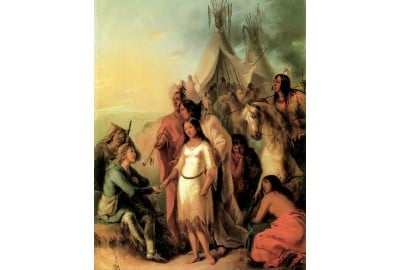
Here they sustained themselves through the ancient lifeways of cattle herding and farming. And naturally there was the occasional raid on their neighbors; something the tribal warrior culture of the Highlands actually depended upon both economically and as a source of social cohesion much like other societies across the globe (for example the indigenous tribes of the North American plains).
A Heritage of Warriorship and Leadersip
Clan Cameron’s history is marked by bouts of violence and alliances typical of Highland politics. The key factor being that they were quite good at it. The Camerons engaged in long-standing conflict with the Clan Mackintosh and the Chattan Confederation. It spaned the 14th–15th centuries and involved raids, ambushes, and pitched battles. Camerons eventually won control of Lochaber, despite Mackintosh holding legal charters showing that power, not paperwork, ruled the Highlands.
Chiefs of the clan were leading Highland figures and Jacobites. Sir Ewen Cameron of Lochiel was a renowned warrior and supporter of the Stuart monarchs during the mid-17th century. In the 1745 Jacobite Rising, Donald Cameron of Lochiel (“The Gentle Lochiel”) personally led his clansmen in support of Bonnie Prince Charlie, culminating in their presence at the Battle of Culloden; the pivotal and tragic apocalypse of Jacobitism that led to massive repercussions for Highland clans.
After Culloden, many Highland clans, including the Camerons, saw their lands forfeited temporarily and traditional Highland dress and customs suppressed. This loss and subsequent Clearances led many Camerons to emigrate abroad in the 18th–19th centuries.

I am a Cameron - What is my Clan Crest, Motto and Coat of Arms?
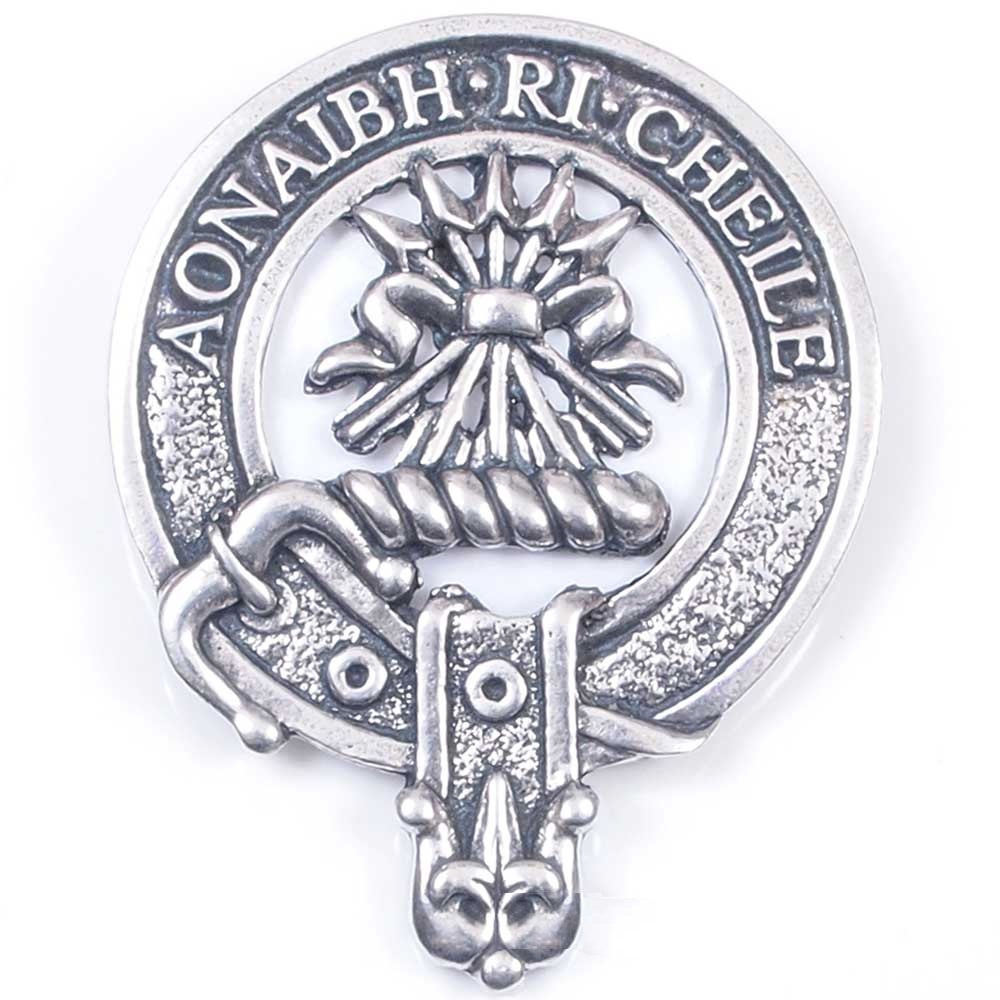
The traditional crest of Clan Cameron features
The crest of Clan Cameron consists of a sheaf of five arrows with the points upwards drawn "proper" (this is realistically) and tied with a "band Gules" (a red colored ribbon or belt). The crest symbolizes the unification of the five branches of the clan.
However there is also another, presumably older, crest consisting of a "dexter arm" (dexter is the Heraldic term for right-side while sinister means left side).
How did they get two? Well, in the mid-18th century, the Camerons of Lochiel successfully allied the five disparate family groups:
1) MacMartins or Camerons of Letterfinlay
2) Camerons of Glen Nevis
3) Camerons of Callart and Lundavra
4) Camerons of Erracht
5) Camerons of Clunes
The arrow sheaf crest dates back to at least 1745 and represents this politcal unification. It has become the more popular choice. And this also accounts for the Cameron clan motto: Aonaibh ri cheile ; Gaelic for "Unite" or "Let us unite."
The Camerons also have what might be the single most macho war cry of all all time: "Chlanna nan con thigibh a' so 's gheibh sibh feòil!" That is..."Sons of the hounds, Come and get flesh!" Dogs of war indeed!
The current chief is Donald Andrew Cameron of Lochiel (the 28th), maintaining ceremonial and cultural leadership.
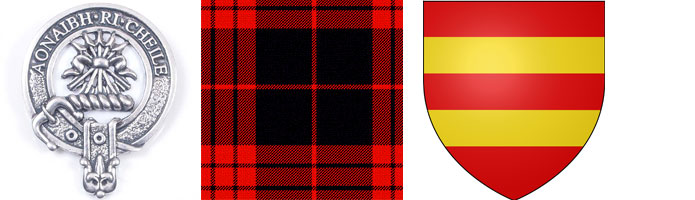
Cameron Tartans:
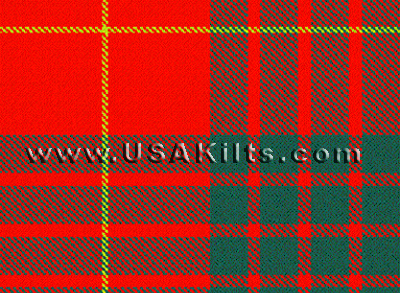
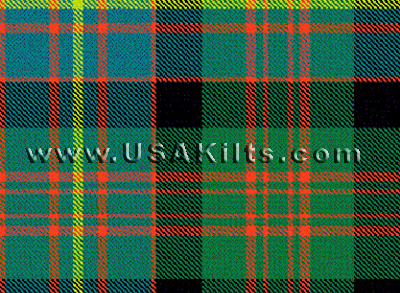
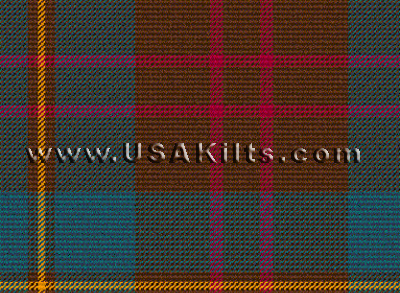
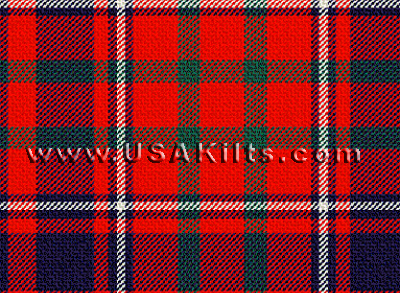
The Scottish Register of Tartans, the official national repository for tartan designs, lists multiple Cameron-associated tartans (setts) including the main Cameron tartan, Cameron of Erracht, and Cameron of Lochiel. Which tartan is most closely associated wit your family line will, hopefully, become clear as you explore your geneaology. However as a member of the clan you are welcome to wear any of the various Setts. Do not let perfectioin in your researech prevent you from showing your heritage!
Is there a Clan Cameron Seat I can visit?
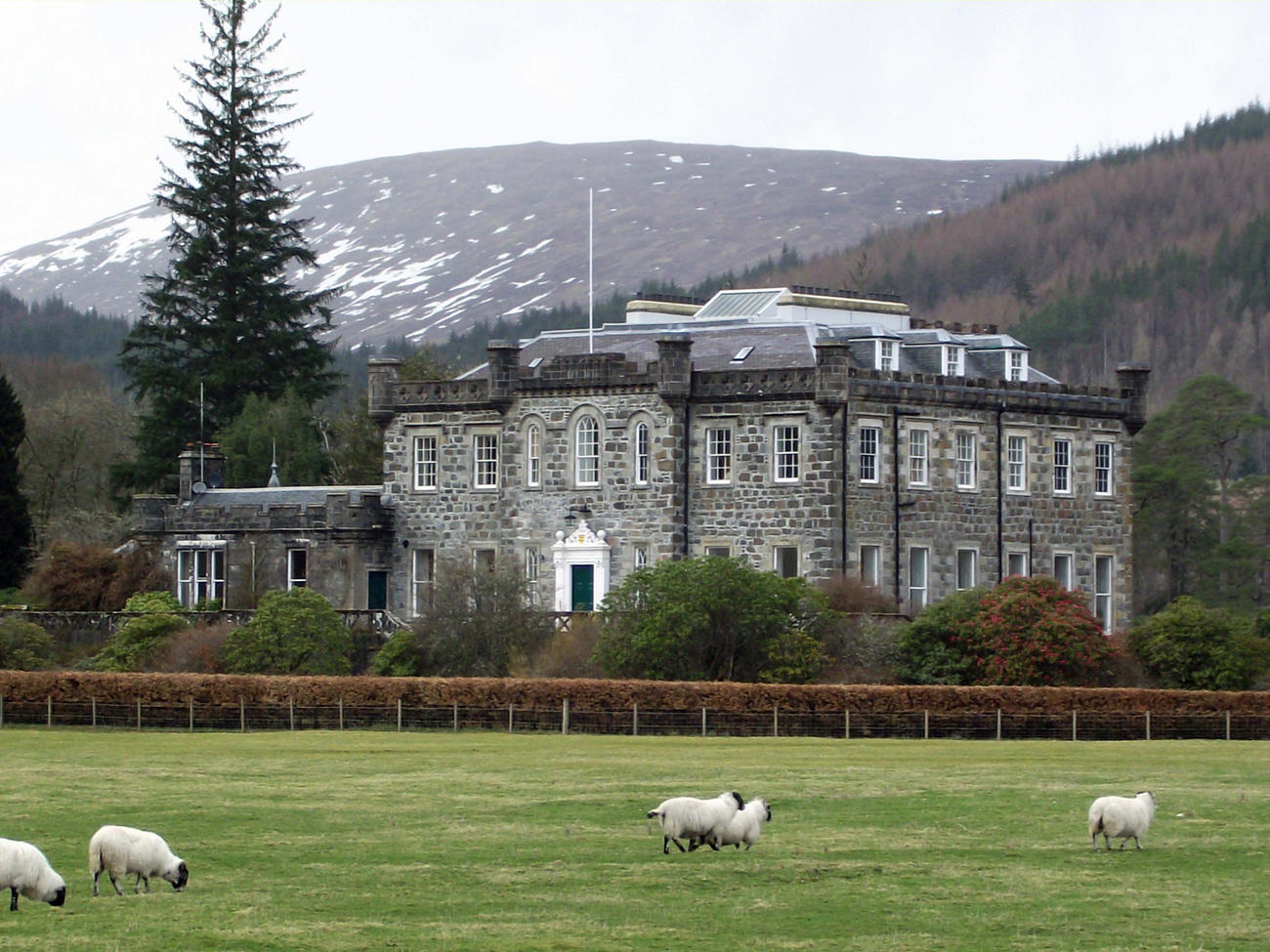
The Camerons’ historic seats reflect changes through the centuries. Tor Castle was an early stronghold before the mid-17th century. Achnacarry, established later, became the enduring seat of the chiefs and remains tied to the modern clan’s identity. Start with Achnacarry, but know that either site, as well as the countryside around Lochaber, will make for an enriching travel experience.
But remember you do not have to leave home to enjoy connecting with your clan! The Cameron heritage is very well represented globally through the Clan Cameron Association (Clan-Cameron.org) which actively promotes the clan's long history and heritage. They are a crucial group to explore if you are researching your genealogical connections. There are International Gatherings and registrar services for anyone tracing roots, including archived immigration records and professional genealogy assistance!