Clan Symbols and Identification in Scottish History
What Is Ancient, What Is Early Modern, and What Is Modern Tradition
When we think of a Scottish clan, typically the first thing that comes to mind is the tartan. Every clan has one, right? And they are all designs that have been worn for hundreds of years, right?
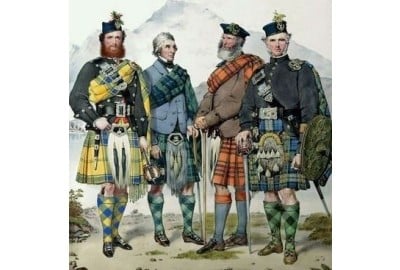
Well, you may already know it, but most clan-specific tartans are not older than 200 years; a result of the Tartan Craze of the 19th century and the explosion of Scottish pride that went with it.
The development of clan tartan is a whole separate topic. But what if I told you there is a far older form of clan identification? One that seems to go back far into the Middle Ages?
Origins of Clan Crest Badges: A Later Development
“Is it the Clan Crest?” I hear you ask? Nope. However clan crests as we all wear today are pretty old. Clan crest badges as we recognize them today are a late 18th-century innovation, emerging after the collapse of the traditional clan system.
After the defeat of the Jacobites in the 1745-46 Uprising and the so-called Disarming Acts which followed, clans ceased to function as military or legal units. Identity shifted toward symbolic allegiance. Latent Jacobitism survived for a time in secret and Jacobite groups had a whole array of symbols and codes of their own.
As things calmed down and restrictions were lifted, those wishing to show their pedigree, allegiance and general pride wanted something special. As a result, chiefs increasingly allowed followers to display their family crests as badges of loyalty.
Bear in mind there is an essential difference between an Heraldic crest and a clan badge:
-
Heraldic crests – medieval armorial devices belonging only to individuals (chiefs or nobles) originally based on medieval helmet crests worn in knightly tournaments.
-
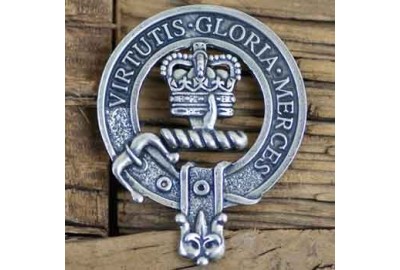
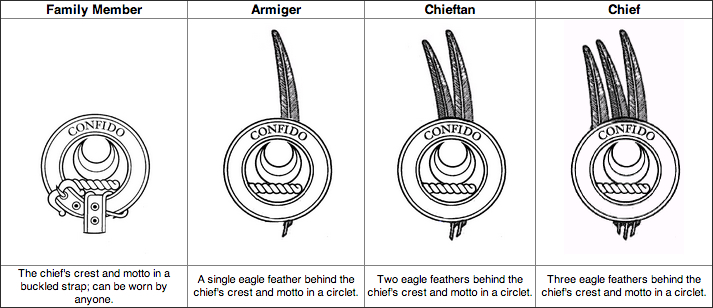
Clan crest badges – badges worn by followers, usually featuring a chief’s crest encircled by a strap and buckle. (more on that below)
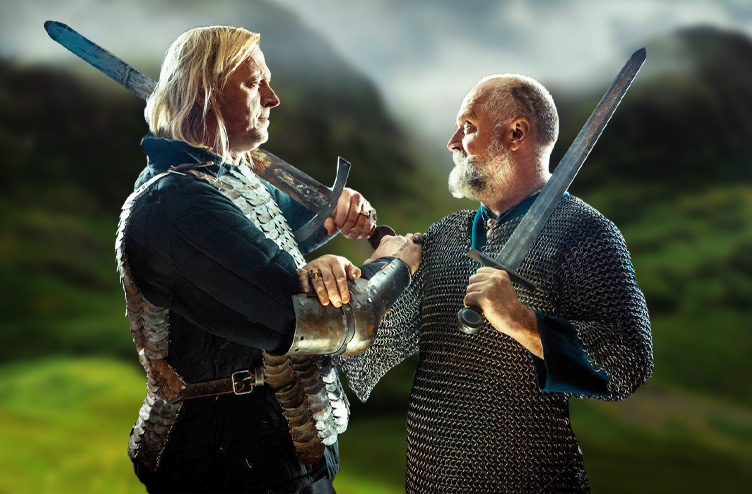
While heraldic crests existed in Scotland from the Middle Ages, ordinary clan members did not wear them. Okay, so how did clan members identify each other?
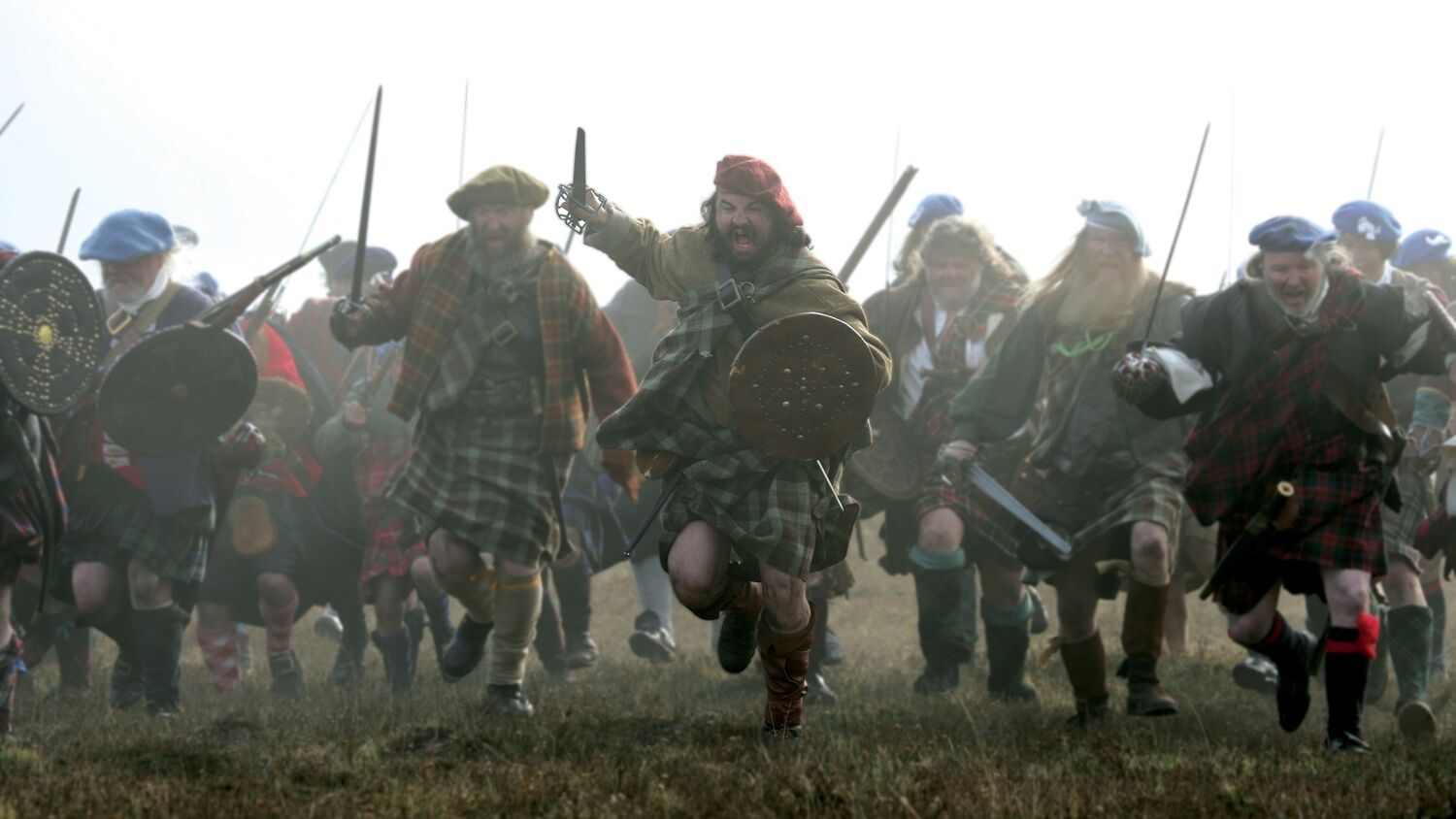
Medieval and renaissance-era clan identity relied more on social structure, loyalty, and oral tradition than on fixed visual symbols. What mattered to a Scottish clansman was:
> Kinship and local loyalty
> Shared military service
> Oral tradition and genealogy
> Association with specific lands and landscapes
> War cries (sluagh-ghairm)
Notice that last one on the list? War cries were an easy and effective way to communicate on the battlefield, not to mention any time you wanted to build morale amongst your men. In many cases, the war cry became the Clan Motto as well. But again, this is not a visual identifier.

Plant Badges: The Earliest Scottish Clan Identifiers
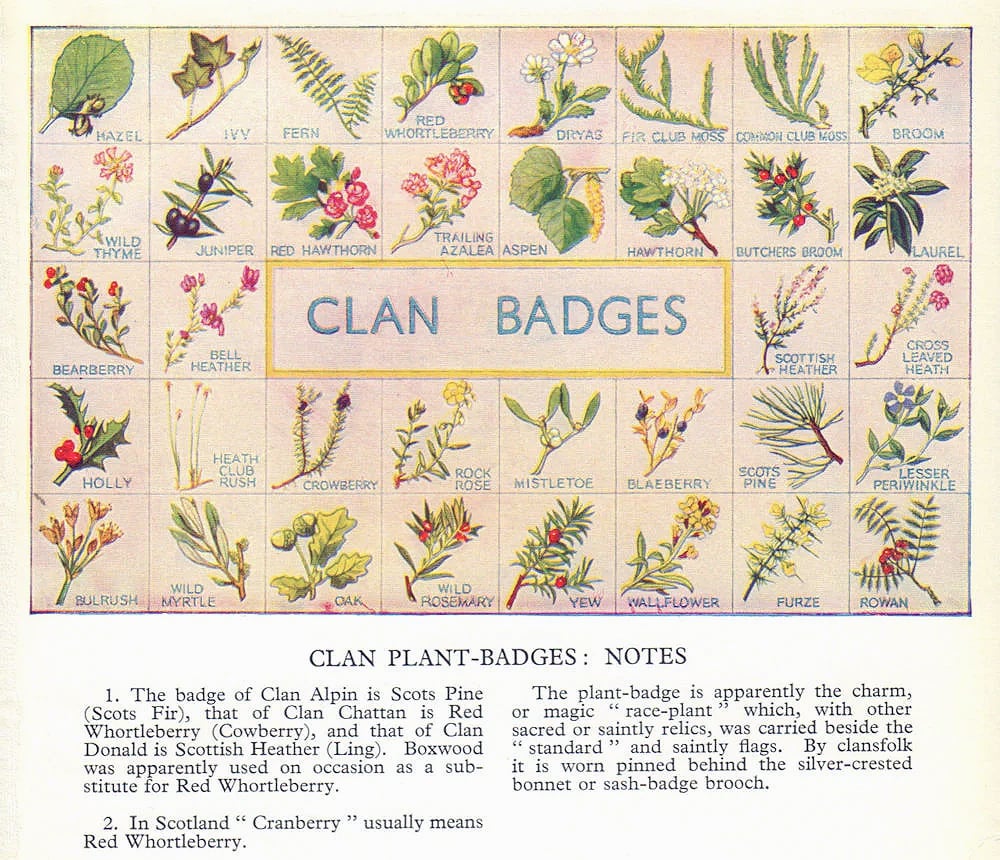
What are plant badges?
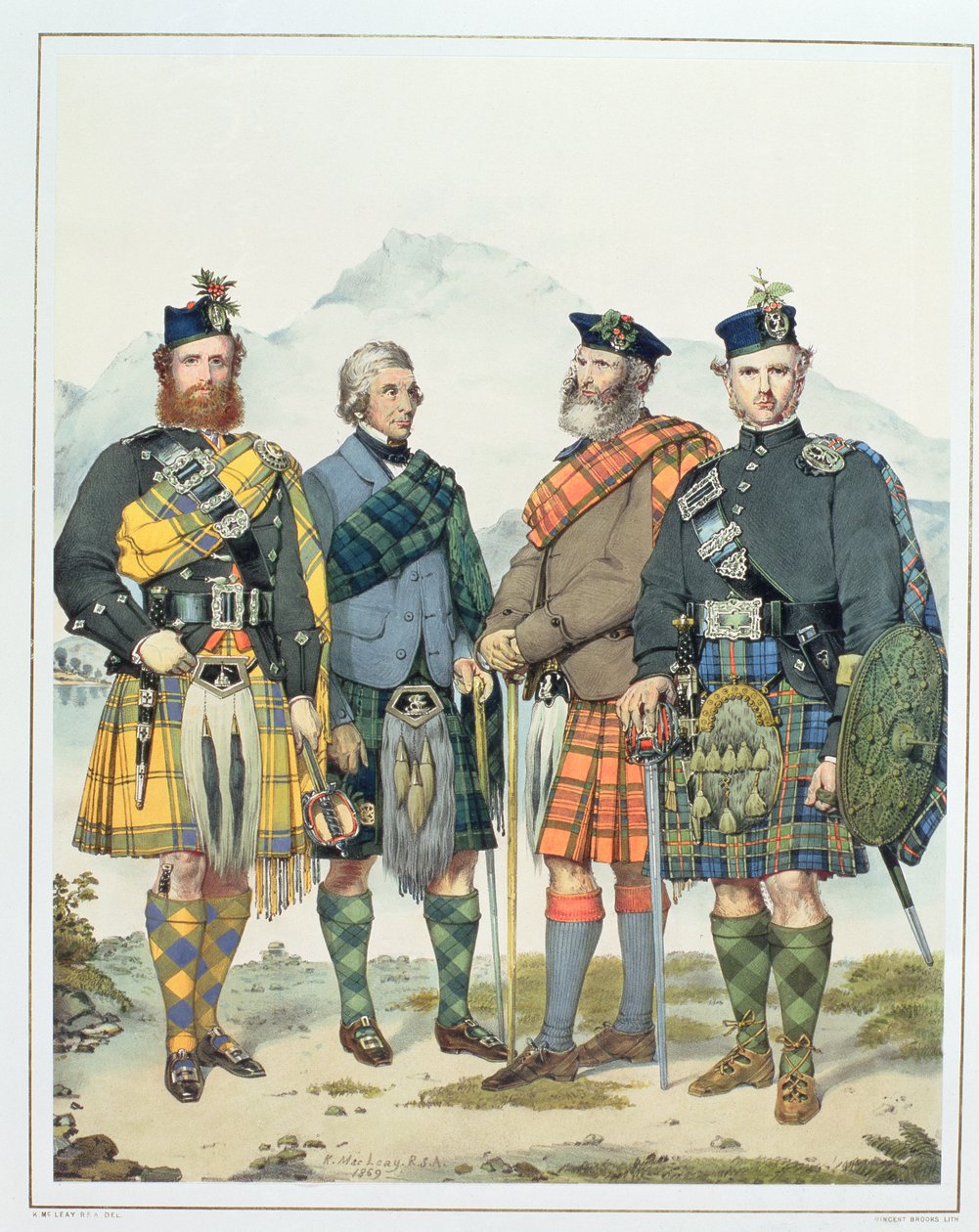
Traditionally, plant badges were sprigs of plants such as heather, oak, pine, or boxwood, worn in the bonnet or pinned to clothing to indicate allegiance to a clan.
The earliest firm documentation for the wearing of plant badges dates to the late 16th and early 17th centuries, with stronger evidence in the 17th and early 18th centuries.
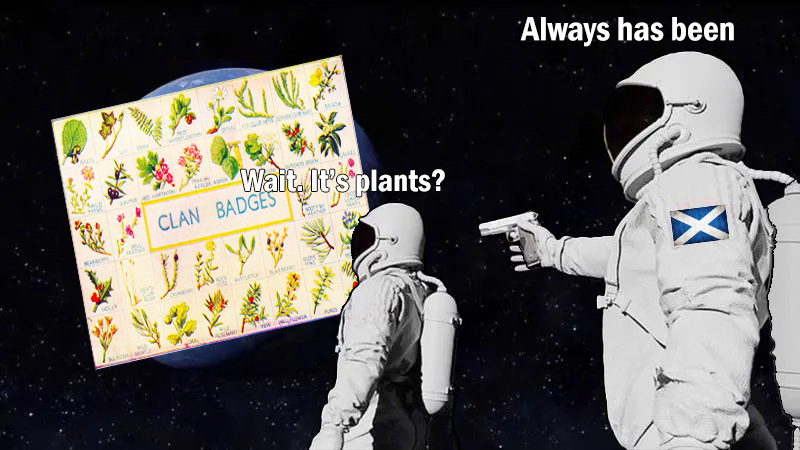
But I heard Plant Badges are ancient?
It is possible that plant badges grew out of older Gaelic symbolic associations between families and certain plants or trees. However while Medieval Gaelic poetry and chronicles frequently reference trees, plants, and landscapes associated with families or regions, there is no clear evidence that clan members wore bits of veg to identify themselves.
This has not stopped some writers (especially those pesky Victorians) from claiming that plant badges have roots (pun intended) in the Celtic Iron Age. I can’t blame them in a way - it just feels so primal!
Most historians conclude that plant badges are an early modern Highland practice, not a medieval one. Possibly the practice evolved during the 16th and 17th centuries as armies increased in size, but this is mere speculation.
By the time of the Jacobite risings (1688–1746), plant badges were widely recognized clan identifiers, especially in military contexts where quick visual recognition mattered.
And we have “eye-witness” accounts. The most important early sources are:
-
Martin Martin, A Description of the Western Islands of Scotland (1703)
Martin explicitly describes Highlanders wearing specific plants in their bonnets to distinguish clans. This is the clearest early firsthand account of the practice. -
Sir Robert Gordon, A Genealogical History of the Earldom of Sutherland (written c. 1615–1630)
Gordon describes clan identifiers and distinctions, though plant badges are not always explicitly named.
I myself have often wondered just how useful a plant badge would be in the “off season.” That is to say, how can you wear an oak leaf in your bonnet in the winter? One answer is that most warfare in the pre-modern period was pretty seasonal, especially inter-tribal conflicts (ie. clan feuds in our context). However, I still suspect that use of the plant badge was probably not consistent.
19th-century Standardization of Scottish Clan Symbols
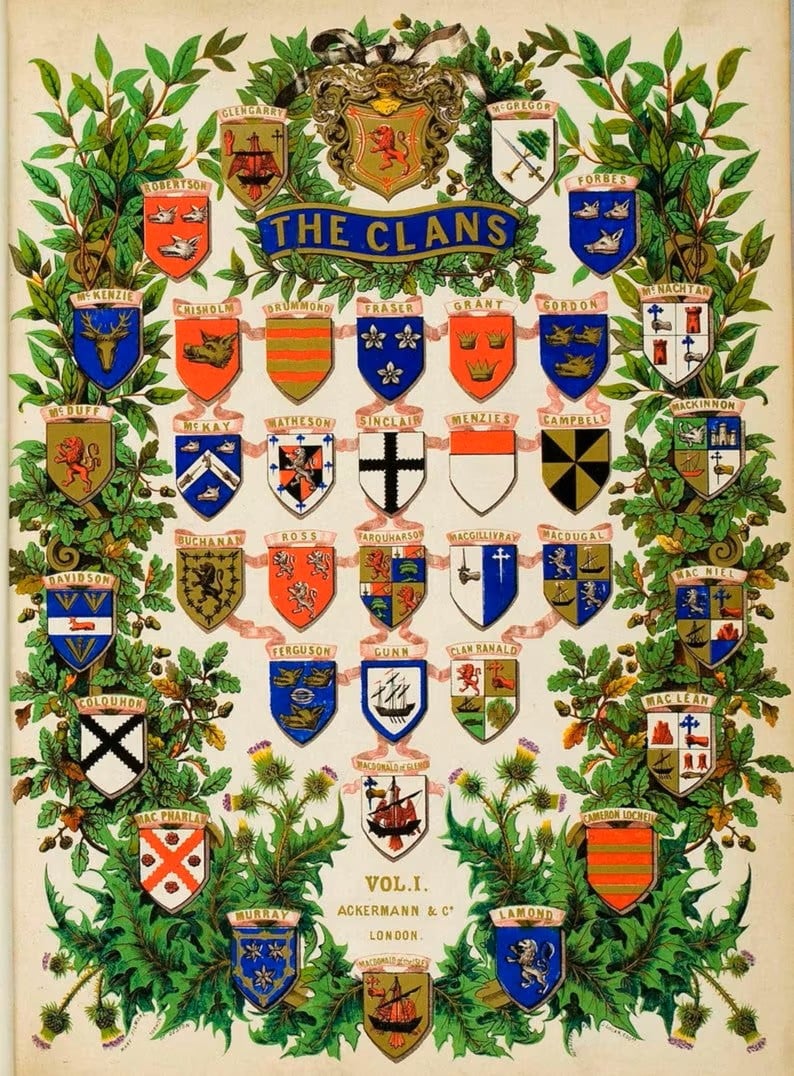
As mentioned above, the Victorian Highland revival transformed everything. The key factors that fed the fire were King George IV’s 1822 visit to Scotland, Queen Victoria’s enthusiasm for Highland culture, and the rise of clan societies and public Highland events.
During this period, the Court of the Lord Lyon expanded and clarified heraldic rules to accommodate the growing fervor. Crest badges became a standardized and widespread symbol of clan identity.
The main rules set down were:
> The crest belongs exclusively to the chief
> Others may wear it only as a badge, enclosed by a strap and buckle bearing the chief’s motto.
The strap or belt symbolized loyalty and was actually based on the heraldic garter; a popular symbol in the British Isles since the founding of the Chivalric Order of the Garter by King Edward III of England in 1348. So some romance and honor was thus baked into the system. This legal and cultural framework solidified the modern meaning of clan crest badges we use to this very day.
Are clan crest badges more important than tartan?
Oh no. not by a long shot. However tartan would not be systematically recorded for many years to come. And to this day, clan chiefs have the right to adopt new or different tartans for use by their families or the clan as a whole at any time. Changing the crest is pretty much unheard of.
Meanwhile, the humble plant badge has taken a backseat. I think this is mainly due to a lack of awareness. You will see enthusiasts, clan chiefs, and regional chiefs of clan societies sporting their plant badge on occasion, but not too many regular gents..
Personally, I think this is a shame. We live in the age of artificial plants for Pete’s sake! I would love to see more people adding a cheerful sprig to their bonnets at Highland Games and festivals. It is a great conversation starter, and truly harkens back to history that most of our other gear does not.
If you would like to learn more, these are the standard treatises on this subject:
> Hugh Trevor-Roper, The Invention of Tradition: The Highland Tradition of Scotland (1983)
> Iain Moncreiffe & Don Pottinger, Scotland of Old Clans (1952)
Sources Cited
-
Martin, Martin. A Description of the Western Islands of Scotland. London, 1703.
-
Gordon, Sir Robert. The Genealogical History of the Earldom of Sutherland. c. 1615–1630.
-
Pinkerton, John. An Enquiry into the History of Scotland. 1789.
-
Logan, James. The Scottish Gael. 1831.
-
Smibert, Thomas. The Clans of the Highlands of Scotland. 1850.
-
Trevor-Roper, Hugh. “The Invention of Tradition: The Highland Tradition of Scotland.” In The Invention of Tradition, 1983.
-
Moncreiffe, Iain & Pottinger, Don. Scotland of Old Clans. 1952.
-
Lynch, Michael. Scotland: A New History. 1991.