The Murky Origins and Early History of Clan Buchanan
Described as “one of the oldest Highland Clans of Scotland,” the Buchanans are an ancient house to be sure. But just how ancient is murky.
The name “Buchanan” derives from lands on the eastern shore of Loch Lomond in what is today Stirlingshire. The Gaelic origin for the name “Buchanan” is often given as Mac a’ Chanonaich (meaning “son of the canon”) or Buth Chanain (“house or seat of the canon”).
Canon in this case is an ecclesiastical term derived from the Greek for "rule" or "measuring stick." It is used to describe church regulations, lists of holy writings, or clergy who serve as official advisors or staff at a cathedral or diocese. Sometimes these canonical roles are honorary. That's a long way of explainig that the clan’s identity seems rooted not just in territorial possessions but also in ecclesiastical or clerical associations.
An Irish Progenitor?
According to traditional clan-history narratives (which we have to accept as mostly legend) the clan descends from a man named Anselan O Kyan (or O’Kyan) a noble exile who came over from Ireland around 1016 and was granted lands for services rendered.
However, as the clan’s own modern summary points out, genetic (Y-DNA) research among descendants has failed to establish a link to O’Kyan’s line from Ireland, casting doubt on whether the legend reflects real descent or a constructed origin myth. And there's no shame in this. It's simnply a frustrating fact that pre-modern historic records were often mixed with hearsay and myth. early chronciclers didn't let a lack of facts get in the way of a good story - just ask Saint Patrick.
Instead, scientific evidence suggests that the clan’s male-line ancestors may have been established in the Loch Lomond area well before the 1000 CE time frame. Thus the true roots of Clan Buchanan appear to lie firmly in ancient Scotland; possibly stretching back to Celtic or P-Celtic peoples long before recorded history. In a way this is even more inspiring.
Medieval & Early Modern Period: Growth, Influence, and Arms
By the early 13th century, the clan was clearly established in its traditional territory and Clan Buchanan was becoming a significant power. By 1282, one Morris of Buchanan had a charter granting him baronial rights over the clan lands. The small island of Clairinch, once granted to a Buchanan ancestor, became a symbol for the clan; its name was used as a battle-cry: “Clàr-Innis!”
During the Wars of Scottish Independence (late 13th to early 14th centuries), the Buchanans supported the cause of Robert the Bruce. Their loyalty ensured the clan’s fortunes endured and likely grew in the aftermath.
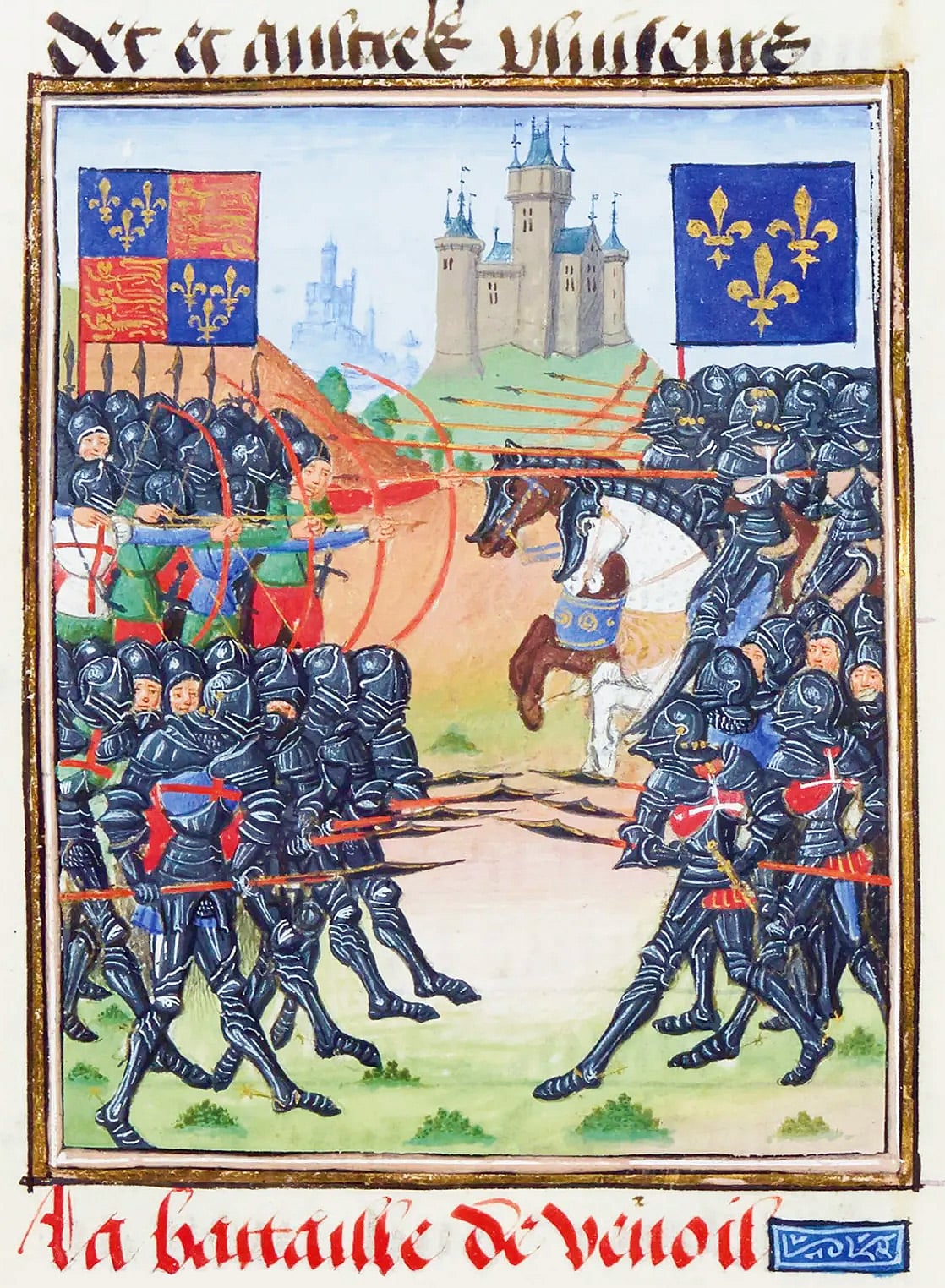
The clan also had martial exploits abroad: for example, one of their members, Sir Alexander Buchanan, is reputed to have fought in France around 1421. One legend even credits him with killing the Duke of Clarence at the Battle of Beaugé — a story linked to the distinctive clan heraldry (the ducal cap in the crest) that is still associated with the Buchanans.
A Clan of Peace
It is worth noting that while many Scottish histories are, to be blunt, violent, this is not a theme in the story of this clan. According to one modern summary, the history of the Buchanans “is not the stereotypical Scottish clan story” of constant blood feuds — but rather “one of intellectual, charitable and spiritual distinction.”
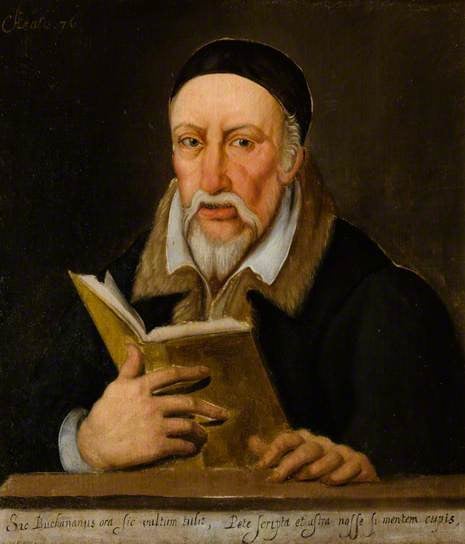
For instance, among notable individuals associated with the name is George Buchanan (1506 – 1582), born in what is now Stirlingshire. He became a renowned scholar and humanist, widely recognized for his work in education, literature, and Latin poetry.
In another example of cultural contribution, Dugald Buchanan (18th century) assisted in translating parts of the New Testament into Gaelic and composed poetry in Gaelic.
Rather than being associated with inter-clan warfare, feuds, or involvement in the Jacobite uprisings, the “Buchanan name” carried cultural weight beyond petty ambition or politics.
Decline of the Traditional Chiefship and the Transformation of Clan Lands
Over the centuries, feudal economics, shifts in land ownership, and evolving political realities affected many clans including the Buchanans. While perhaps a less dramatic decline than other clans experienced, publicly available summaries of clan history indicate the grim process of displacement impacted the family.
For several centuries, the seat of Clan Buchanan was marked by a residence known as Buchanan Auld House, located west of the village of Drymen in Stirlingshire. This house and the surrounding lands remained with the Buchanan chiefs from at least the 13th century until the late 17th century.
However, the male line of chiefs came to an end with the death of John Buchanan in 1682. He died without a male heir and the estate, burdened by debt, was ultimately sold to settle creditors.
As a result, the direct chiefly line of the clan was interrupted; an event that had lasting consequences for its structure, influence, and territorial holdings.
In the 18th and 19th centuries, what remained of the seat and legacy changed hands. The old house fell into disuse. Later a new residence, Buchanan Castle, was built nearby though this newer castle was associated with different owners after the Buchanans lost the estate.
A New Chief!
While the misfortunes of the Clan Buchanan are complex (too complex to cover here - we recommend connecting with the official clan society) there is a happy ending.
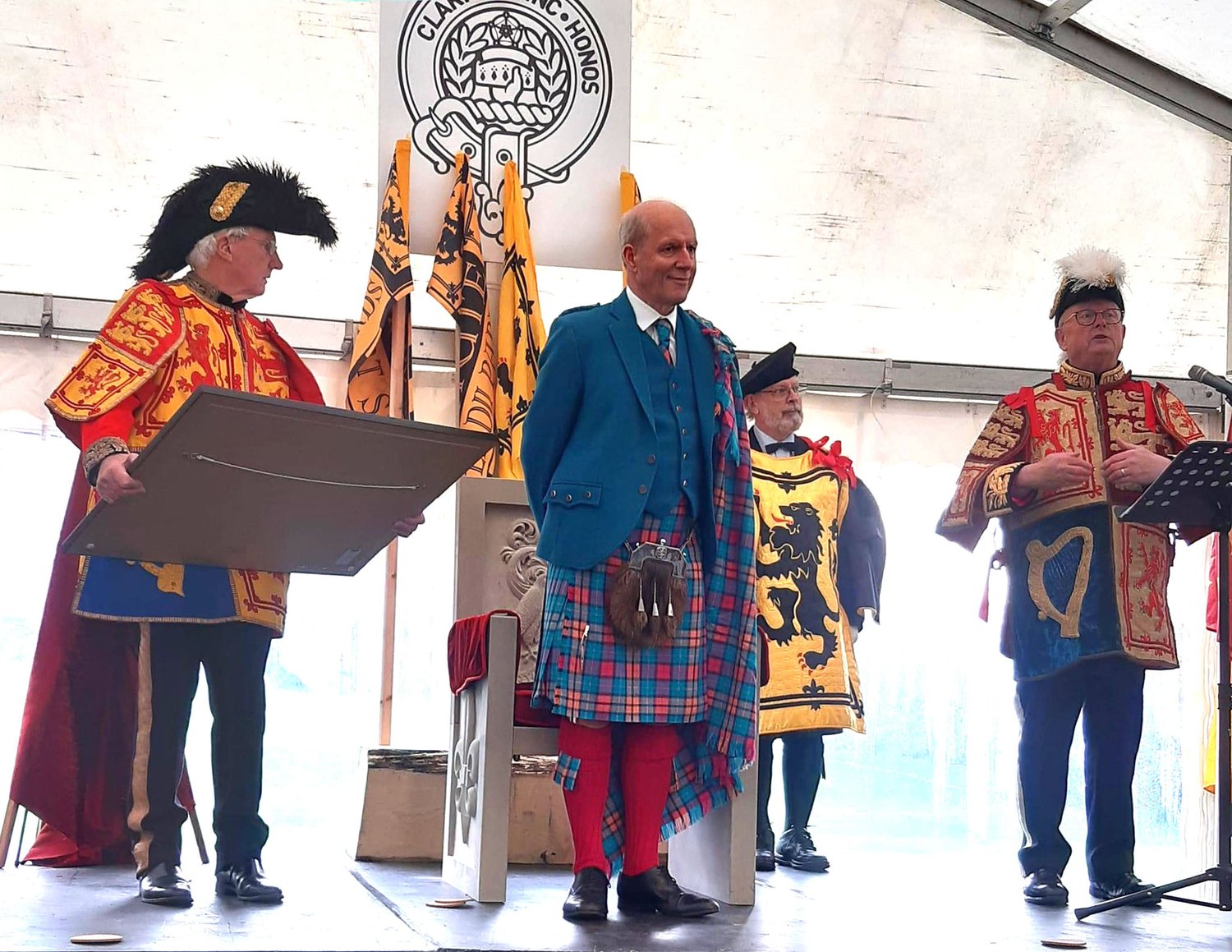
Following a long and exhaustive genealogical search, a new Chief for Clan Buchanan was found and recognized in 2018. John Michael Baillie-Hamilton Buchanan fills the role after a 337-year vacancy. He is formally known by the title "The Buchanan".
The claim to the chiefship was upheld in August 2018 by the Lord Lyon King of Arms, the head of the official heraldry court in Scotland. A formal inauguration ceremony, drawing on ancient Gaelic rituals, was held in October 2022 at the family's ancestral home, the Cambusmore Estate in Callander, Stirlingshire.
As chief, John Michael Baillie-Hamilton Buchanan serves as the figurehead for millions of clan members and associated families (septs) worldwide and has pledged to lead the clan into the modern era while restoring ancient traditions.
I am a Buchanan - What is my Clan Crest, Motto and Coat of Arms?
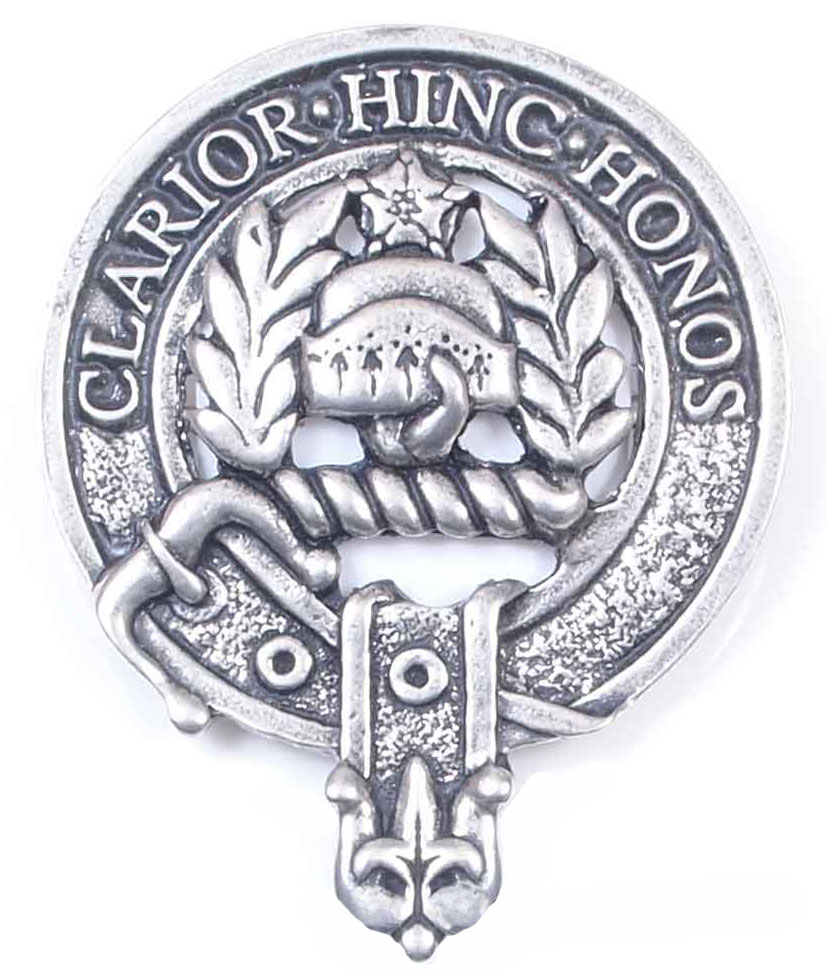
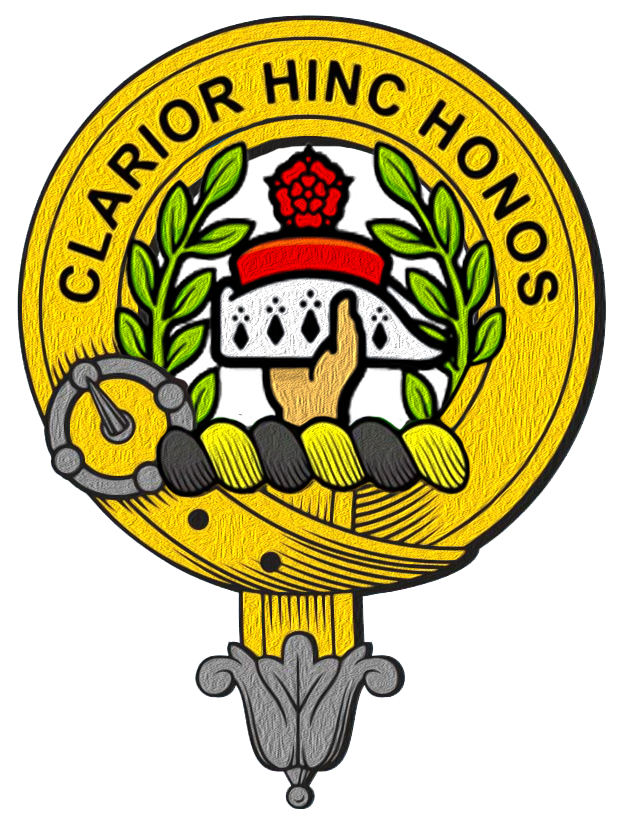
The heraldic crest of Clan Buchanan features a dexter (right) hand holding up a ducal cap or cornet, proper, tufted on top with a rose of red (gules), and encircled by two laurel branches proper. "Proper" means "drawn in a realistic/natural manner and color. All are set on a 'wreath' of the clan's colors: black and gold (or). The so-called wreath by the way is emblematic of the sort of cloth "donut" that was used on a knight's tourney helm to mount a three-dimentional version of the crest.
As mentioned above, the cap seems to be a reference to Sir Alexander Buchanan's exploit of killing the Duke of Clarence at the Battle of Beaugé in 1491.
Buchanan actually has two mottos. The more famous one is "Clarior Hinc Honos"; Latin for "Hence the brighter honour" or "Henceforth forward the honour shall grow ever brighter." These words signify honor growing from the performance of duty and, once again, this feels like a call-back to the clan's association with King Robert the Bruce. Historically the clan has also used "Audaces Juvo" ("I support the daring") and "Veritas Vincit" ("Truth will conquer").
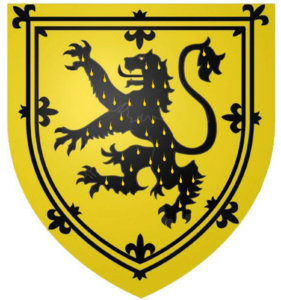
Heraldry actually plays a big role in the clan’s identity. Note that the shield borne by Clan Buchanan (the coat of arms as oposed to the Clan Crest) is very similar to the Royal Arms of Scotland, but with a key difference: the lion and the double fleur-de-lis tressure are rendered in black rather than red. This was certainly seen as a strong implication of the family's connecton to The Bruce in the old days. Today, it may be thought of as a subtle memorial to the clan’s subsequent losses.
Show You Are Proud to be Part of Clan Buchanan!
If you’re looking to celebrate your Buchanan heritage through tartan and Highland dress, we're happy to help!
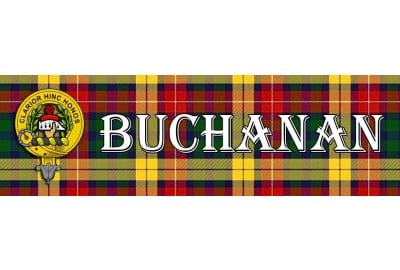
- Explore All Buchanan Tartans — classic color palettes rooted in the recorded tradition of the name.
- Get Your Buchanan Kilt - Wool or Polyviscose available! All hand-made here in our Pennsylvania shop.
- Clan Buchanan Regalia - Clan Crest Badges, Kilt Pins and more!
- Clan Buchanan Gifts - ties, scarves, and ladies apparel that show off your tartan anywhere, any time.
- We even have the Buchanan Tartan Lambswool Blanket!
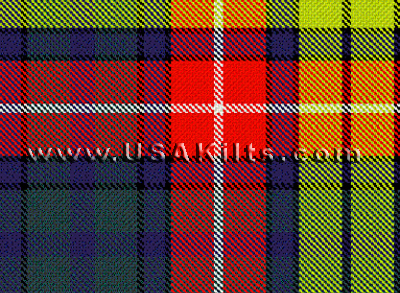
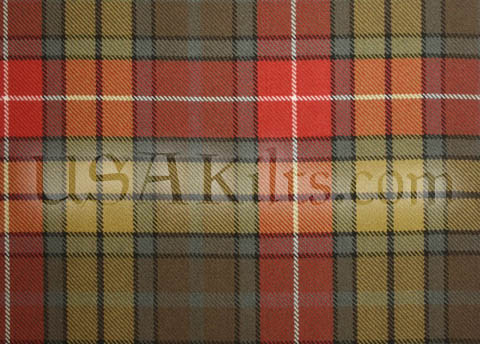
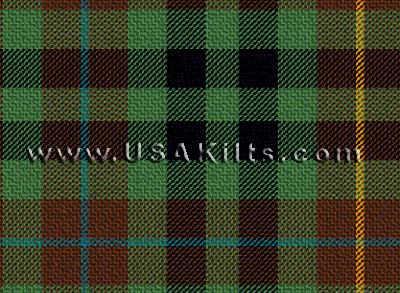
Buchanan Tartan - Hunting Muted
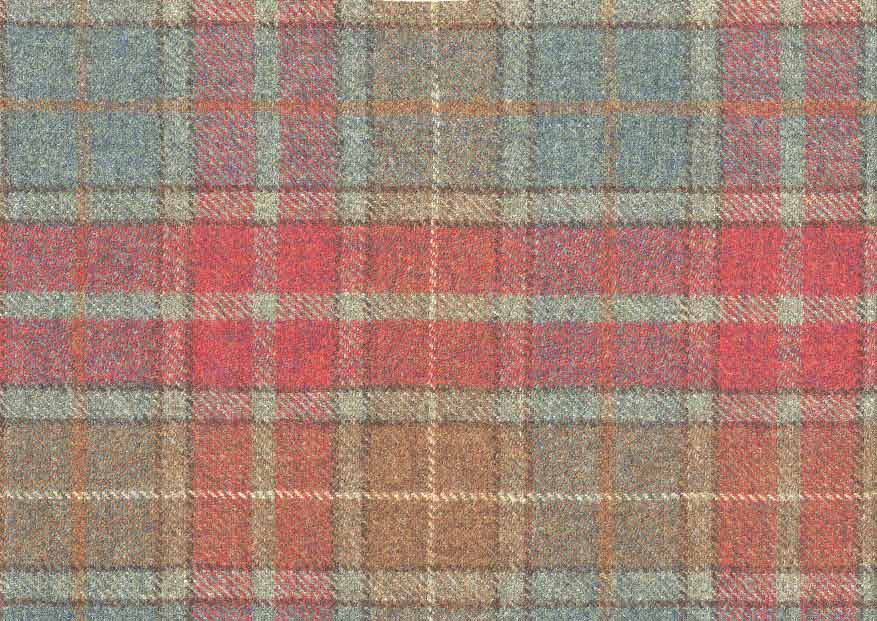
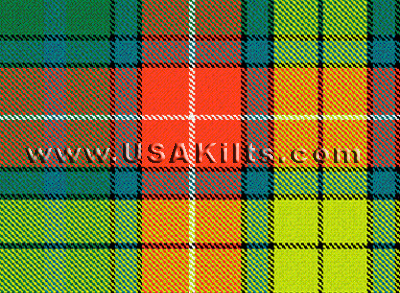
Buchanan Tartan - Antique Tweed