Highland wear is about heritage, respect for tradition and personal expression more or less in equal measure. The difference between “good” and “sharp” often comes down to small, quiet details. If you’re putting together a full kilt outfit naturally you want to make sure it’s done right.
Many of the basic philosophies, rules and practices of traditional gentlemens’ attire apply to Highland Dress just as much. With that in mind, let’s look at waistcoats and pocket watches.
Why Do Men Leave the Bottom Button of a Vest Unbuttoned? Why Do Men In Kilts Button It?
You’ve probably heard it before: “Always leave the bottom button undone.”
But where did that actually come from? Is it just one of those fashion rules that nobody questions… or is there a real reason behind it?
The King Edward Story
The most commonly told origin of this custom goes back to King Edward VII of Britain (late 19th to early 20th century).
As the story goes, Edward, who was a larger gentleman later in life, found it more comfortable to leave the bottom button of his waistcoat undone. Edward was quite popular and ran in a flash social set (something he was notorious for before he ascended to the throne). He was a bonvivant and a very fashionable gent.
Supposedly courtiers and friends, wanting to follow royal example, started imitating the bottom button thing and the custom quickly became popular. And from there, it stuck in both daytime and formal dress—including Highland wear.
The True Origin of Leaving Your Bottom Vest Button Unbuttoned
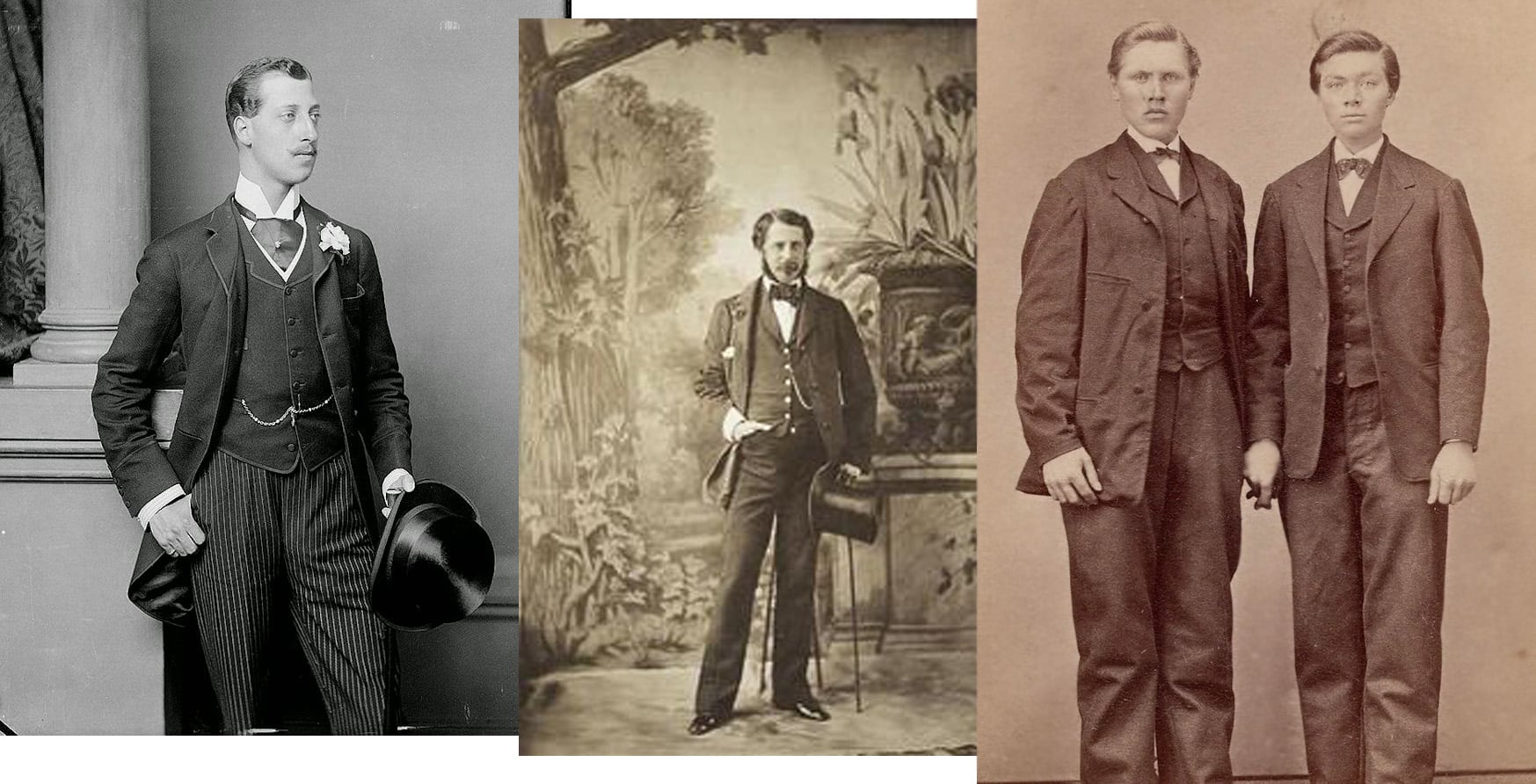
Is the Edward story true? Well no. (shocker coming from us right?)
Pictorial evidence from the 19th century shows that, while less common, the practice of leaving the bottom button of a waistcoat undone predates Edward VII. Did His Royal Majesty help cement its popularity in the 20th century? Very likely. The Edwardian era is when it really took off.
Was the practice adopted by portly men in particular? No. In fact Edward himself didn’t do it all the time.
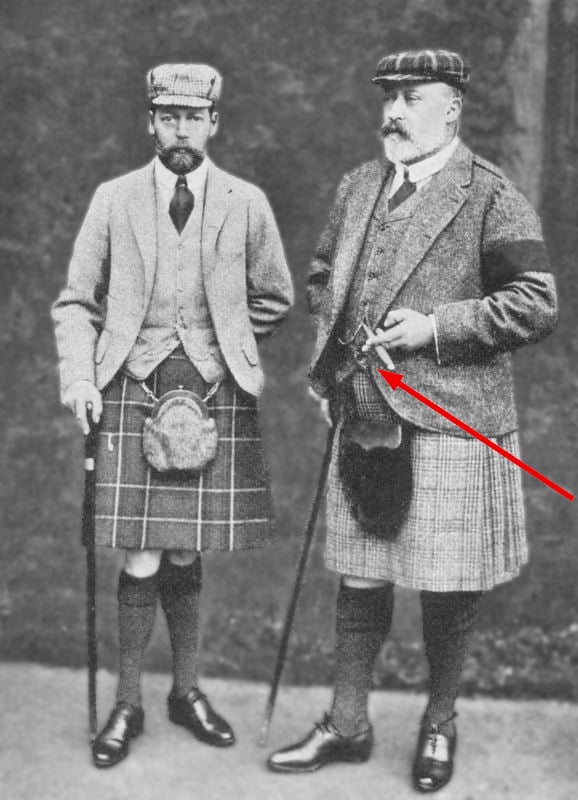
Who was the first to do it? Very hard to say. However there are a couple of theories.
The "rider theory” suggests that the habit began with horsemen who wanted more comfort in the saddle. Leaving the button undone prevented the waistcoat from riding up.
Then there is the “Eton theory” which essentially suggests that the practice was an insider fashion signal adopted by students of Eton College; specifically members of ‘Pop’, the oldest self-electing student society. Consisting of the sons of social elites, the Pops, whom you may think of as something like a snooty fraternity, held certain privileges on campus and identified themselves with various fashion eccentricities. The habit may have been retained by nostalgic graduates. By this idea, the one-percenters set the trend and the country followed.
Why Leave the Bottom Button Open? It Just Makes Sense
Even if these origin stories disappeared tomorrow, men would probably still leave that bottom button undone. Why?
Well, remember the Rider Theory? You do not have to be on a horse to notice how a vest will ride up when you are seated. When you sit, bend, or move, a fully-buttoned waistcoat can pucker awkwardly. Originally people probably just did it as a matter of convenience on any given day.
BUT Does This Apply to Highland Dress Waistcoats?
Ah the real question! Highland Dress tends to tweak general fashion trends even as it acknowledges them. Here are our recommendations for vests with kilts:
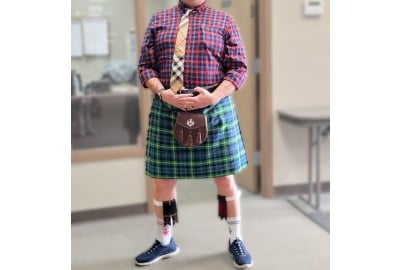
- Casual Day Wear: No real rules. A kilt-cut vest, worn open or closed can look very dashing with a casual (often oxford) dress shirt.
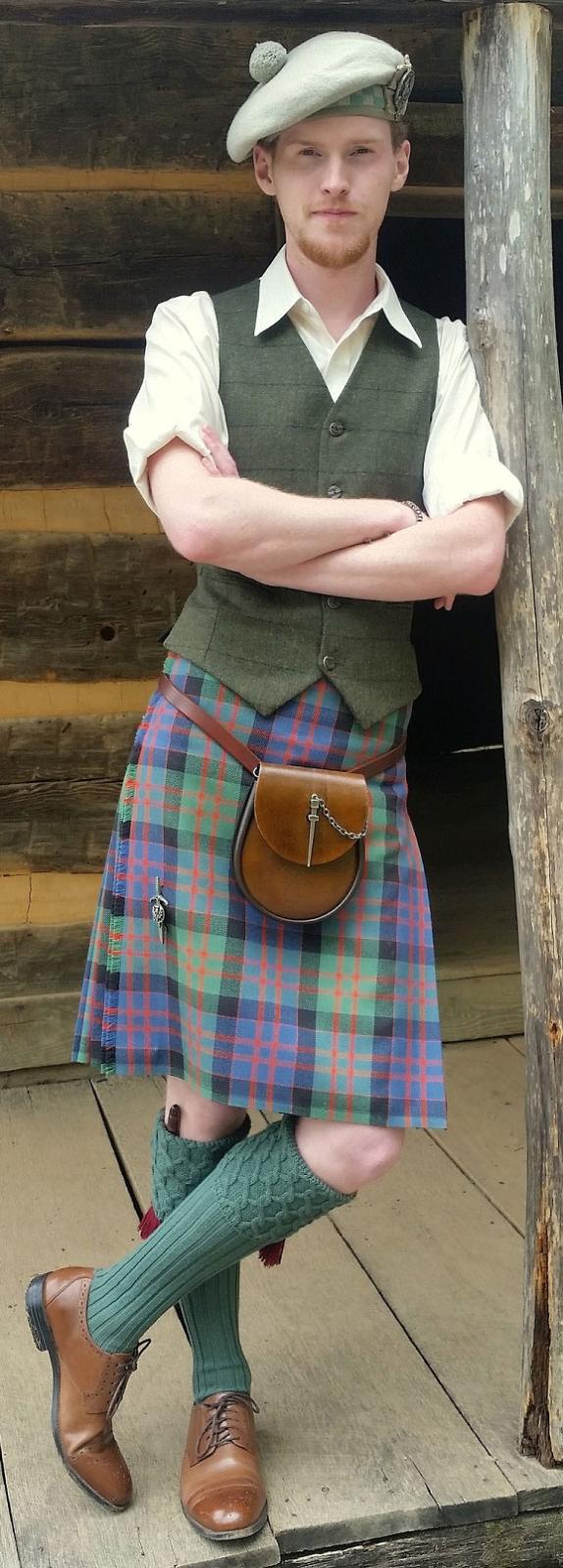
- Smart Day Wear (usually tweeds): You can leave the bottom button undone if you choose. However, you will find that most gents actually do them all up, at least while standing. Remember that in Highland Dress the jacket is almost always worn open, so your waistcoat buttons are more visible. Having all of the buttons done up looks tidier with a kilt and naturally leads the eye downwards towards the sporran, which is always the centerpiece of a kilted outfit.
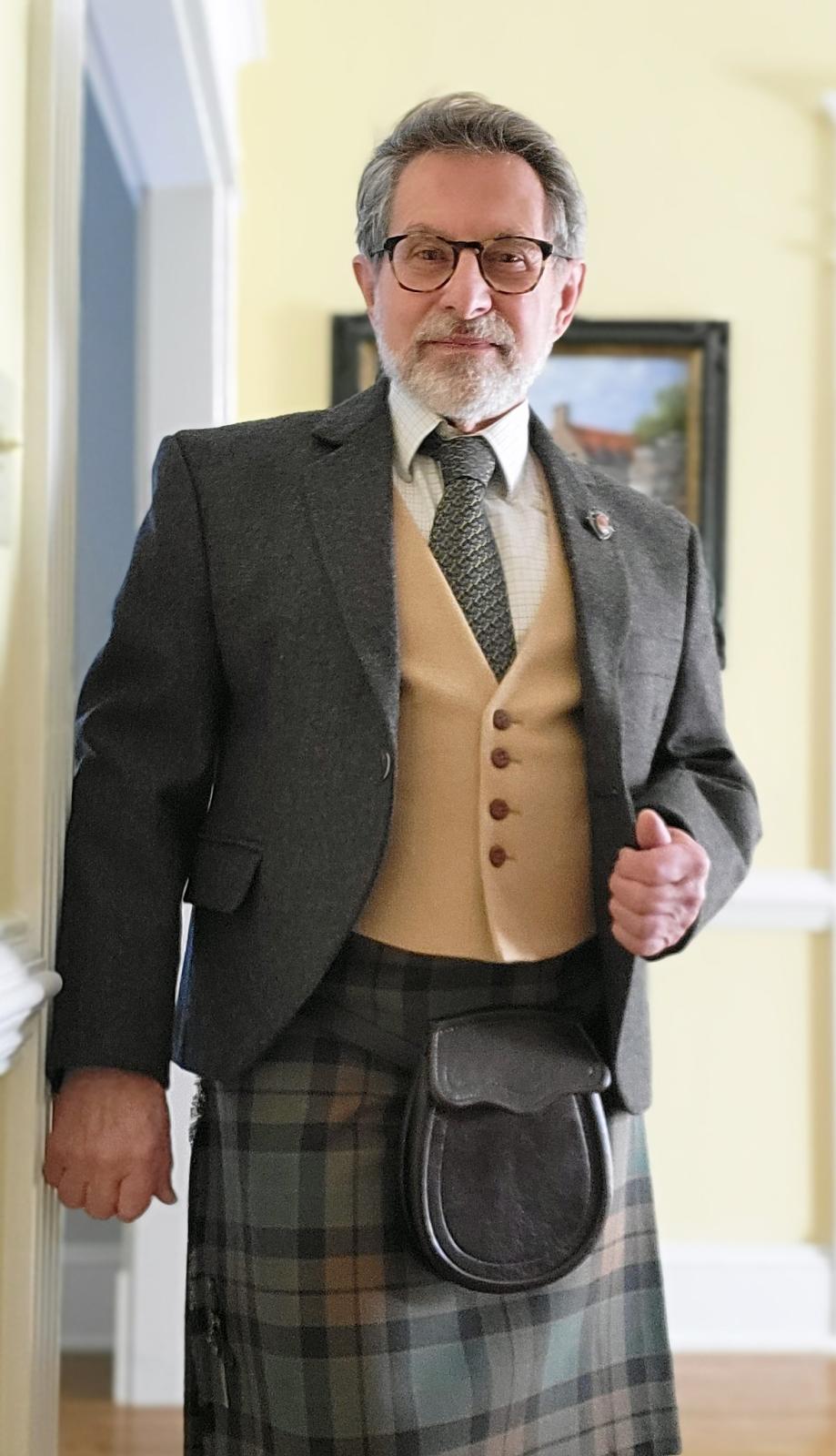
- Evening and Formal: Button all buttons - no exceptions.
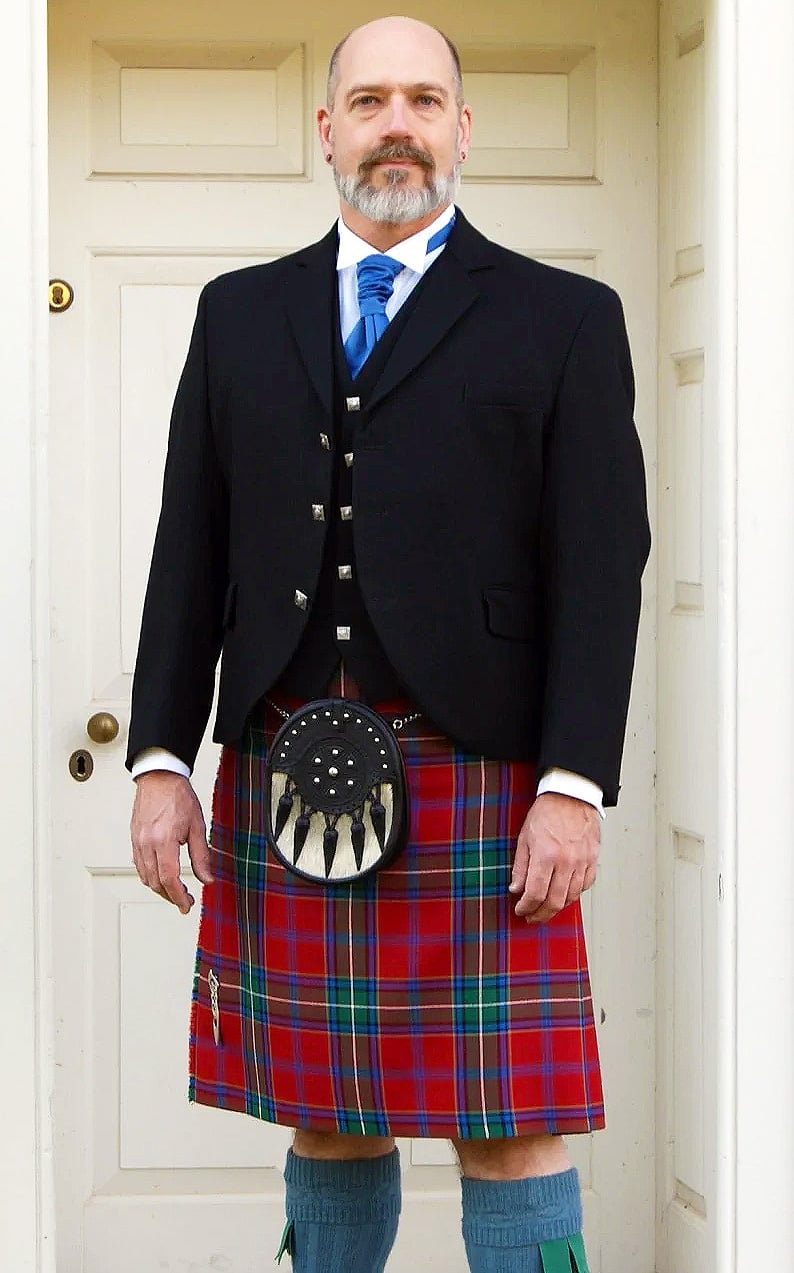
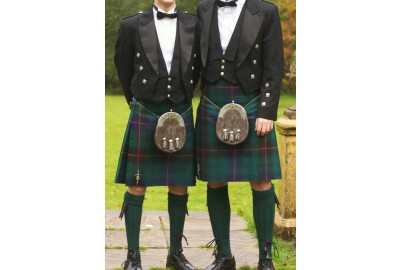
As to that last bit - we are talking about Argyll-cut jackets and waistcoats. Naturally you always button all the buttons on a deep-collar waistcoat as is worn with the Prince Charlie Coatee and of course some more exotic forms of Highland Formal such as the Montrose, Sheriffmuir and Kenmore doublets all require full buttoning anyway.
How Do You Wear a Pocket Watch with a Kilt?
Essentially you wear a pocket watch with a kilted outfit the same way you would with an ordinary suit. The options lie mainly in which sort of watch chain you select.
Does It Matter Which Buttonhole You Use for a Pocket Watch Chain?
Yes. Here's The Traditional Placement:
If you’re wearing a pocket watch with a waistcoat (vest), there is a conventional way to attach the chain.
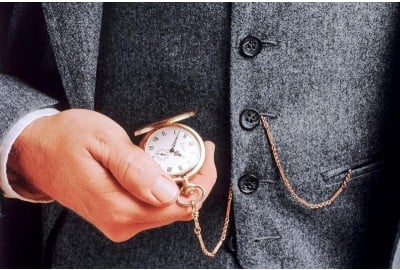
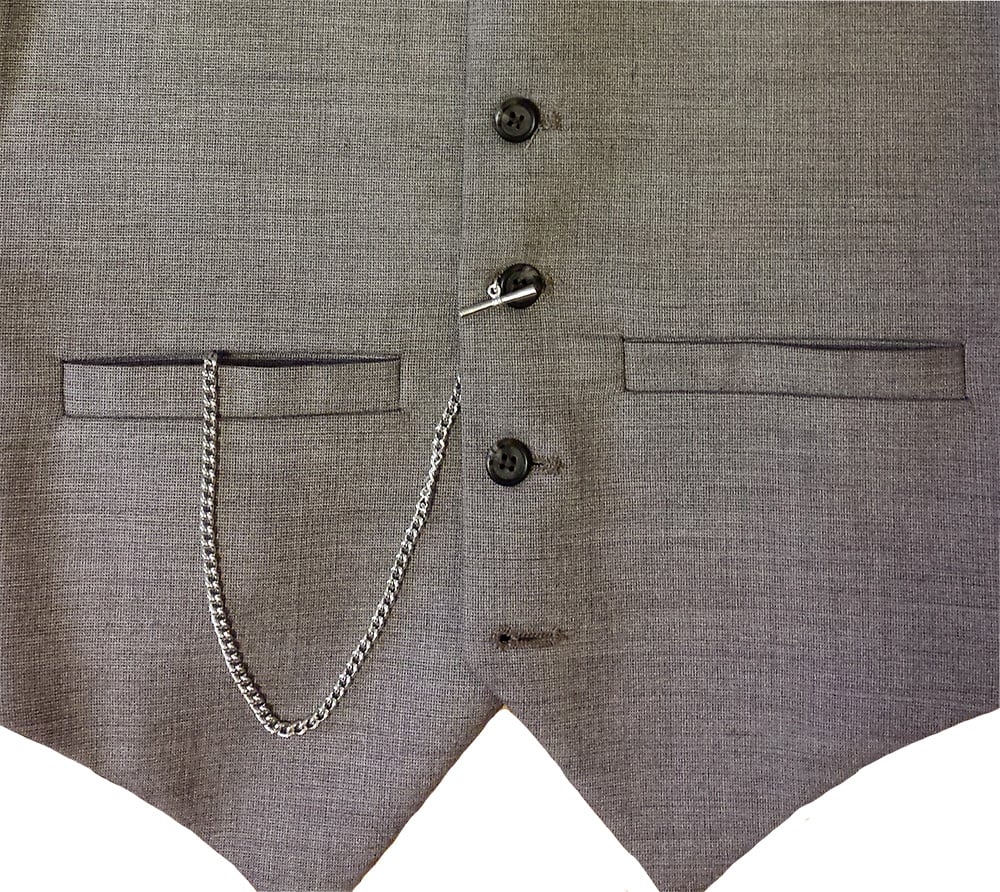
You want the chain to pass through a buttonhole above the line of the waistcoat pockets. On most five- or six-button waistcoats, that usually means the third button up from the bottom.
This results in a clean, elegant arc—the classic swoop of the chain—from the buttonhole down into the pocket. If you use a buttonhole too low, the curve looks cramped. Too high, and it starts to look a bit awkward.
As always looking back into the Victorian days we find a lot of variance, but this has been the standard way to do it for over a century.
How to Attach a T-Bar Watch Chain Correctly
Traditionally you wear your pocket watch on your non-dominant side. If you are right-handed, the watch goes in your left waistcoat pocket. The idea is you can check the time with your off hand while keeping your dominant hand free.
- If you are keeping the watch in your left-hand pocket pass the T-bar from front to back so that it is hidden from view.
- If you are placing the watch in your right-hand pocket, pass the T-bar from front to back. (this is less desireable)
Does everyone follow this rule? No. The important thing is that it feels natural and secure when you reach for your watch.
Not All Watch Chains Are the Same - But There's LOTS of Style Potential!
There are two common types of pocket watch chains:
1. The T-Bar (Albert Chain)
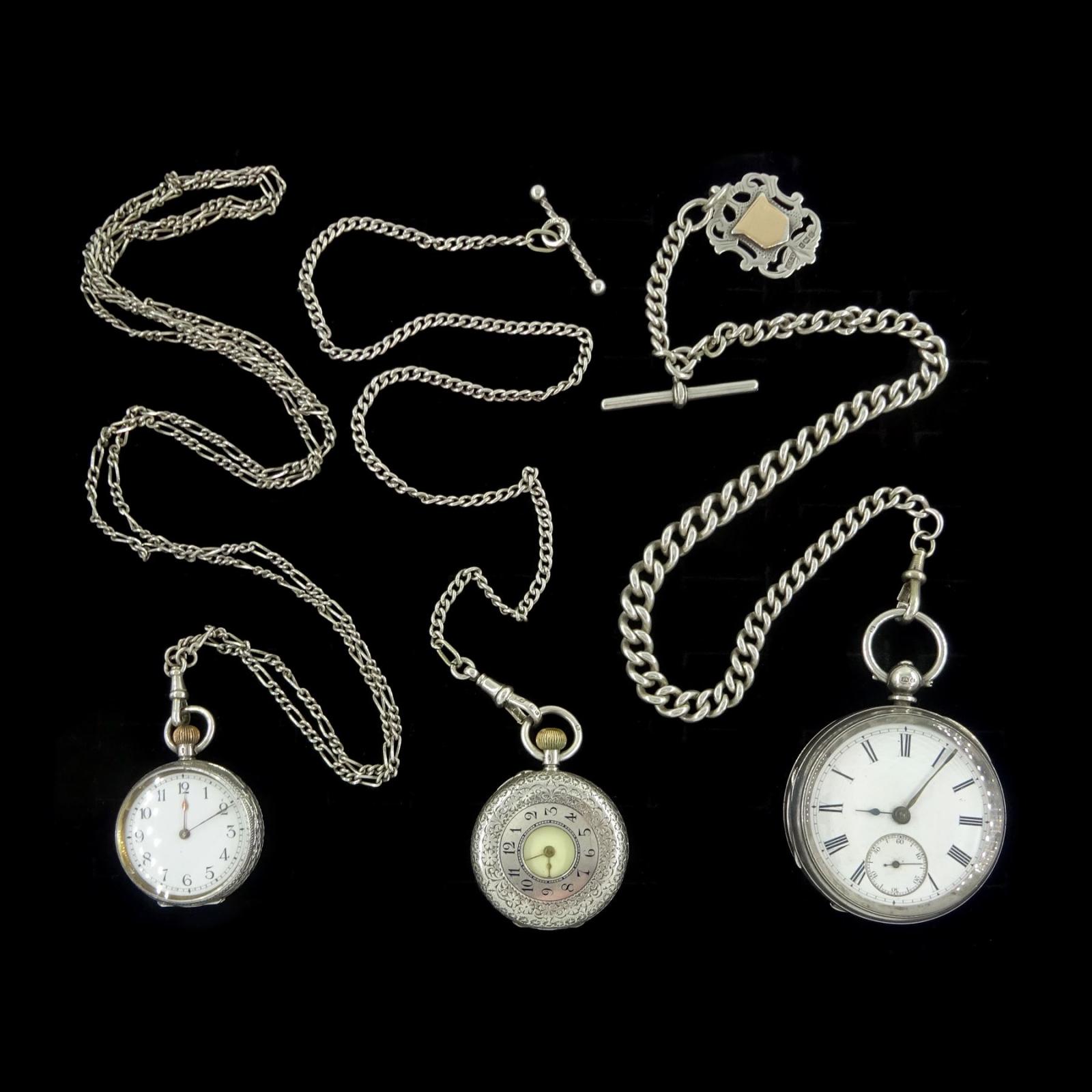
This is the classic setup. The small T-shaped bar slides through the waistcoat buttonhole and anchors the chain in place. The watch goes in your pocket, and the chain forms that visible arc across your vest.
It’s called an Albert chain (or Albert bar) because Prince Albert popularized the style in the Victorian era. He didn’t invent it—but he made it fashionable.
Typically the T-bar is what you want if you are wearing your watch with a waistcoat. You can also run the T-bar through the boutonniere hole of a jacket and place the watch in your breast pocket.
2. The Belt or Pants Clip Chain (Lépine Style Clip)
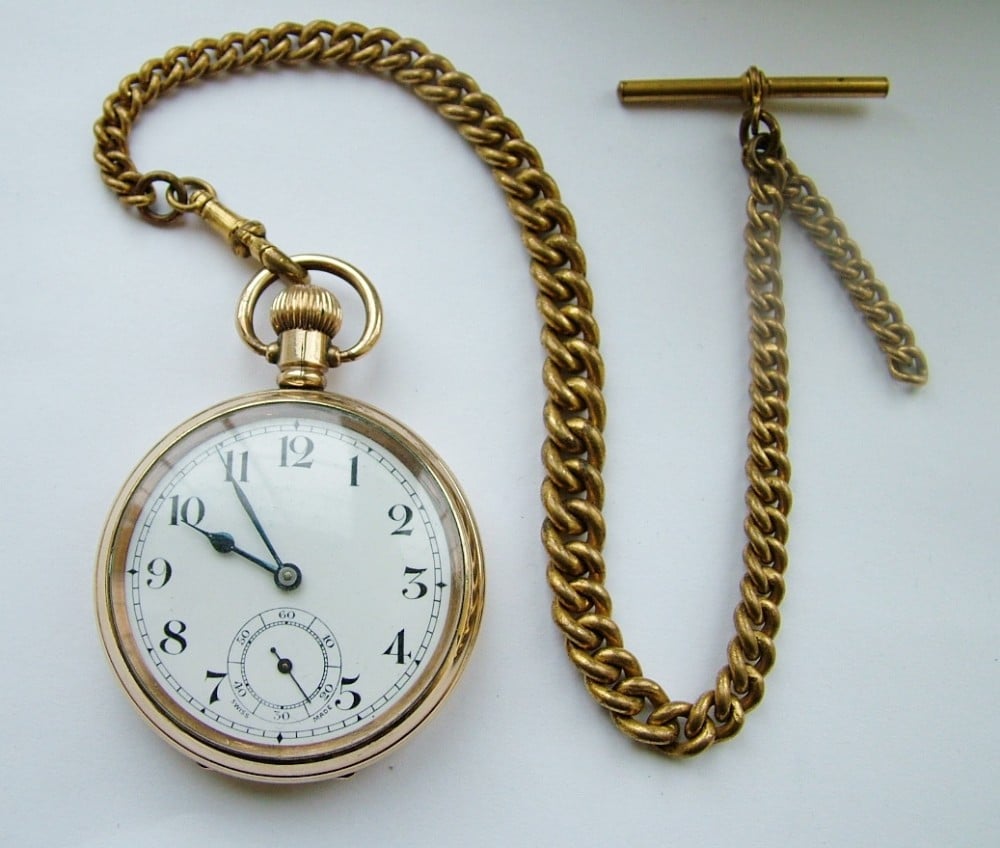
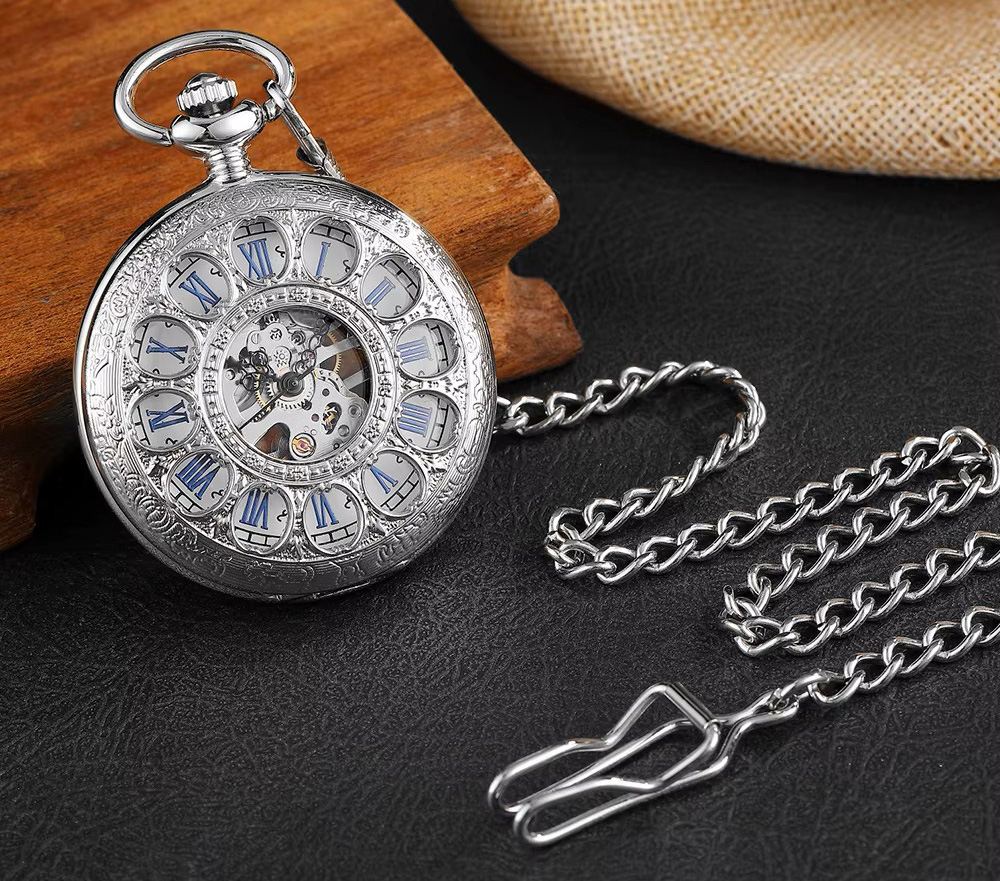
A lot of pocket watches will be sold with a clip instead of a T-bar. The clip is meant to hook over your pants waistband or belt—not through a waistcoat buttonhole.
Can you make it work with a vest? It’s awkward but if you have no other option, yes. Feed the clip through the buttonhole and hide the extra slack inside the waistcoat.
Occasionally we see gents clip a watch chain to the waistband of the kilt and store the watch in their sporran. We do not recommend this. It looks awkward and is bad for the watch.
What About Double Chains and Fobs?
Now we’re getting into the fun stuff.
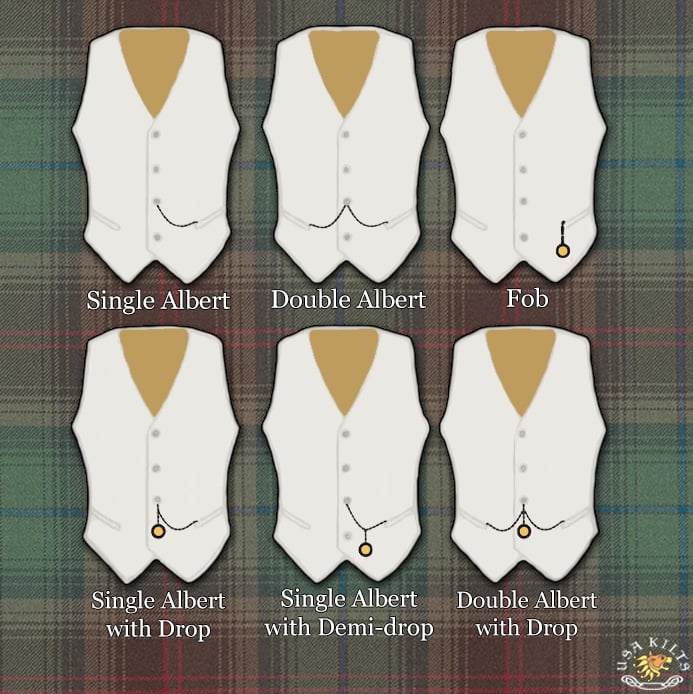
A Double Albert chain (Full Albert) has the T-bar in the center with a chain running to the watch on one side and a second chain running to a decorative fob on the other.
In the 18th century watch fobs were originally a sort of decorative pull cord to allow one to fish out one’s watch easily. The Victorians adopted chains to better protect their time pieces. With the Double Albert, one would might have a purely decorative fob or attach something of practical use such as a cigar cutter, pipe pick, maginfier, small knife or wax seal (though this was more often worn on the outside on a drop). In the early days it was usually the winding key for the watch. Essentially anything handy that would fit in the waistcoat pocket.
If you wanted to really show off, you might have a small charm mounted near the T-bar or even a small central chain with a larger decorative fob; the so-called Double Albert with Drop.
If you’re wearing a double chain, symmetry matters. The chain should still pass through that third buttonhole up, and you’ll want both arcs—watch and fob—to mirror each other as closely as possible.
Do You Actually Need a Pocket Watch? And a Few Words About Being a Gentleman
Clearly, no. Most people will say that a pocket watch today is less about timekeeping and more about fashion. It’s a nod to classic style and the art of being a gentleman.
Enthusiasts will often cite that taking the time to look at your pocket watch rather than checking the time on your phone or smart watch is healthy. You are more likely to actually note the time. How many times have you checked your phone only to forget what time it said a few minutes later? So much for modern technology.
Pocket watches say some, reset your brain; slowing you down enough to be truly in the moment. And yes of course, it looks damned sharp.
I’ll admit, I don’t always wear one myself though I have a small collection. Some I inherited, others I purchased. I will say that wearing one simply feels right to me. As a lover of all things Victorian, I just love the look.
More so, I love the presence that traditional Highland dress gives a man. It is not clothing that says "efficiency" or “I am in a rush” or “this’ll do for now.”
Rather, it says “I am here in this place and time and I will command this situation in my own way, at my own pace. You can respect that or move along.”
In a word, it is dignity.
And this is why we who love the kilt tend to fret over these tiny details. Each and every one helps us craft not just a “fit” but our presence in the world.
So by all means, adopt the waistcoat. Wear the tweed like you mean it. And while leisurely drawing in your favorite smoke from your meerschaum, check the time on your pocket watch. It’s your time after all.