Oh No! My DNA Says We’re Not Related to the Clan…Can I Wear the Tartan? Yes and Here’s Why
One of the more interesting things about modern genealogy is that sometimes it uncovers family stories nobody expected.
Classic examples:
- Your spiffy DNA home-test reveals an adoption somewhere up the family tree.
- Or maybe some old relative was “born on the wrong side of the blanket.”
End result either way is the genealogical paper trail and the genetics don’t line up quite the way you thought they would (or the way you had been told by your grandparents). In kilt circles, we see this come up as “Can I still wear my clan tartan?”
Short answer? Yes. Absolutely!
There are a few different reasons why. In point of fact, the history of the Scottish clans is a lot messier, more practical, and more human than most people realize.
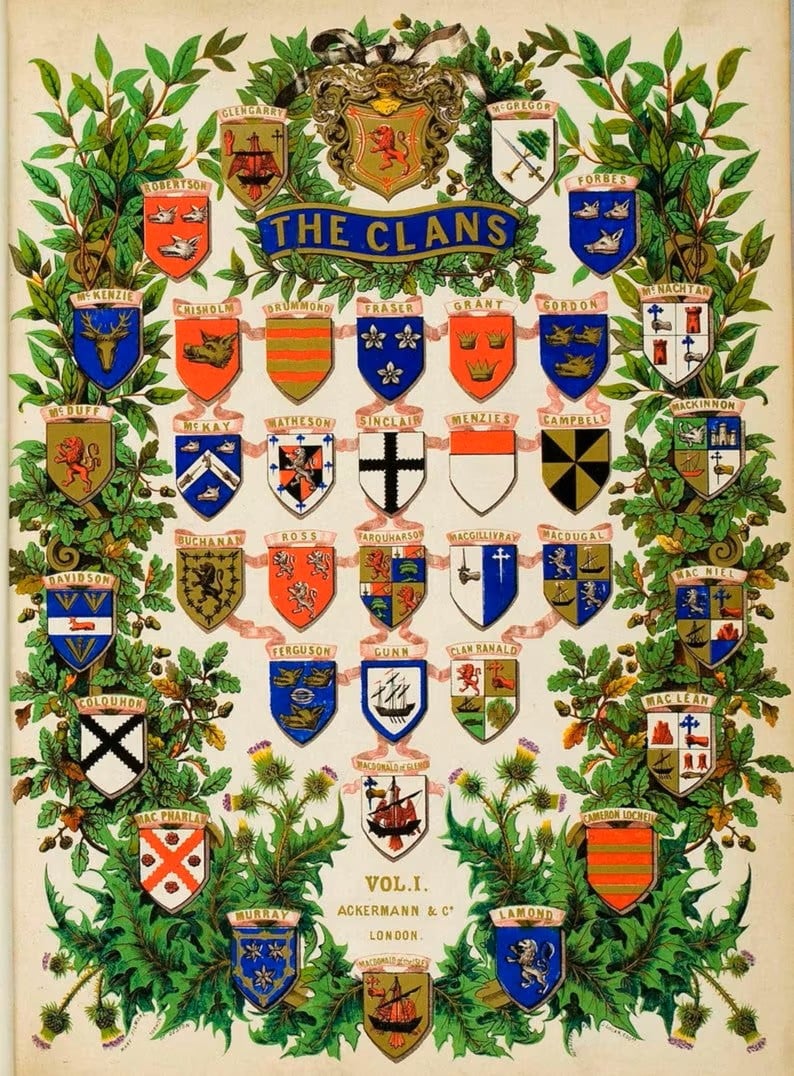
Clans Were Never Just About Blood
Modern people sometimes picture Scottish clans as giant extended families where everyone was directly descended from one ancestor in an unbroken line.
That is a romantic image. Yes, clans usually have a nominal progenitor, often a semi-mythic warrior shrouded in the mists of time. But this is not Lord of the Rings or Dune. There are no “true heirs” in Scottish clans. Much of the time clan membership is more about military and political alliances pf the ancient past. (more of a Game of Thrones case)
How Did Clans Function?
The word clan comes from the Gaelic clann, meaning “children” or “family,” but clans were as much political and social communities as they were bloodlines.
In practical terms, clans were built around:
- Mutual protection
- Land & resource sharing
- Military alliances
- Economic survival
- Community identity
If you lived under the protection of a clan chief, worked the land, fought alongside the clan, or were accepted into that community for another reason such as marriage, you were considered part of the clan. Blood was less important than loyalty and bonds of oaths.
Yes, of course there were family lines and branches directly related to the progenitor. But keep in mind that clan chiefship was not necessarily hereditary or linear.
Prior to the 1800s, Scottish clan chiefs were often originally selected through systems closer to election than strict primogeniture (inheritance by a first-born son). Especially in the Highlands and Gaelic-speaking regions, a system called tanistry was used. Under tanistry, the chief was chosen from a pool of eligible male relatives within the leading family. Even Scottish kingship itself often followed tanistry principles rather than strict primogeniture.
The clan’s family heads or nobles would effectively “elect” the successor, called the tanist, during the current chief’s lifetime. It wasn’t democracy in the modern sense since the eligible were almost always brothers, sons, cousins, nephews, etc. But it did offer a lot of flexibility.
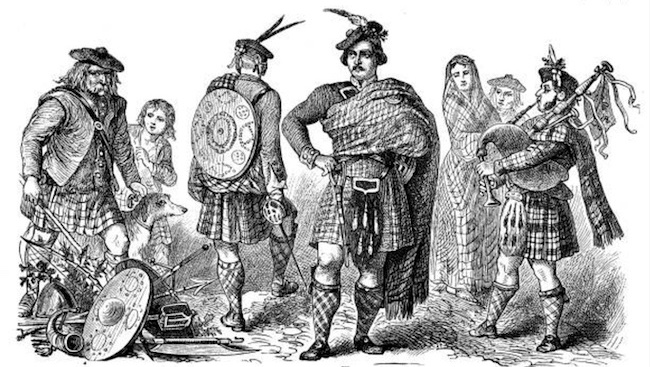
Primogeniture gradually took over in Scotland through Norman, feudal, and Crown influence from the 1200s to 1600s. Lowland noble families adopted it earlier, while many Highland clans continued using versions of tanistry or elective succession much longer.
The Scottish Crown worked aggressively to suppress older Gaelic clan structures. After the Jacobite uprisings and especially following Culloden (1746), chiefs increasingly transformed from tribal leaders into landed aristocrats and landlords. Succession became much more rigidly hereditary.
Throughout Scottish history, many people adopted the surname of a clan chief specifically to show loyalty or gain protection.
This was part and parcel to a system called Manrent (sometimes written as man-rent or bond of manrent). Under manrent, a family or other closely related group gained protection from a large clan by agreeing to offer the services of some male members on a regular basis, or in times of need such as war.
This is how Septs were originally formed.
What Is A Sept? And Does It Matter If You Are In One?
The concept of “septs” in Scottish clans also shows why we shouldn’t get too hung up on strict bloodlines.
A sept is traditionally a family associated with a larger clan, originally through manrent. Sometimes they were related by blood. Sometimes they were connected geographically. Sometimes politically. Sometimes economically. Sometimes because of protection arrangements.
Over time, sept associations became even broader and more flexible. By the Victorian era, clans were actively expanding their lists of associated surnames because larger clan networks carried more social and political influence.
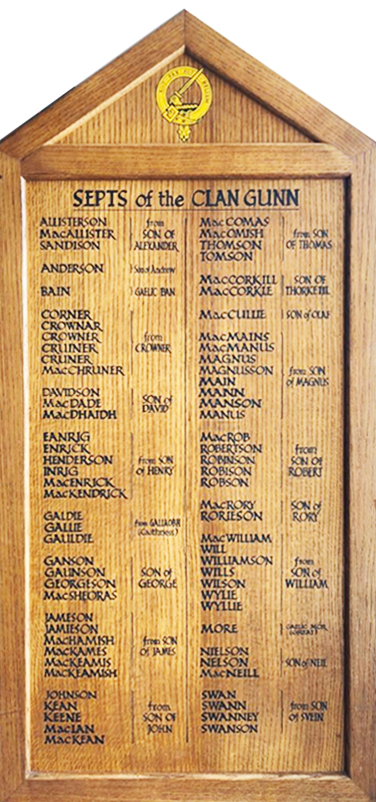
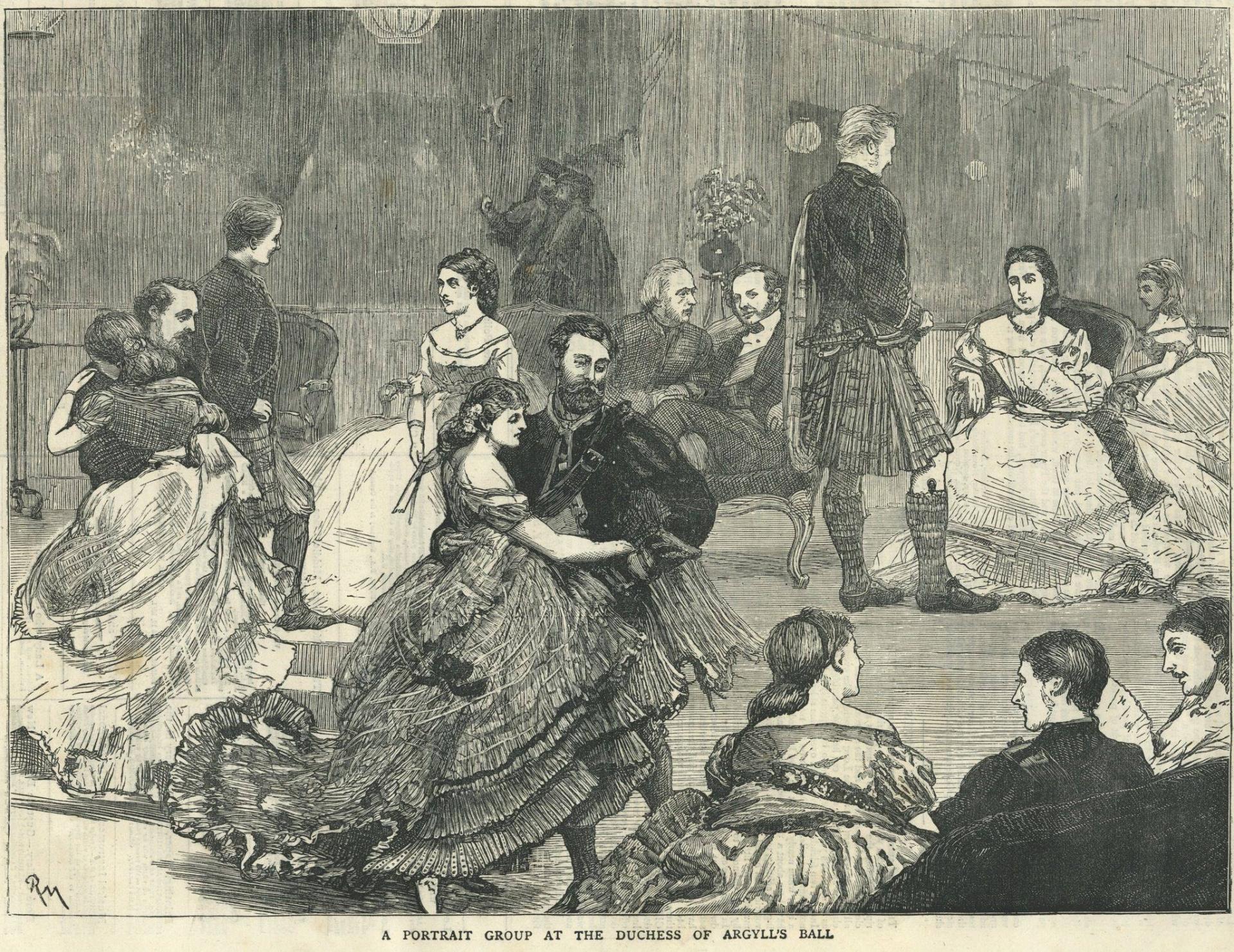
And frankly a lot of people desperately wanted to have their Scottish self-identity validated by some sort of authority. This was the peak of the “Tartan craze” in Britain and having a connection to Scotland, however tenuous, was cool.
As a member of a recognized Clan Sept, you are invited to wear the tatan of the clan. That is putting it as simply as possible. There are of course many clans that have offshoots such as the Campbells whose various splits and septs are almost clans in their own rights.
Take the Campbells for instance. There are the territorial branches of Breadalbane, Cawdor, and Loudoun. Then there is a gaggle of Septs. (Arthur, MacArtair, MacArthur, MacCarter, Bannatyne, Ballantyne, Brunton, Burnes, Burness, Burnett, Burns, Caddell, Cadell, Calder, Calvert, Cattell, Camp, Connochie, Conochie, Denoon, Denune, Fisher, Fullerton, Gant, Gibbon, Gibson)
Notice how a couple of these seem to be simply different spellings of the same name? (Burnes and Burness, Caddell and Cadell) That’s pretty common. It’s more or less the same family, but the spellings and offshoots are all accounted for as official.
Our Tartan Database includes each Clan Tartan and includes all of each clan’s sept names.
Seemingly Random Names Claimed By Clans
There are also a few occupational names that have become accepted as Septs of various clans due to the number of people with that name claiming loyalty to the clan back in the day.
The best example is Smith.
"Smith" refers to a blacksmith or metalworker and emerged independently across almost every region of Scotland as well as other countries like England. So naturally, almost every clan historically had its own resident smith.
The most widely accepted clan affiliations for Smith include MacPherson, Chattan, Mackintosh, MacFarlane, MacDuff and MacDonald.
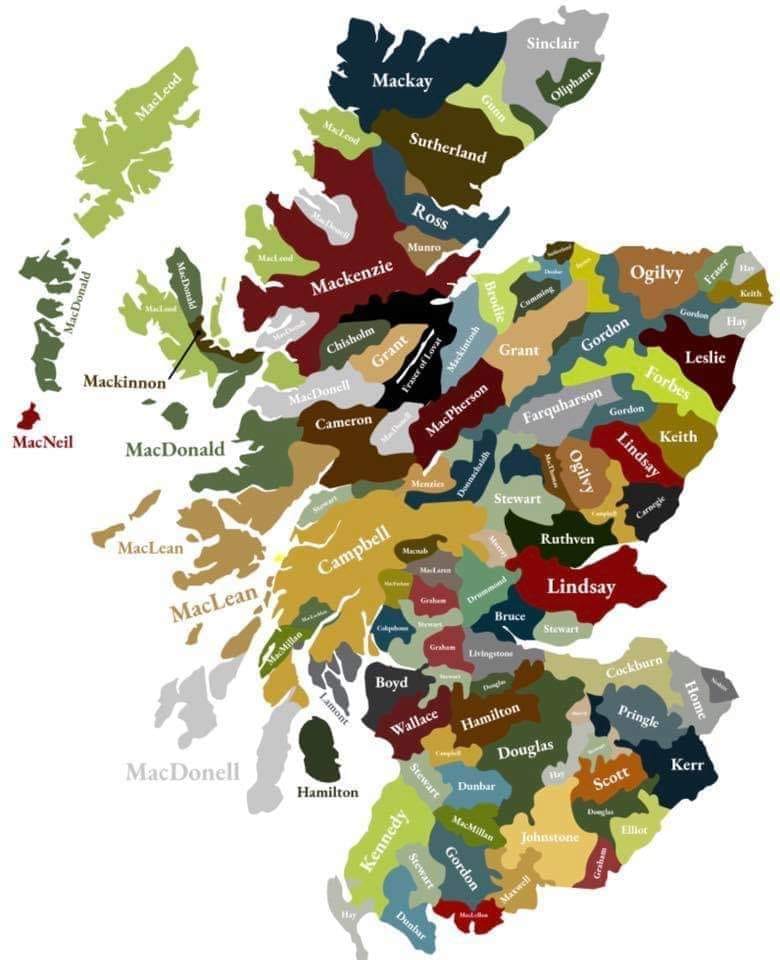
If you are wondering if your name is a Sept, the best thing you can do is try to narrow down the geographic origin of your ancestors in Scotland.
Adoption and Clan Identity
Let’s talk specifically about adoption. If your ancestor was formally adopted into a family, then from an historical and cultural standpoint, they became part of that family.
Pre-modern societies generally understood that life was messy. Records were incomplete. Relationships were complicated. Children were raised by extended family members. Widows remarried. Children born out of wedlock were adopted by cousins. And so on.
So if your great-great-grandfather raised a child as his own, gave that child his name, his protection, and a place within the family, then that person became part of the family story. If the name appears in your geneaology, it's legit enough.
What about a modern family adoption? The same logic applies. If you were adopted by someone who has a clan name for a surname, you have been accepted. YUou can use the clan tartan. That's it.
We are aware of one or two occasions where an individual, who is very close to members of a modern clan society has asked for some sort of official "adoption." Nothing wrong with this idea, however it is not something 98% of people would ever need to consider. It is more of a statement of a modern relationship.
Final Thoughts On Finding The Right Tartan For You
At the end of the day, wearing tartan is about celebrating heritage, identity, and connection in whatever way works best for you.
As we have said many times, there are exactly zero rules preventing you from wearing any tartan you want.
If you have a clan connection on your father’s side, great.
If the stronger connection is from your mom, also great!
You can even have both family tartans and wear them alternatively to honor the whole family.
Remember also that regional or district tartans are also valid. After all, some people have no exact clan connection at all, but do have a clear sense of where their ancestors hailed from.
Most of all, remember that each of us has a different heritage story. How you arrive at the right way to honor your clan is your call. If your genealogical connections are slim, you are far from alone. Let the stories that have been handed down to you be your guide. Keep learning as much as you can about your family’s history and the history of the Gaelic lands. That knowledge is more important than anything else and your passion for it is the best source of pride.