What are the worst mistakes people make when purchasing a kilt?
Buying a kilt? Awesome! You’re about to do something freaking amazing for yourself — a new path toward self-expression, pride, heritage, freedom, and frankly, a whole lot of fun.
But there are some pitfalls to avoid; both in purchasing a kilt and wearing a kilt. Let's break down the most common mistakes.
1. Rushing Into It
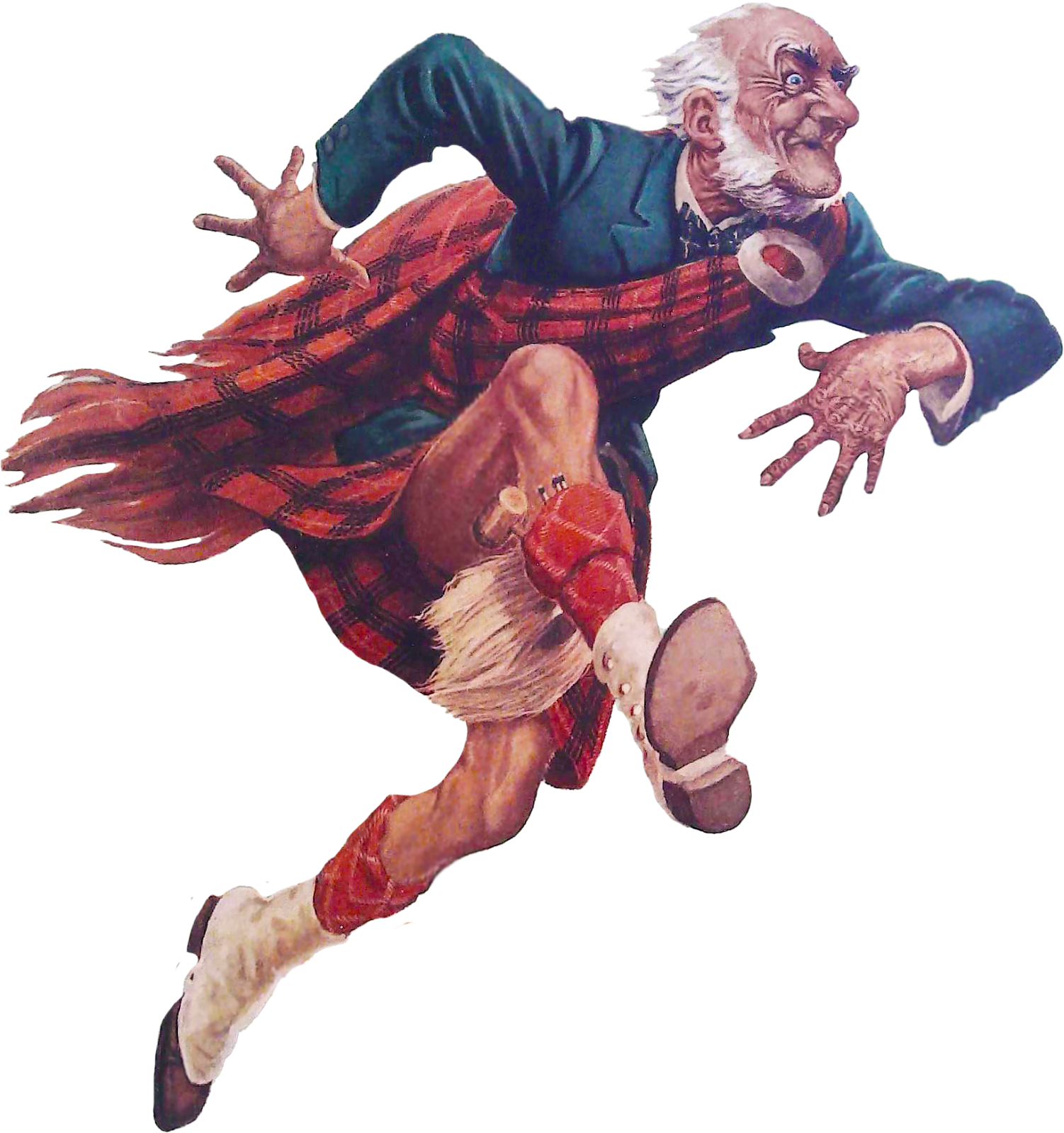
Most gents who come to us for their first kilt are in the same place emotionally. They’re crazy excited … and maybe just a tiny bit nervous.
And that’s a good thing, frankly. We'd rather you come to us straight off. Not just becasue we want to do business, but becasue we find a lot of the errors new kilt wearers make (and regret later) happen because they are going it alone, usually buying online and in a hurry.
If you do not read the rest of this article, at last take this on. This is the macro. Do. Not. Rush.
Whether you’re buying traditional Highland dress or a modern utility kilt, most first-time errors come down to impatience. Instant gratification is a trap, my brothers. It will lead you to:
-
Skimp on quality instead of saving a bit more.
-
Use bad measurements.
- Possibly buy the wrong tartan.
-
Throw it on without double-checking how it’s meant to be worn.
-
Try to build the perfect outfit all at once.
2. Not Doing Your Research
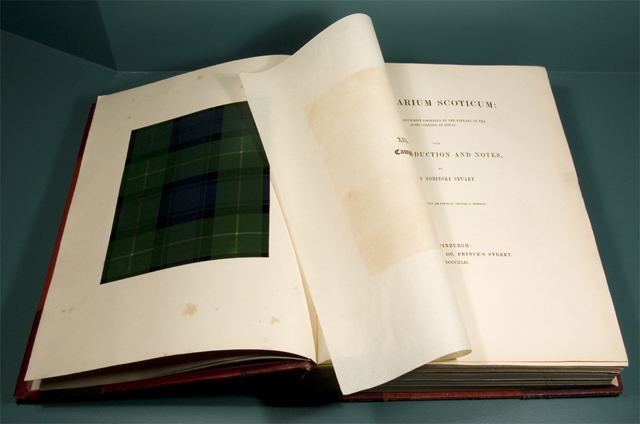
This is really just like "1A" but we want to stress it. To set yourself up for success from Day One, spend some time learning:
A. Who You’re Buying From
Not all kilts are created equal. rather than buy the first kilt you find online, do some poking. There are, sadly,. many sellers now who will dress up cheap, mass-produced junk using AI or fancy photos stolen from the websites of quality companies. Yes, that includes us too though we try to police it as best we can. The issue is that these sellers are often located in places like Pakistan or China and it can be hard to take them to task.
Pro Tips:
- If the deal seems too good to be true, it probably is.
- Dive into online forums to see what kilt wearers think of the seller.
- Check google reviews, etc.
- Only buy if the kilt is made from 100% wool. (as opposed to a blend)
B. What Type of Kilt You Actually Need
Be clear about how you plan to use your kilt. Grantd, tbhi can change over time, but it is a good thougth experiment.
Are you dressing for:
-
Formal events?
-
Highland Games?
-
Daily wear?
-
Work?
Generally speaking, a solid kilt can apply to any of these setting, but if for example you are shopping on a budget or maybe live in a hot climate, it may affect your final choice. Context is king.
3. Measuring Like It’s a Pair of Jeans
This is the most expensive mistake.
The wrong waist measurement:
If you order based on pant size, it will almost certainly be wrong. "Fashion sizing" is not just for the women. Fast fashion manufactueres wil always lead you to beleive that you wear a smaller size than your actual physical measurements - it's how the flatter you and it has become so ubiquitous that most men dobn;t realize it is being doen to them. If you wear a "38" in slacks, your actual waist measurement is probably more like 40-41 inches!
The wrong length:
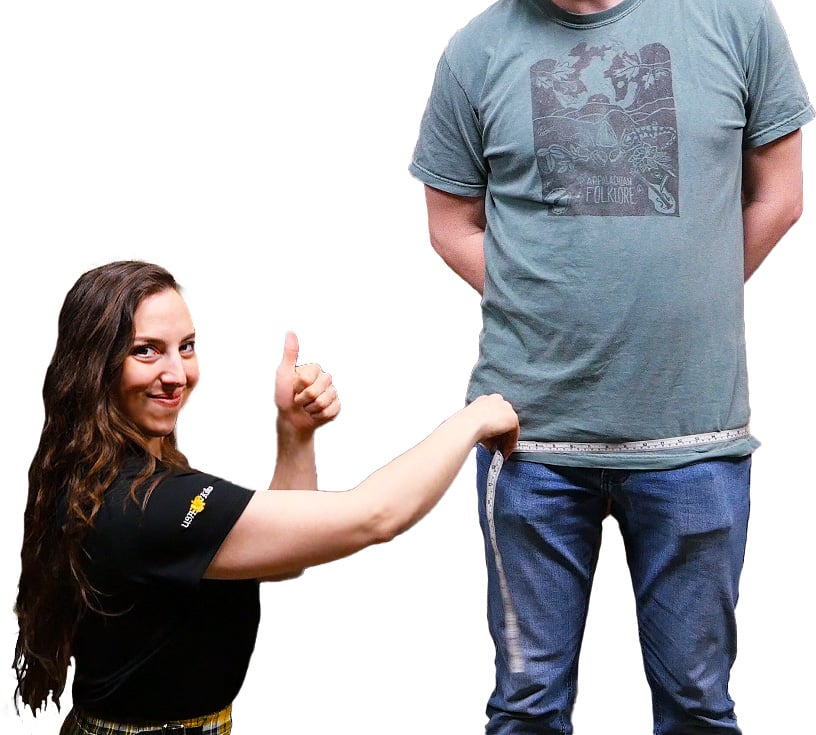
A kilt is worn at your true waist — at or slightly above your belly button — not down where your jeans sit. If you measure the length for your kilt by starting at where your panst sit, it will be too short. nether can you guess the proper length for your kilt by using your inseam. That has nothing to do with it. If you’re six feet tall and you order a 21-inch kilt because that’s what measured at your jeans waist, you’re getting a mini skirt. And there’s no magic fix once it’s made.
ALWAYS Take the time to:
-
Measure at your true waist.
-
Measure the length from that point to the middle of your kneecap down the side of your leg.
-
Double-check your numbers.
- If you can, get a friend to help.
Want more advice on this? We have a whole How to Measure for a Kilt video!
4. Trying to Buy Everything at Once
Hey, times are tough. We get it. So we realize how sticker shock can come into play when you are looking at buying a kilt. Sadly (or goodly?) this is one area where you absolutely get what you pay for. Hand-crafted kilts can last a lifetime and carry a lot of benefits.
So if you are comitted to quality and want to do it right, how do you avoid breaking the bank? Peanuts.
Yes you read that right. We often say that buting kilts, getting into Highland Dress is like eating peanuts. There's always something new and fun to add to your collection and you can add items you love over years and years. So there is zero rush.
What not to do if you are on a strict budget:
Don't scare yourself into thinking you have to have a complete head-to-toe outift in order to be 'doing it right".
A complete Highland Dress outfit for "sharp daywear" can include:
Here’s the truth: you don’t need it all on day one.
Just buy these three things:
-
The best kilt you can afford without breaking the bank
-
A simple, serviceable sporran
-
A kilt belt and buckle ( actually optional!)
If you’re going to spend the bulk of your budget anywhere, spend it on the kilt itself. That’s the centerpiece. Everything else grows around it.
Build over time. Upgrade your sporran later, or buy one in a different style. Add (or improve) kilt hose. Invest in a jacket when the occasion calls for it.
Now if you DO want a complete outfit, like for a wedding, we can help there - see our Kilt packages.
Now About Wearing the Kilt Itself...
The first time you wear a kilt out in public, you’re going to feel it. People notice. They look. They ask questions. Bu the most fun part? Getting the compliments! That only works if you look decently put together. We have another article on how to build up your kilt confidence, but here are a few quick notes for newbies going out in a kilt for the first time.
5. Wearing It Wrong
A few classic mistakes:
- Pleats go in the back. Flat apron in the front.
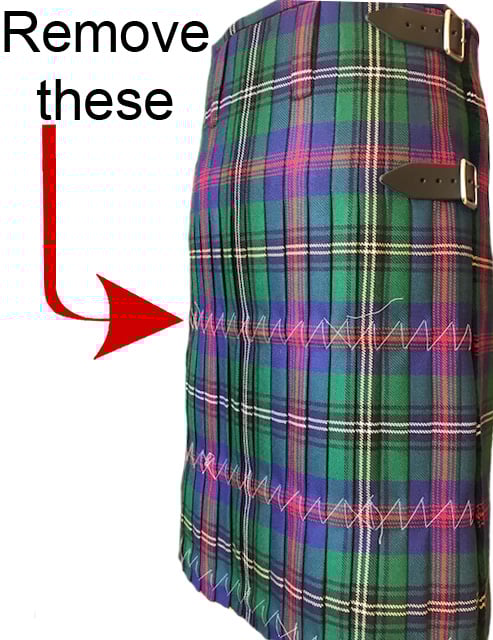
- Remove the basting stitches. Sometimes you will receive a new kilt from a maker and it will have these weird crisscross zigzag stitches across the pleats. These are basting stitches; temporary cotten threads used to keep a kilt neat during final pressing and in transport. REMOVE THEM with a pair of scissors so the pleats can swing freely. You can sometimes just pull them apart. Do not worry about the kilt when you do this. Tartan wool is tough stuff.
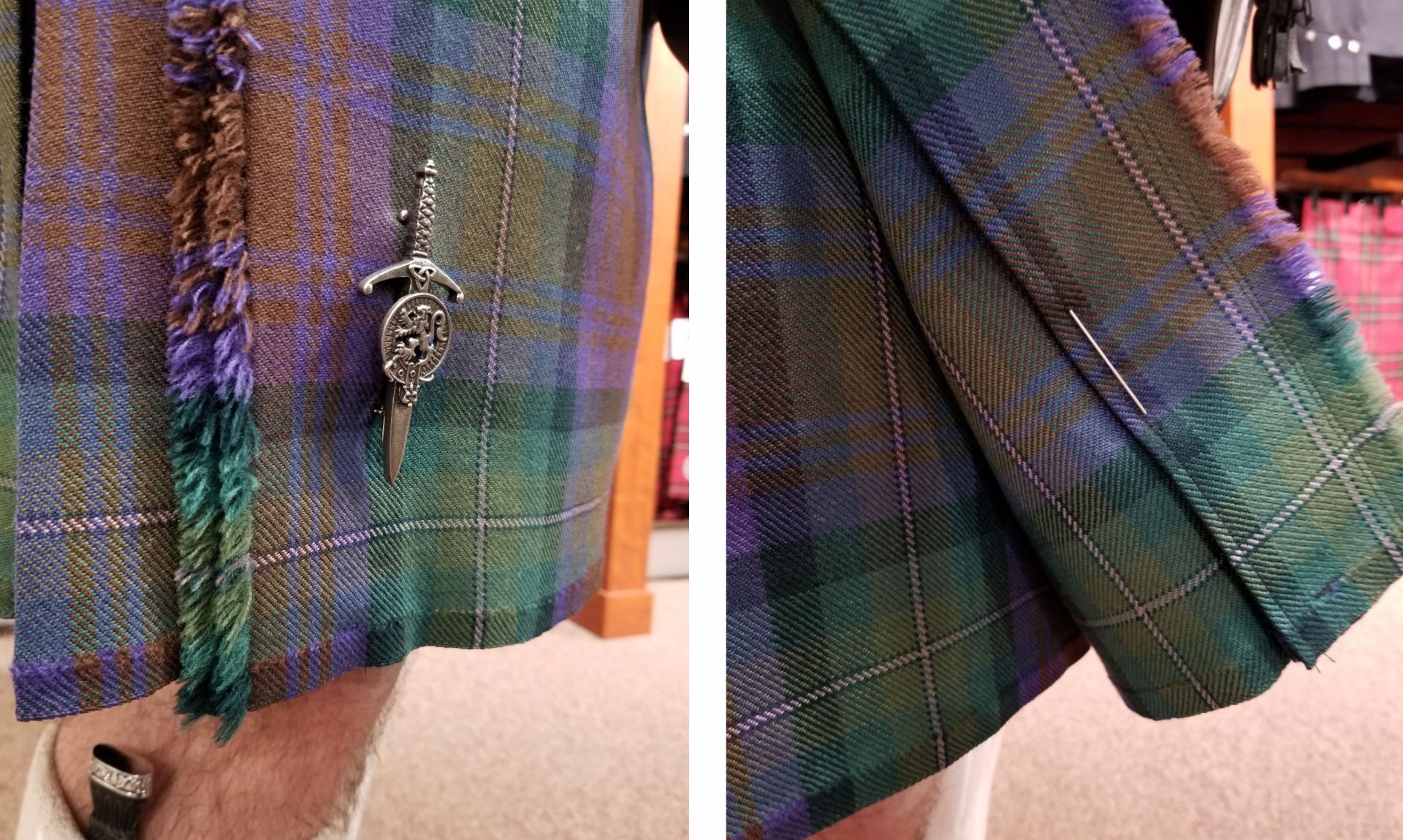
- The kilt pin goes through the top apron only. Not both layers. This is as much about protecting your kilt as appearance. If the layers are pinned togther, they will not move and seperate properly when you walk or sit, and it is going to look really off. You are also putting undue stress on the fabric. A modern kilt pin acts as a small "wind weight" to keep your front apron from flapping about, but it is really mainly a decoration. You do not even need one (hence us not listing it in the kilt essentials above).
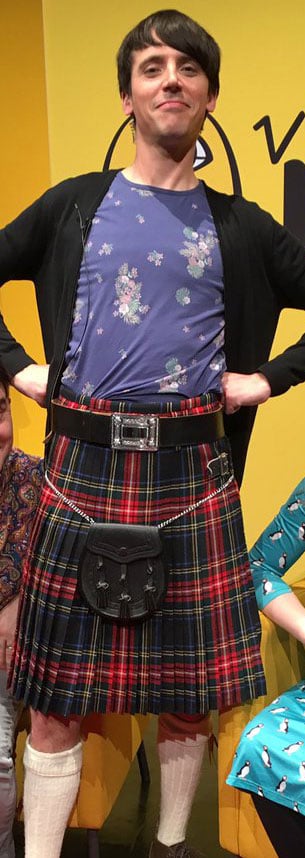
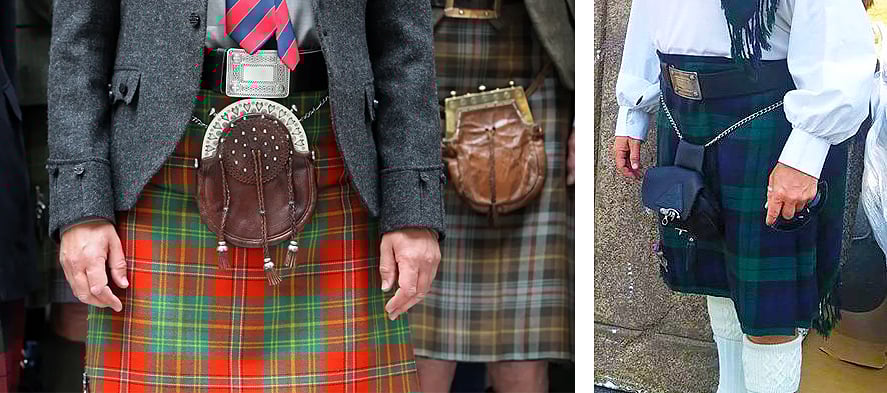
- Set your sporran properly. Use the three-finger rule: Your sporran should hang about three finger-widths between the top of the sporran and the bottom of the belt buckle. Too low is worse than too high in terms of looking sloppy, but neither is great.
-
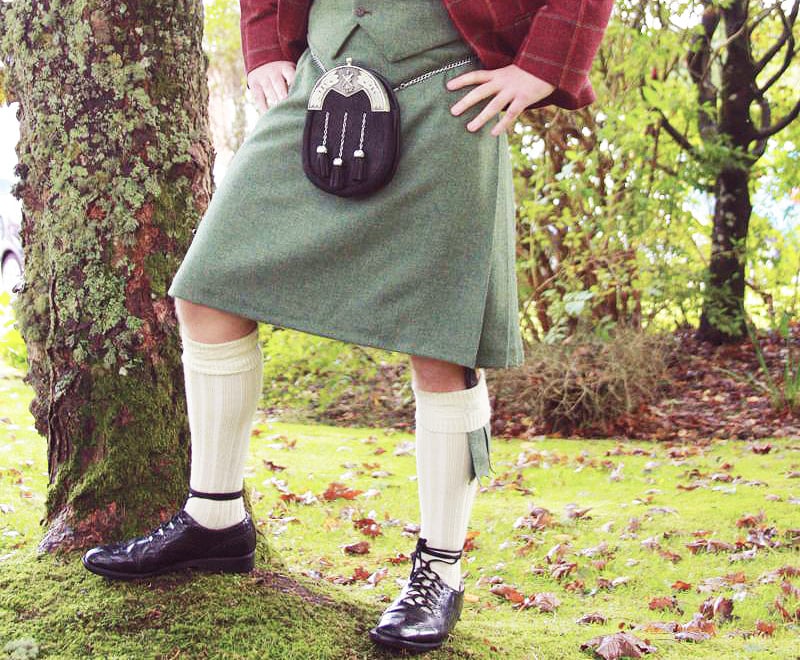
Avoid cream or white kilt hose. This one’s style advice, not law. But in our experience cream hose read as “rental” or "costume." And in fact historically they only exist because they were cheaper and faster to produce for the rental companies. They became an unfortunate standard because they "go with everything. " If you are uinsure what color hoes to buy, start with charcoal or tan (for day) or try for a color that tones well (matches) a color in your tartan.