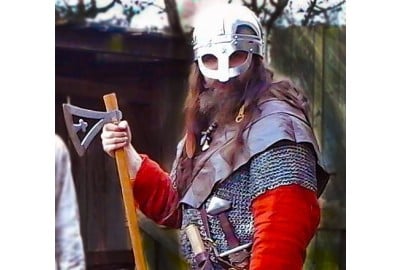
Did Vikings Influence Scottish Culture? In More Ways Than You Might Think.
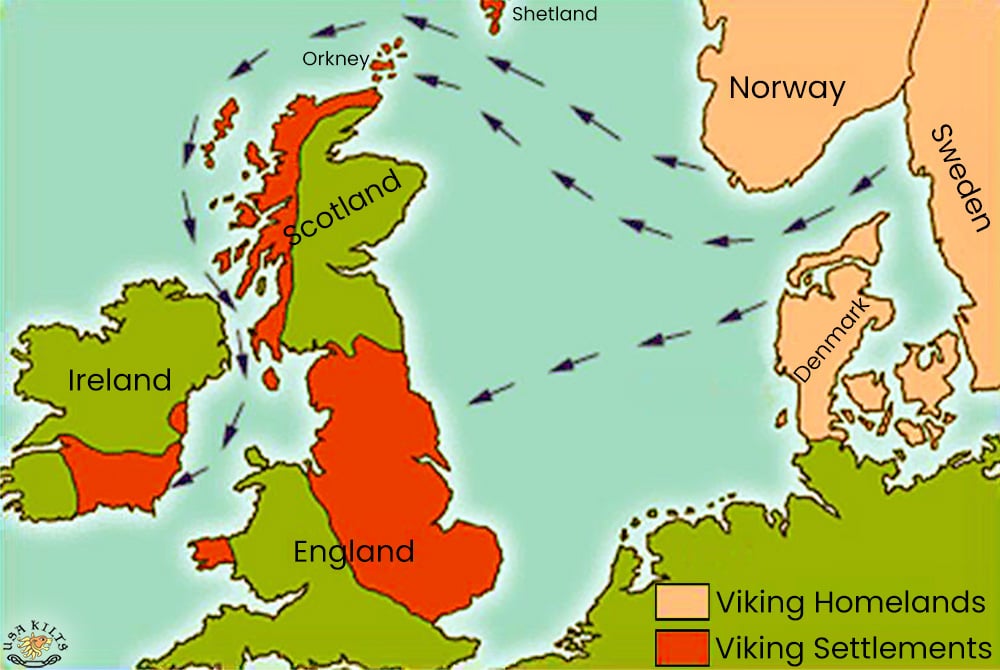
Situated where it is in the North Sea, Scotland was a natural destination for the Vikings; either for its own sake or as a convenient first stop while sailing around the British Isles. Raids on the Scottish coast and isles began in the 8th century but it was not long before some Norsemen began settling in these lands.
One of the primary motivations for Norse exploring and raiding was population pressure. For the Vikings a successful raid was counted in terms of treasure or slaves which they could use back home to increase their holdings. But an equally popular option was to find new fertile lands they could call their own, far from the competition back home.
In 1098 the Scottish islands were united under the Norwegian king, Magnus III by King Eagar and collectively became know as the Kingdom of the Isles. The territory stretched from the southern islands of the Isle of Man and the Hebrides all the way to the northern islands of Shetland and Orkney, which retain their Nordic cultural identity to this day.
Not surprisingly, Viking mainland settlements were most concentrated along the northern and western coasts. Caithness and Sutherland in particular were annexed by the Norwegian Crown, forming a core part of the Earldom of Orkney.
Other areas of influence included the western seaboard, particularly around the Firth of Clyde, Galloway, and the Moray Firth which started as a launch point for raids and later became a trading hub. (pretty classic pattern there)
In these areas intermingling of Scandinavian settlers with the locals resulted in a distinct, blended culture often referred to as Hiberno-Norse or Celto-Norse.
What Did the Vikings Give to Scotland?
The Vikings lived in Scotland and her islands as a distinct cultural entity for around 300 years. In that time, they imported a variety of goods and practices which became part of the Hyberno-Norse culture ... part of Scotland going forward. Here are a few of the more exciting items.
Ships:
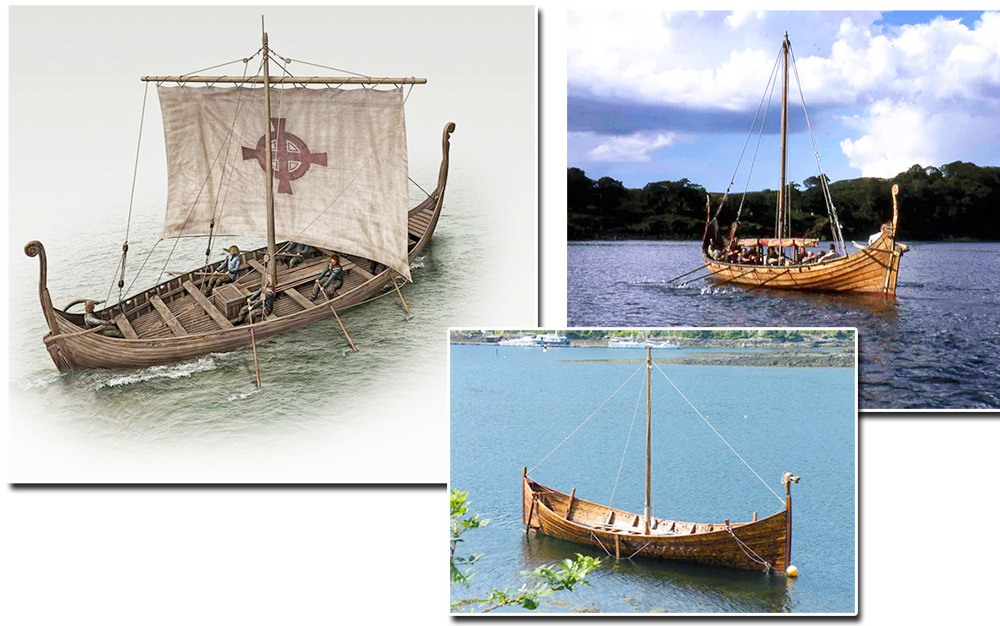
One of the most iconic items was the birlinn; a wooden galley used to quickly travel about the islands and most famously used for war by the Lords of the Isles. The birlinn was a true Viking longship but in miniature. Like its big brothers, the ocean-going Herskip (war ship) and Knarr (cargo ship), it had a clinker-built hull and square sail - ideal for the stormy waters of the Hebrides and easily portaged.
Houses:
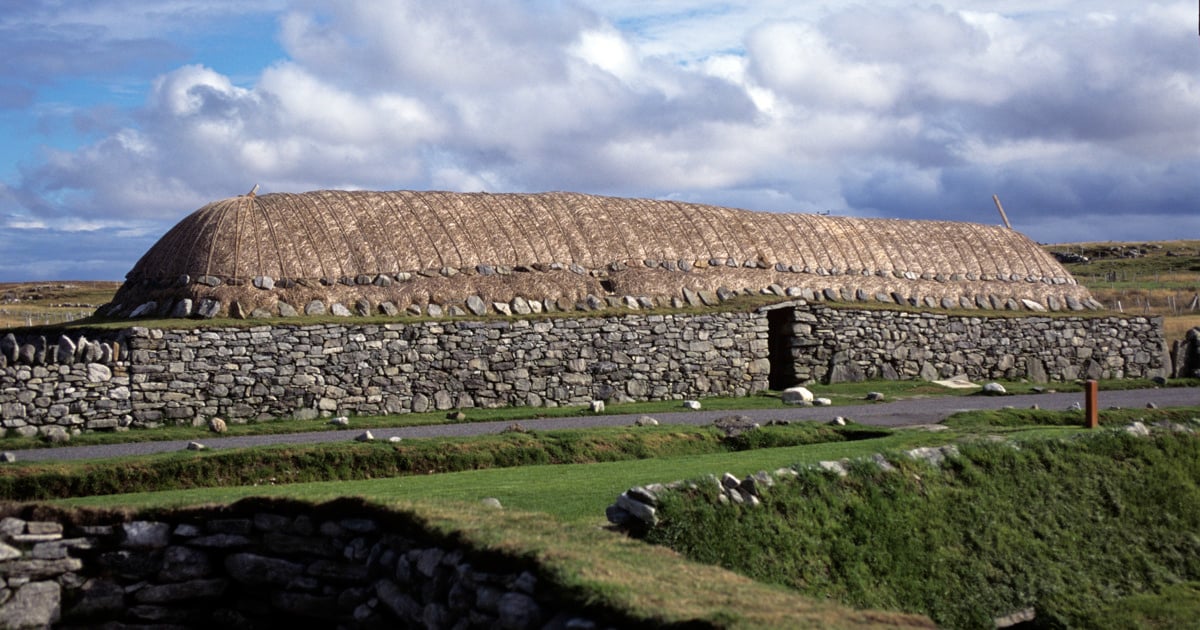
Another item most people would not consider is rectangular housing. Before the Vikings, Hebridean buildings were typically circular. Th most famous design being the broch; a circular dry-stone tower whose design dated back to the Iron Age and was in use roughly from 400 BCE–200 CE.
The Norse introduced the longhouse, which evolved into the traditional Hebridean Blackhouse; a structure that housed families at one end and livestock at the other. This design was retained well into the 19th century (you can even see one in the film Rob Roy).
The Norse also introduced advanced stonework including man-made quays and canals, such as the one on the isle of Skye that connects Loch na h-Airde to the sea.
Food and farming:
The Vikings also brought in new technology and foods. Their water-powered horizontal mills were used to grind native barley and oats along with new crops like rye and flax. Their farming techniques, developed in the harsh conditions of Scandinavia, brought new productivity to the poor soils of Northern Scotland. And in those fields one would find Viking sheep; the direct ancestors of modern Hebridean sheep.
Laws and a Sense of Freedom:
Ever wonder where the "ornery" Scottish sense of independence came from? Well not to put too fine a point on it but it is at least a little bit thanks to the Vikings. Two great gift the Norse settlers left Scotland were Udal Law and the Thing.
Udal Law:
Udal Law (from the Old Norse óðal) is an allodial system of land ownership that remains part of the law in Orkney and Shetland. "Allodial" refers to land ownership that is absolute, free from taxes or duties owed to a feudal lord or government. Yes, it sounds very Libertarian. Unlike the feudal system that dominated the rest of Scotland (and in some senses still does), Udal law did not recognize the Crown as the ultimate owner of the land, stating that land was held "of God."
This meant there was no need for written title deeds. Ownership could be proven simply through long-term possession. Land owners would divide parcels evenly among their children rather than giving it all to a first-born son.
Udal law is still cited in Scottish courts, often where it pertains to fishing and other maritime issues. It serves as a powerful symbol of identity and a basis for modern claims for greater local control over resources.
The Thing:
One of the reasons Britain got a headstart on democracy back in the Middle Ages was because England and Scotland has inheritted Anglo-Saxon and Norse systems of government by consensus.
In the north this was known as the Thing (or Lawthing, or in Iceland the Allthing). The Thing was a gathering of landholders and their dependants, family, friends, etc. In Iceland it was essentially everyone who could make it to the meeting site.
During the Thing, any dispute could be raised and issues were settled, usually through trade or compensation. The Thing was also a time for socializing, doing business, and arranging marriages. In Shetland, the meeting site at Tingwall (Old Norse Þingvöllr) remained the administrative center for centuries.
In the Islands and coastal settlements, Things would evolve into market days. The sense of "everyone gets a say" would become a strong aspect of Scottish clan culture, even as the clans were forced into behaving more and more like feudal lordships.
Am I saying we have the Vikings to thank for our modern democracies? No. Of course not. Why would I, proud son of a Nordwegian-Scottish lineage, ever imply that?
Did the Vikings Wear Kilts? ... No. Here's What We Know.
Sorry to disappoint, but no. However, this is not a show-stopper for those of us with Scandinavian heritage. No more than having any other heritage should make you feel you are not allowed to wear the kilt. It just means your personal expression could be a bit different.
So why do some people get the impression that the Vikings wore kilts or that they even introduced the concept?
It comes from reading too much into small fragments of Scottish history and linguistics. The first trigger is the word kilt itself.
Scottish Gaelic borrowed from many different linguistic sources over the centuries. The Scotti tribe (Gaels) from Ireland had settled in Scotland between A.D. 400 and 600 eventually establishing the kingdom of Dál Riata along the coast of Argyll. This existed alongside the Pictish kingdom for a long time before eventually the two were unified under Kenneth MacAlpin in 844 BCE. The Gaelic and Pictish languages coexisted and intermingled until the later arrival of the Vikings.
The Viking language seems to have largely supplanted that of the Picts during the 9th and 10th centuries. It was the language not only of conquerors and rulers but more importantly of trade.
After Viking rule faded and their settled descendants integrated, much of their language remained. Old Norse is well represented in Scottish Gaelic. Thousands of places in the west have Norse roots and there are hundreds of loan-words, many relating to maritime topics such as fishing and sailing (go figure). For instance:
- Sgeir: "skerry"
- Bàta: "boat"
- Sgoth: "skiff"
- Fuar" "cold"
And that brings us to kjalta.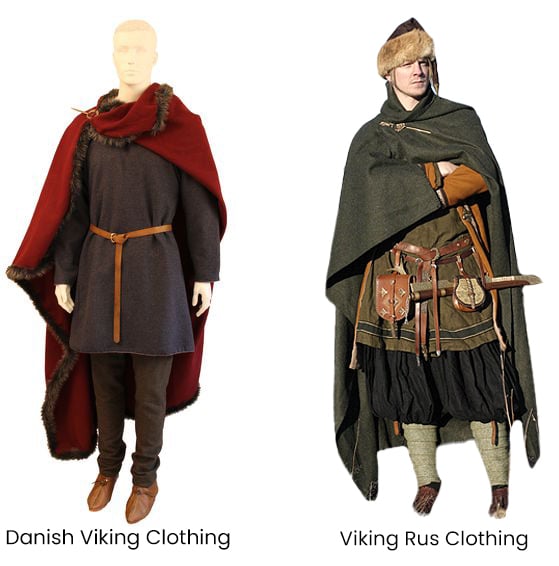
Is Kilt a Norse Word? Yes.
Kjalta (or kelta) is an Old Norse word adopted by the Scots which refers to a fold in a garment, the lap, or the act of tucking up clothes. It implies arranging clothing to avoid mud or for mobility; "to fold by gathering up to the knees." Note that the Swedish kilta translates to "swaddle." The Middle English word 'kilt' evolved from these sources.
These roots have led some people to infer that the kilt was "invented" or "introduced" by Vikings. There is no evidence for that. It seems the word kilt only evolved into a description of a garment in the 18th century.
The "OG" Gaelic word for a kilt is of course féileadh mór meaning "belted plaid" (plaid meaning a simple length of cloth like a blanket) and can be documented back to the late 16th century. The earliest surviving image of a belted plaid is believed to be a watercolor from around 1570, with descriptions from this period highlighting a full-length, un-tailored woolen garment of about 4-6 yards used as both clothing and a blanket. The "modern" short/little/small kilt of the 18th century was called the feileadh beag.
Use of the word "kilt" came later as shorthand for the belted plaid, at least partly due to the influence of English and Scots dialect speakers from the Lowlands.
Think of it like this:
"I saw Angus yesterday. He was wearing his féileadh mór kilted up so high I could almost see his bum."
Over time the verb/adjective became a noun...
"I saw Angus yesterday. His kilt was so short I could almost see his bum."
Did The Vikings Wear Tartan?
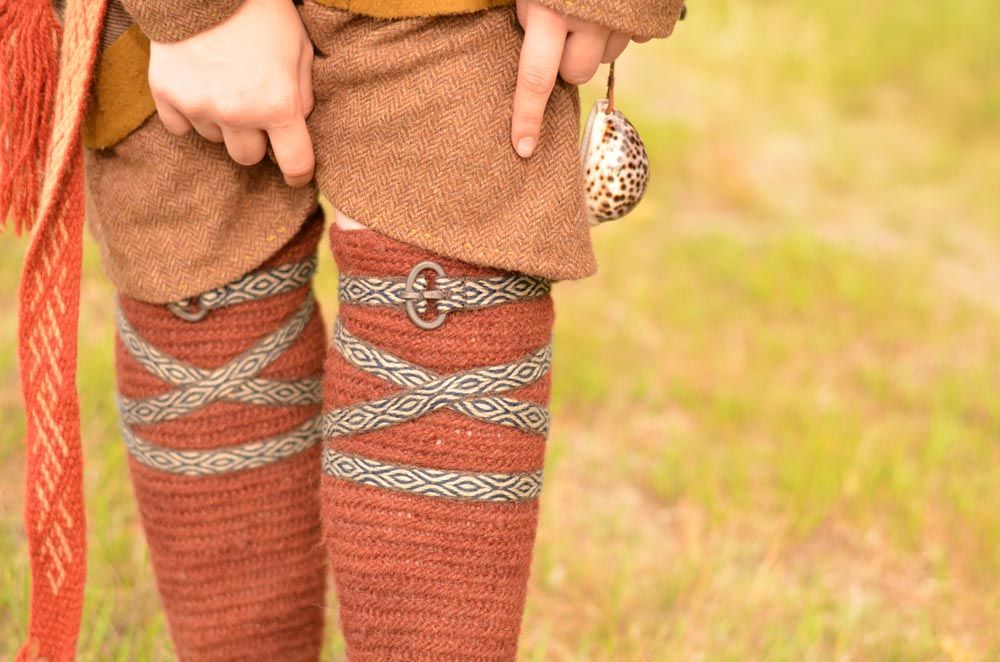
While we are sure they knew the technique of weaving tartan (it had been around for over one thousand years already) it seems the Norse just did not go in for it. We do know that they sometimes included simple, thin lines of a single color in their weaves. What we might call a "windowpane" pattern now. Wool and linen might also be woven in twill patterns. Clothing was decorated with embroidery, decorative stitches, or tablet-woven trim.
Okay, but is there any evidence for a kilt-like garment before the 16th century? Maybe the Vikings adopted that?
Sadly no. All we know for sure is that the Gaels liked to go around without pants. This was in marked contrast to the Vikings who encountered them. Here's one piece of actual history that fueled the 'Viking Kilt' idea.
There was once a very powerful Viking king, Magnus III Olafsson (Old Norse: Magnús Óláfsson), who ruled Norway from 1093 until his death in 1103 and spent a large amount of his time in Scotland and Ireland.
Magnus was given the 'byname' (a nickname associated with personal traits or deeds) of "Barefoot" (Old Norse: berfœttr).
Also called "Magnus the Tall" and "Magnus the Strife-lover" in various stories, his more amusing byname of "Barefoot" or "Barelegs" supposedly came from his adoption of Gaelic dress. According to Snorri Sturluson, he went without trews (tight-fitting pants often cut on the bias for flexibility), merely wearing a short tunic. Another account claims the name referred to him riding barefoot in the Irish fashion.
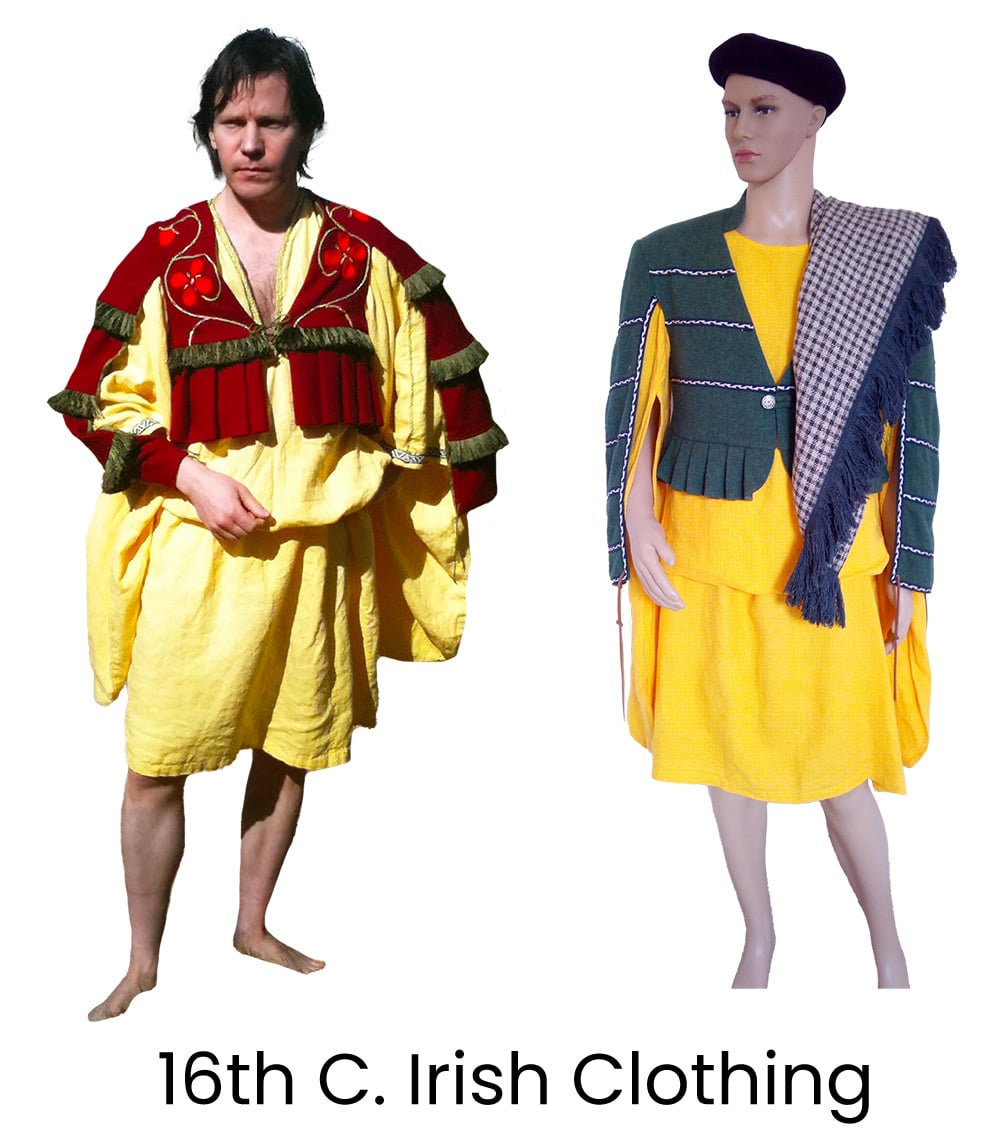
Interestingly, by the 16th century some Irish were wearing trews but we also have evidence of Irish warriors going bare-legged. It is possible that going pant-less was a seasonal choice or driven by environmental factors such as mud, working near water, etc.
Side note: 16th-century images of Irishmen wearing no trews, but a voluminous léine, once led some people to imagine that the Irish invented the kilt. There's no real evidence for this.
We do know the Vikings wore a variety of different trousers with different designs appearing in different regions over time. If Snorri is to be trusted, Magnus may have tossed his trousers aside while working in the British Isles for the same reasons the locals went without. Perhaps just practicality in a damp climate that was warmer than Norway. he may not have been the only one, but who knows. Again, a connection between Vikings and kilts is shown to be, well, just not there.
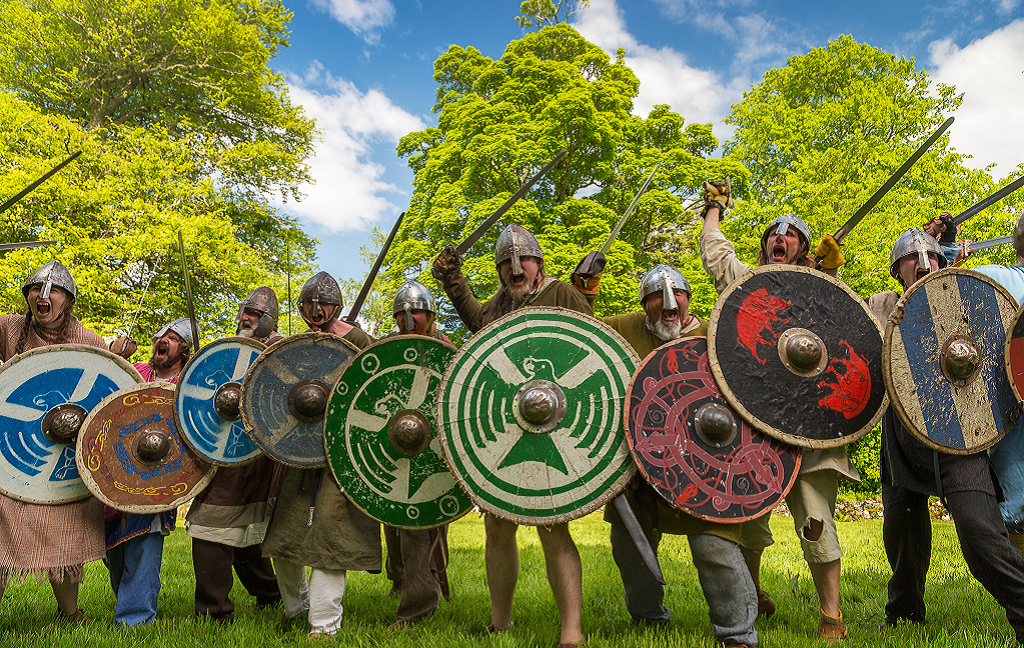
Are There Really "Viking" Clans? Yep!
DNA studies show high levels of Norse ancestry, the peak being up to 44% in Shetland which is not surprising. There are many Scottish clans whose roots lie with Norse settlers from the Viking period.
As we all know, the ‘Mac’ prefix means ‘son of’ in a Scottish surname. This convention allows us to find some of the Nordic origins easily if we account for linguistic drift from how the original name sounded. For example:
- MacIvor - "sons of Ivar"
- Macaulay - "sons of Olaf"
- MacAskill - "sons of Asgeir"
- MacSween - "sons of Swein"
Of course MacLeod, MacDonald, MacDougall and Gunn while not so obvious have well-known Nordic roots.
In each case, the progenitor of the clan is someone who earned himself a big reputation, usually towards the end of the Viking period.
For example, the name Leod derives from the Old Norse Ljótr, meaning “ugly” or perhaps “fierce” and dates to the early 1200s. He is accepted as the eponymous founder of Clan MacLeod, but there are no contemporary written records that clearly say this. (We have to accept that legend and history merge in early Scottish history.)
Though there's some debate, the most common tradition says Leod was the son of Olaf the Black (Óláfr Guðrøðarson), a Norse-Gaelic king of Man and the Isles (d. 1237). If true, that would make Leod part of the Crovan dynasty, linking Clan MacLeod directly to Norse royalty. That is a pretty epic origin!
And my personal favorite example - Clan Gunn.
Gunn is among the oldest of Scottish clans. Again, we see them appear in the 12th century and they are a perfect example of Hyberno-Norse integration being descended from the Norse Jarls (Earls) of Orkney and the Pictish Mormaers of Caithness. The Norse name Gunnr ("war" or "warrior") is considered the origin of the clan name. However, the clan claims one Gunni, grandson of the Viking Sweyn Asleifsson, as their progenitor.
Celebrating Mixed Norse and Celtic Heritage
Is there a tartan just for people with Scandinavian ancestry?
Luckily, unlike our ancient ancestors, those of us with Norse heritage can enjoy tartan and kilts to the fullest.
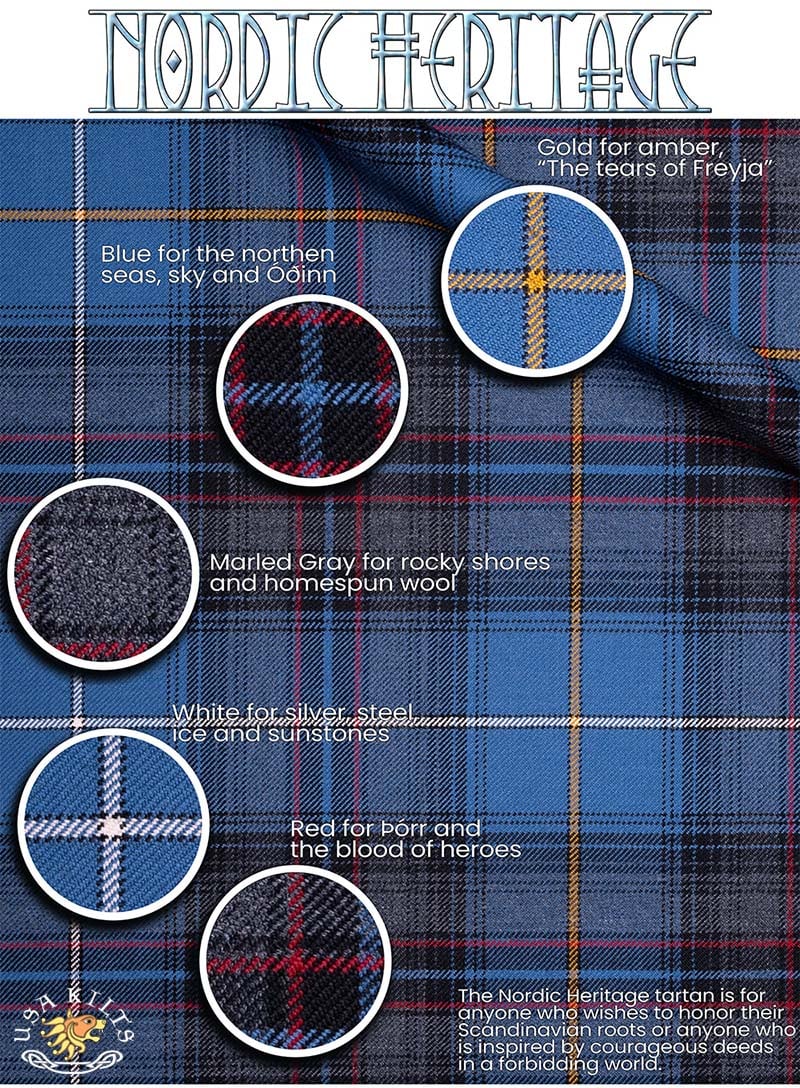
If you are a member of one of the Norse-descended clans, then a choice of tartan is pretty easy. If you do not have a clear clan connection (or simply want some variety), there's one tartan just for you, and we're proud to say it is a USA Kilts exclusive. Our Nordic Heritage tartan includes a variety of colors and design choices to represent key aspects of Nordic/Viking culture.
What Viking Kilt Accessories Are There?
Remember how we discussed the Hyberno-Norse hybrid culture? Well the long long legacy of that is it is easy to express your love for Nordic culture and heritage as well as your Celtic side. Common themes to look for include:
- Celtic Knotwork: The swirling over-under lines we all love first appeared in Ireland, but wee closely related to interlace patterns of ancient origin. Everyone loved them, including the Vikings.
- Zoomorphic designs: Intricate and beautiful themes of animals and people were extremely popular. Examples can be found in everything from the Bok of Kells to Rune stones.
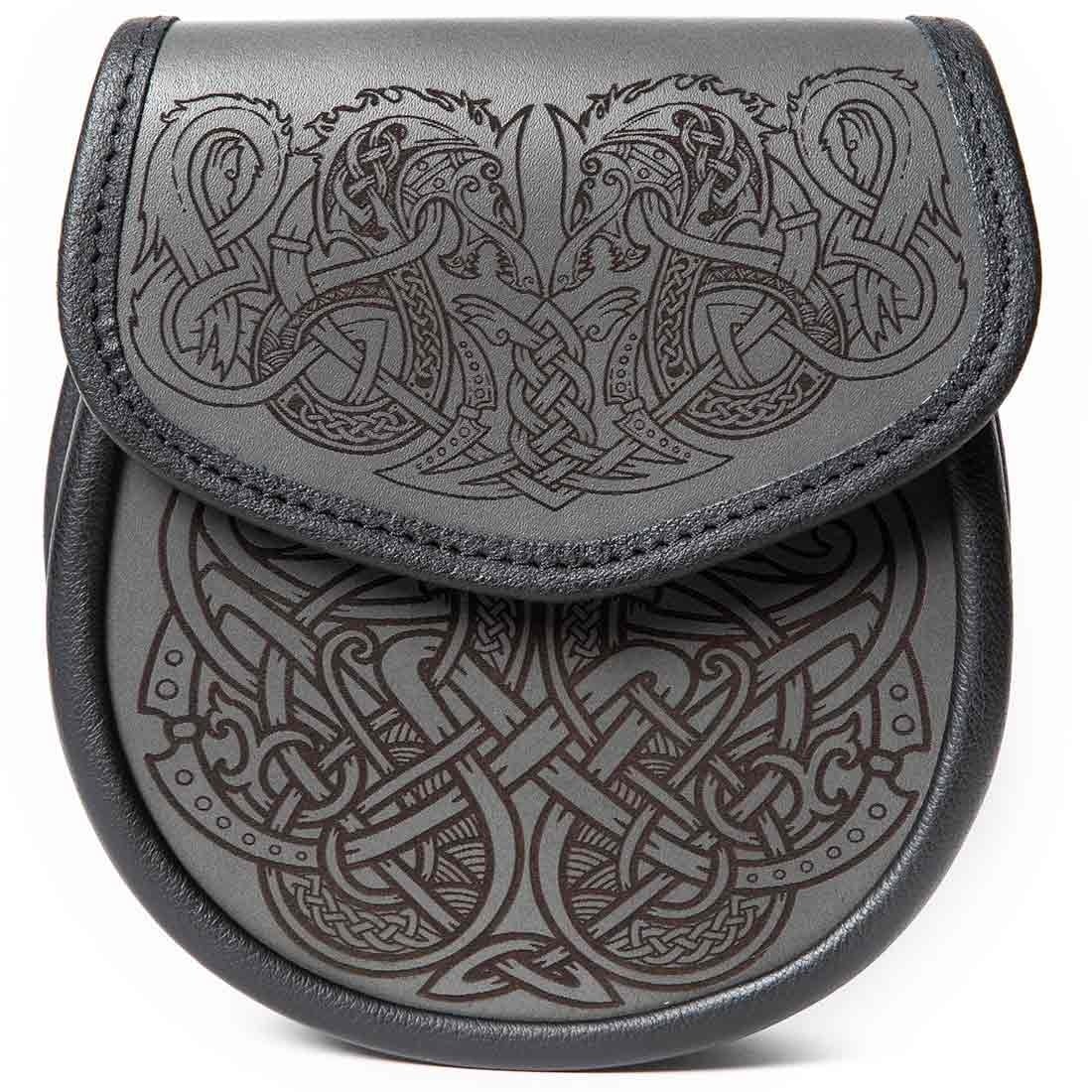
- Leather tooling: Both knotwork and zoomorphic themes can be found on belts, sporrans, and more.
- Metal Jewelry: The Gaels and the Norse both wore very distinctive accessories. The most common choice of metal was silver. A couple of accessories that were popular with both cultures were (and are) metal armbands and torcs.
Arm rings were important since they could also be used as currency; wearable wealth. This is even shown in the mythology. The Norse God Odin had a magical arm ring of gold named Droupnir, which recreated itself afresh every ninth night, dripping eight new rings of equal weight. This symbolized limitless abundance and emulated how warband leaders would give payment to their followers when out a'viking.
Torcs are rigid, or semi-rigid neck rings made from twisted metal rods with an opening at the front. The ends are usually formed into balls or small zoomorphic sculptures, for example dragon heads. Both Celtic and Viking men and women wore them. Torcs served as prestigious, often permanent, symbols of high status, wealth, and power. Like arm rings, many artisans today offer them, both as reproductions of archaeological specimens or new original designs.
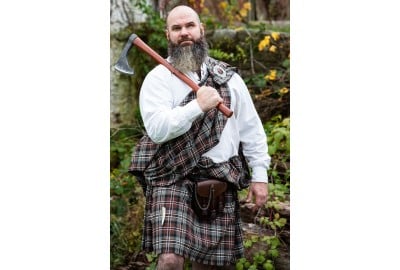
- Viking Kilt Accessories: When it comes to Highland Dress (kilt outfits) you can Norse-ify your outfit really well using Viking kilt pins and Viking-themed kilt belt buckles. Your sporran can also include some Viking sizzle with zoomorphic designs or modern art based on Viking themes.