
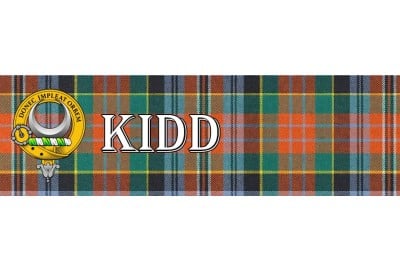
The House of Kidd: History of the Kidd Family in Scotland
The Kidd family's story differs somewhat from that of Scotland's great Highland clans. Rather than descending from a single Gaelic chief or semi-mythic progenitor (like the classic Viking) who ruled a Highland territory, the House of Kidd emerged from the Lowlands of Angus and Dundee- prosperous towns and fertile farmlands in eastern Scotland. Nevertheless, their history and character is fascinating. And it even includes a “pirate.”
Although the House of Kidd has no officially recognized clan chief today, it remains one of Scotland's oldest documented families. In point of fact, people bearing the surnames Kidd, Kyd, Kid, and Kydd have appeared in Scottish records as merchants, landowners, craftsmen, soldiers, engineers, sailors, and explorers for well over 800 years.
Kidd Family Crest
Unlike a Clan Crest, coats of arms belong to specific individuals and their lawful descendants, not to everyone who shares the surname. Over the centuries, various members of the House of Kidd have been granted arms, but there has never been one universal coat of arms representing every Kidd family.
Some commercial websites advertise a "Kidd family crest" or "Clan Kidd coat of arms." However, if you go shopping be a bit cautious. Try to select the one that is closest to your specific lineage, if possible. There IS a universally recognized Kidd Clan Crest however.
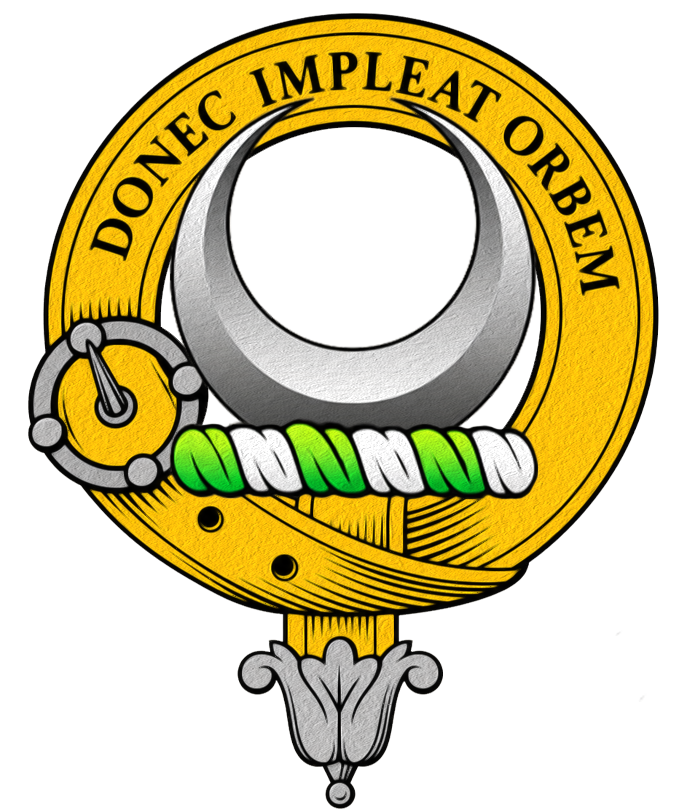
The crest is quite simple and elegant- "A Crescent Argent." That is, a moon shape depicted in white or silver metal.
The family motto is Donec Impleat Latin for "Until It Fill."
A bit cryptic maybe, but there is a great history behind it......
A more literal translation would be "Until it fills its orb" or "Until it fills the world."
Not all clan crests and mottos are related to one another, but in this case they absolutely are. The Kidd motto is a direct wordplay on the waxing moon in the crest. It's a coded meaning: Just as a crescent moon is not yet whole but growing, so is our family.
It implies intent, patience, and ambition. It announces that the family's influence, wealth, and status are steadily rising and will not stop until they reach their fullest potential.
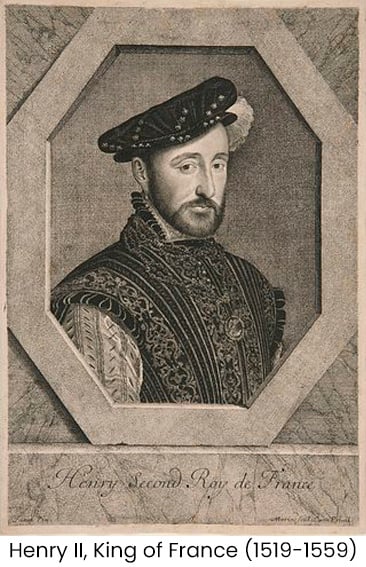
According to clan lore documented by the Comann Kidd na h-Alba (The Kidd Society of Scotland), the motto and crest date back to an advenute in the 16th century. Members of the Kyd family traveling or fighting abroad were supposedly presented with these heraldic honors by none other than King Henri II of France. It's hard to document fully but very plausible since during this period many Scottish soldiers served in the French military......the root of what would become known as the "auld alliance."
Outstanding service frequently earned these mercenaries French-granted titles and heraldry which they brought home, elevating their social status.
When the Public Register of All Arms and Bearings in Scotland was formally established in 1672, variations of the motto were officially recorded for different branches of the House of Kidd. William Kyd of Woodhill registered the full motto "Donec impleat orbem" alongside a crescent symbol. After generations of carving the crest onto smaller objects like signet rings and kilt pins, the phrase was shortened into the punchy, modern clan badge version we have now.
The Kidd Tartan - And why it is also the Macpherson Tartan
The tartan associated with the House of Kidd has one of the most fascinating histories in Scotland.
According to the Scottish Register of Tartans, the pattern originated with Wilsons of Bannockburn, Scotland's foremost commercial tartan manufacturer during the late eighteenth century.
The design dates to approximately 1790 and appears in Wilsons' 1819 pattern book as No. 43, "Kidd or Caledonia."
An interesting twist followed in 1817, when the chief of Clan MacPherson adopted the very same sett as an official MacPherson clan tartan (now referred to as MacPherson Red to distinguish it from other MacPherson tartans).
Was this unfair or presumptive? Not really. Tartan was far from "locked down" regarding group associations at the time. Before any attempt at formally listing tartans as belonging to clans existed, weavers could sell a tartan to anyone any time.
The associations with names was merely a matter of recording who had bought what, when, and how much. In these early days, clan lairds were buying tartan in bulk as an option for livery (uniforms for their household staff) not really considering or even imaginging the tartan they happened to like being one day worn by thousands of men across the world. Such particular clan associations with tartans would not take hold until the Tartan Craze of the mid-19th century.
Thus, one identical tartan sett has historically been known under three different names:
Its history illustrates how tartan evolved during the late eighteenth and early nineteenth centuries.

A "New" Kidd Family Tartan?
The House of Kidd Society has recently arranged to have woven a reproduction of the original threadcount and colors of the 1790 version. This new reproduction Kidd tartan will not be resstricted. Rarher it will be available and identified as Caledonia and Macpherson as well allowing any member of these clans (or anyone interested in 18th century tartan) to wear and enjoy.
Is the House of Kidd a Scottish Clan?
Many people will refer to the family as Clan Kidd, but historically the more accurate description would be House of Kidd. Though not a Clan in the traditional sense, the House of Kidd functions very much as a clan in terms of heritage expression. Here's why......
In most cases, a Scottish clan is defined three key factors:
- A recognized clan chief... the central figure and legal head of the clan, officially recognized by the Lord Lyon (the head of Scottish heraldry).
- A shared ancestral surname... usually tracing back to real or semi-mythic progenitor.
- An ancestral territory (Dùthchas)... an historical, specific geographic region or territory where the clan traditionally lived and governed.
In some cases a clan may lack a chief due to the chiefly line having died out at some point in its history. Such a clan is termed armigerous (authorized by the Crown to use a coat of arms including a crest). Most clans have Gaelic cultural or even "tribal" roots. Historically they were formed and functioned under the old Gaelic clan system which informed their management and lineage.
Noble Familes, by contrast, do not possess certain of these key elements:
- Usually not Gaelic/Highland but instead Lowland (though yes there are Lowland clans).
- Do not have a line of clan chiefs or Gaelic clan structure.
- Were, and still are, groups of families sharing a Surname and multiple threads of ancestry/land owners as opposed to a connection to a "chiefly line."
As a result, the Kidds are considered an armigerous Scottish family. That is, one that has been granted the right to have and display a Coat of Arms. This places direct members of the family at the rank of Gentleman or Lady, ie. members of the untitled minor gentry. Historically, this did not equate to a peerage or a political title, but it usally was the gateway to attaining such higher ranks, such as Baron.
And this distinction should not be taken to mean a lack of Scottish heritage! Far from it. Scotland has always been about more than Highland clans, despite what the popular media may tell us. Much of the country's history unfolded in the Lowlands, and many great patriots, warriors, leaders and scholars called the region home.
Where Did the Kidd Family Come From?
The Kidd surname has deep roots in eastern Scotland, particularly the historic county of Angus and the neighboring communities of Dundee, Arbroath, Brechin, Forfar, and Perthshire.
The precise origin of the surname remains uncertain. Scottish surname scholar George F. Black suggested that it may derive from an early medieval personal name, although he considered it more likely to have developed as a shortened form of Christopher. Like many Scottish surnames, the name may have arisen independently in more than one place before becoming hereditary.
Whatever its linguistic origin, documentary evidence demonstrates that the House of Kidd has been present in Scotland since at least the late twelfth century.
The Earliest Records of the House of Kidd
The Kidd surname appears remarkably early in surviving Scottish records. One of the earliest known references is one Gilchrist Kide, who held land near the River Nethan sometime roughly between 1180 and 1203.
During the following centuries the surname appears repeatedly in charters, burgh records, land transactions, and accounts of civic life. For instance:
-
Robertus Kyd of Dundee in 1357
-
Sande Kid at an inquest in Forfar in 1450
-
John and Nychol Kyd at Brechin in 1450
-
Cristiane Kydde in Perthshire in 1470
-
Alexander Kyd, a landholder in Aberdeen, in 1492
By the beginning of the sixteenth century, members of the House of Kidd appear regularly in the records of Dundee, showing that the family had become firmly established in one of Scotland's most important royal burghs.
The House of Kidd in Lowland Scotland
Kidds earned their livelihoods as merchants, burgesses, craftsmen, mariners, and landowners. Dundee was one of medieval Scotland's busiest trading ports, linking Scotland with the Low Countries and the Baltic. Families there often gained prosperity through commerce instead of warfare. These were savvy power brokers, people of means and accrued power. While Highland clans dominate much of our popular imagination, Lowland families like the Kidds helped build Scotland's economy, towns, and international trade.
The Kyds of Craigie and Woodhill
One notable branch of the House of Kidd became associated with the estates of Craigie and Woodhill in Angus.
Although surviving records don't allow historians to reconstruct a perfect picture, we know that later family histories connect this branch with several distinguished Scots who served throughout the British Empire during the eighteenth century.
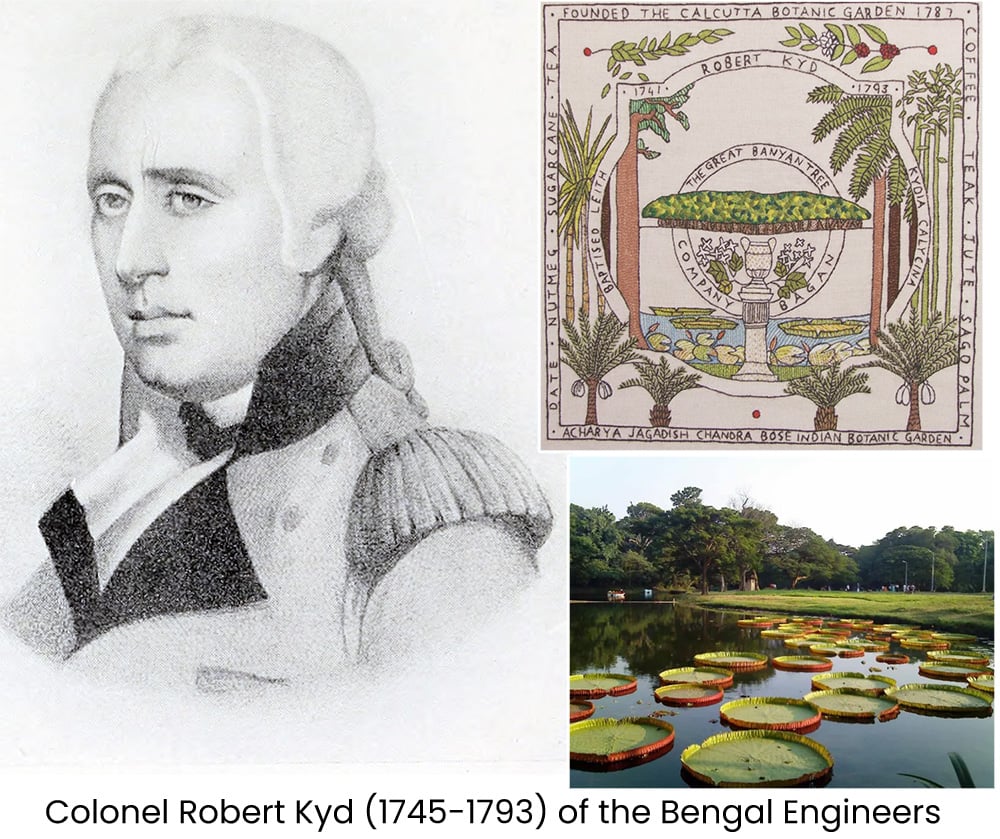
Among them was Colonel Robert Kyd (1745-1793) of the Bengal Engineers.
While serving in India, Colonel Kyd proposed establishing a botanical garden outside Calcutta in 1787. His vision eventually became today's Acharya Jagadish Chandra Bose Indian Botanic Garden, one of Asia's oldest botanical institutions.
Other members of the extended family became engineers, military officers, and shipbuilders, illustrating how descendants of the House of Kidd participated in Scotland's expanding influence around the world during the eighteenth and nineteenth centuries.
Captain William Kidd - Wronged Sea Warrior or Pirate?
The most famous member of the House of Kidd is undoubtedly Captain William Kidd, although his life remains one of history's most debated maritime stories. He was born in Scotland around the mid-seventeenth century. Family traditions associate the good captain with Dundee. However historians debate his exact birthplace, and no documentary evidence securely connects him with the Craigie branch of the House of Kidd.
Kidd began his career not as a pirate but as a respected merchant sailor and privateer. In 1695, he received a royal commission from the English government to hunt pirates and capture French vessels threatening trade in the Indian Ocean. Sailing from New York aboard the Adventure Galley in 1696, Kidd's expedition was meant to protect commerce rather than prey upon it.
His fortunes changed after the capture of the wealthy Armenian merchant ship Quedagh Merchant. The vessel's French papers created a legal and political controversy over whether the seizure was legitimate. Combined with accusations of indiscipline among his crew and the killing of his gunner, William Moore, during an argument, Kidd soon found himself abandoned by many of his old political supporters. Arrested in Boston, he was returned to England and tried in what some have considered a show trial. On May 23, 1701, the captain was convicted of murder and piracy, hanged, and his body gibbeted (hung in an iron cage) at London's Execution Dock.
Captain Kidd's dramatic downfall transformed him into one of history's most legendary pirates. Stories that he had buried vast quantities of treasure inspired centuries of folklore, novels, films, and treasure hunts, even though the lion's share of his wealth was confiscated during his prosecution. Whether remembered as a ruthless pirate or a privateer sacrificed for political expediency, William Kidd is nonetheless the most famous bearer of the Kidd name. This is hardly a smear against the House. After all, don't we all dream once or twice about being pirates?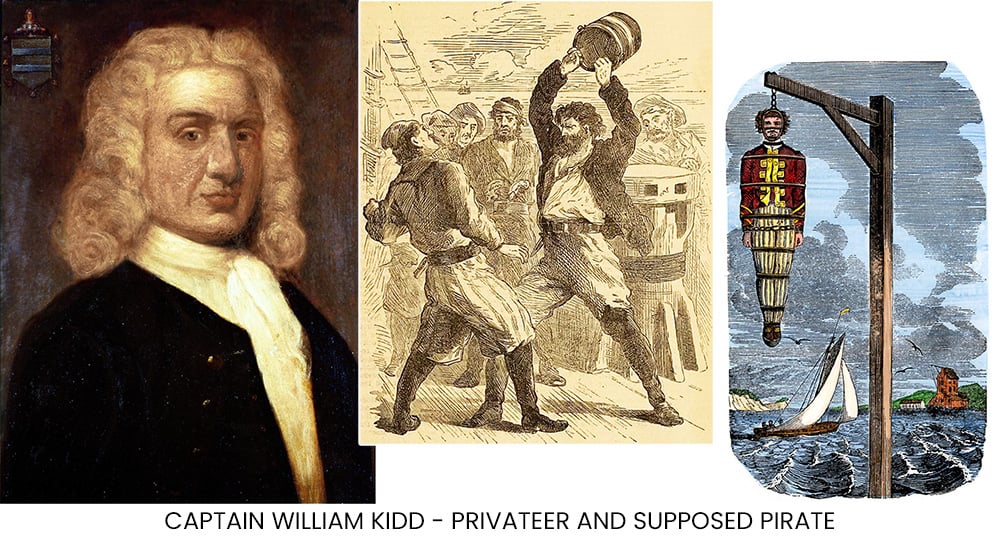
Does the House of Kidd Have a Castle or Estate to Visit?
The House of Kidd has no universally recognized ancestral castle or traditional clan seat. Instead, the family's history is closely associated with lands and holdings in Angus and with the royal burghs of Dundee and Arbroath, where members of the family appear repeatedly in medieval and early modern records.
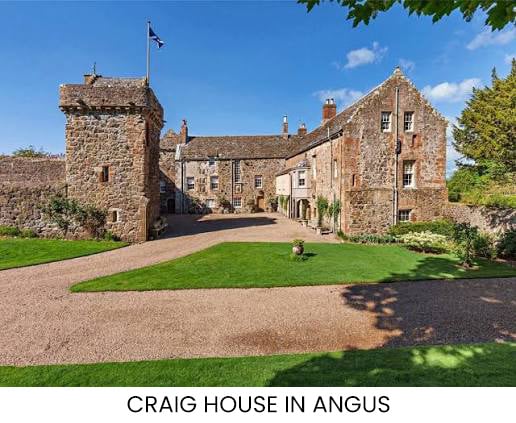
One of the most prominent branches of the House of Kidd became associated with the neighboring estates of Craigie and Woodhill in Angus, historically known as Forfarshire.
The Kyd family held lands at Craigie before 1534, and Patrick Kyd of Craigie emerged as a successful merchant and landowner during the reign of James VI. The family's influence continued to grow over the following century. In 1662, Craigie was erected into the Barony of Craigie, with Craigie House serving as the baronial seat, and in 1677 James Kyd of Woodhill inherited additional lands that were formally incorporated into the barony.
The Kyd family's ownership of Craigie ended in 1728 when the Barony of Craigie was sold to James Guthrie, beginning a new chapter in the estate's history. Over the centuries, the area changed dramatically. Much of the former Craigie estate has since been absorbed into the expanding city of Dundee, while Woodhill remains part of the rural landscape of Angus. Although the House of Kidd never developed into one of Scotland's great territorial Highland clans, the family's long association with Craigie and Woodhill provides a tangible connection to the historic landscape where generations of Kyds lived, prospered, and left their mark on eastern Scotland.
For descendants of the Kidd family, these historic regions and estates are certainly must-visit locations.
The Legacy of the House of Kidd
For more than eight centuries, members of the Kidd family contributed to Scotland through trade, engineering, military service, exploration, science, and public life. Their story stretches from medieval Angus and the bustling port of Dundee to India, where Colonel Robert Kyd helped establish one of the world's oldest botanical gardens, and across the Atlantic through the enduring legend of Captain William Kidd.
Although there is no recognized Clan Kidd in the legal heraldic sense, the House of Kidd remains one of Scotland's oldest documented Lowland families. Its long record in Scottish history, its association with one of Scotland's most intriguing tartans, and its descendants around the world ensure that the Kidd name continues to be celebrated today.
If you want to learn more about your heritage with this fascinating family, contact the House of Kidd Worldwide.
