
The Wallace Sword Is One of Scotland's Greatest National Symbols
The Wallace Sword! Today, people around the world consider it an important symbol of the Scottish nation and spirit. Thousands visit it at the National Wallace Monument in Stirling every year. More important than its physical form, the sword has become a powerful symbol of liberty and a reminder of the freedom for which William Wallace fought.
But spoiler alert. This focus of pilgrimage is not William Wallace's sword. Or at least not exactly. Rather, this artifact, one of the most popular tourist attractions in Scotland, is something of a historical puzzle.
Here's why.
The Ship of Theseus and the Mystery of Wallace's Sword
To set the stage, let me introduce you to a little thing known as the Ship of Theseus.
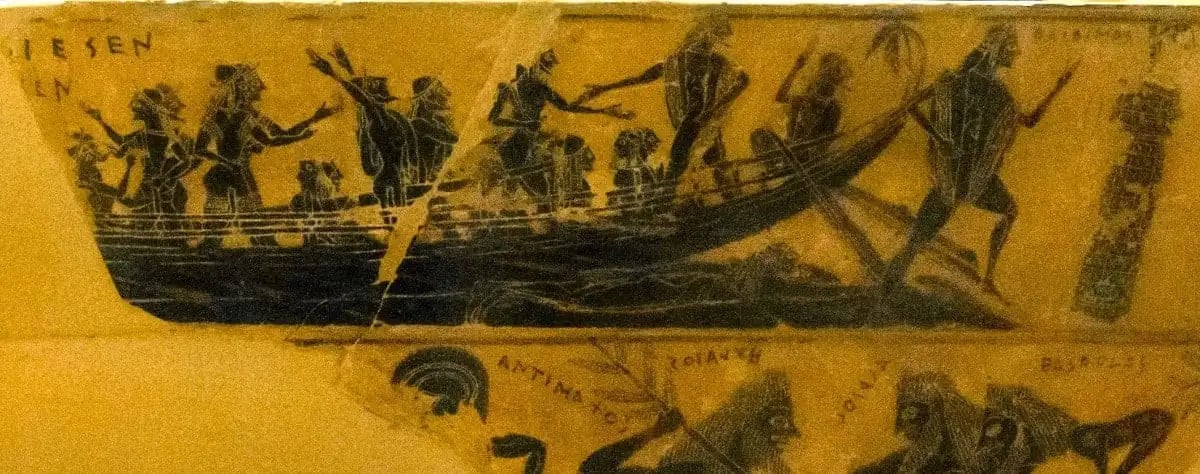
According to Greek myth, Theseus the founder-king of Athens, rescued the children of Athens from King Minos of Crete by slaying the Minotaur. He then escaped aboard a ship sailing to Delos.
For hundreds of years the Athenians commemorated that rescue by sailing the same ship each year. As time passed, damaged timbers were replaced one by one until eventually none of the original wood remained.
Ancient philosophers then asked a simple question: if every part of the ship has been replaced, is it still the same ship?
The Ship of Theseus is a thought experiment about whether an object that has had all of its original parts replaced remains the same object. You can apply the idea to many things ... including Scotland's most famous sword.
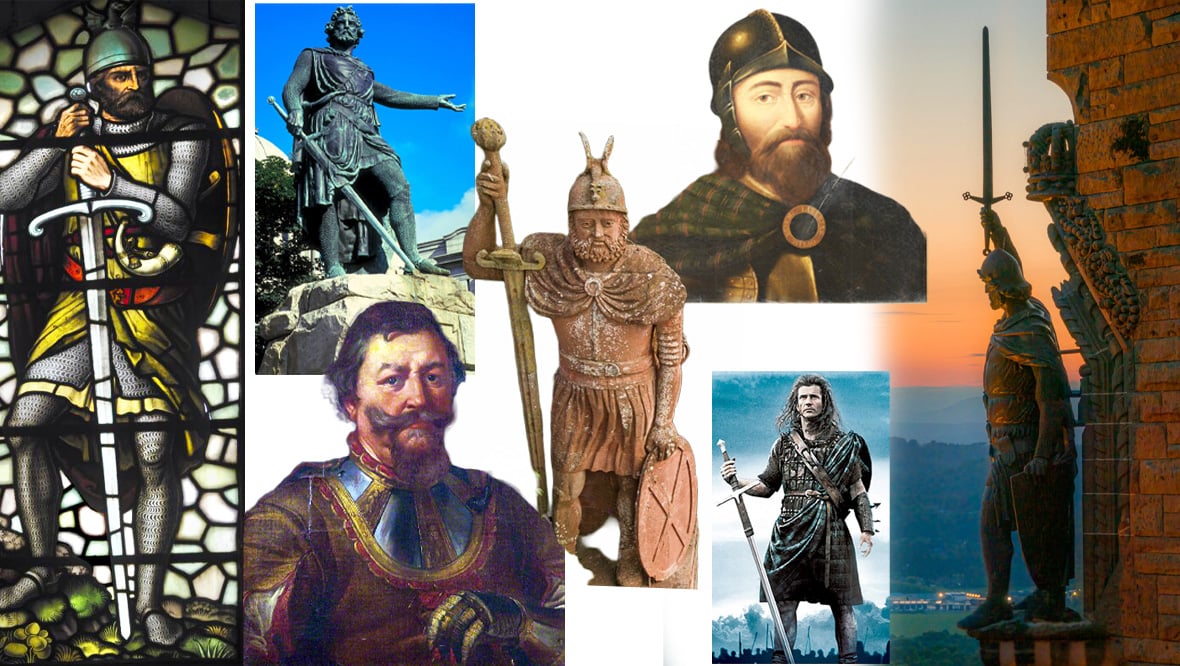
Sir William Wallace, the great national hero who fought Edward I of England, is often credited with using the enormous two-handed sword displayed today in Stirling. Just look at the statues.
But the object we call the Wallace Sword is actually a conglomeration of components from different periods.
A true Ship of Theseus?
Who Was William Wallace?
William Wallace, born around 1270, was a Scottish knight from a noble family. His story is complex, but suffice to say he became one of Scotland's greatest military commanders during the Wars of Independence.
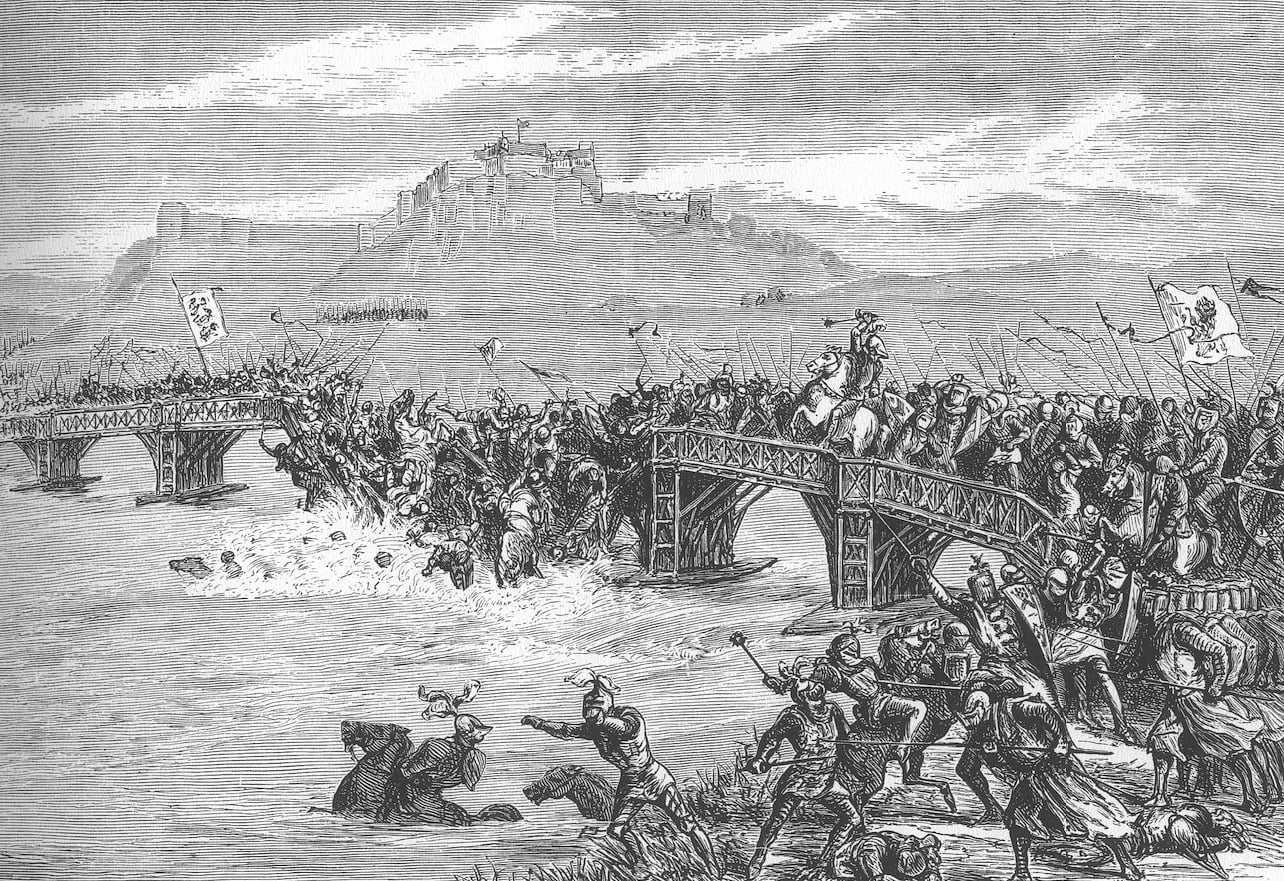
His greatest triumph came at the Battle of Stirling Bridge in 1297. His fortunes changed the following year at Falkirk, and after years as a fugitive he was captured and executed in London in 1305.
Although Wallace never lived to see Scotland's freedom secured, his resistance laid much of the groundwork for Robert the Bruce's later victory.
What Kind of Sword Would William Wallace Actually Have Used?
Now if you're an American like me, odds are the first you ever heard of William Wallace was the 1995 film Braveheart.
It is not an accurate historical film.
Mel Gibson's Wallace wears a kilt centuries before kilts can be documented, paints himself with woad centuries after that practice disappeared, and swings a gigantic Claymore that had not yet been invented.
Did the film invent this image? Not really. It inherited a romantic Victorian tradition that had already transformed Wallace into a legendary Highland warrior.
Wallace Probably Carried an Arming Sword...
So what would the real Wallace have carried?
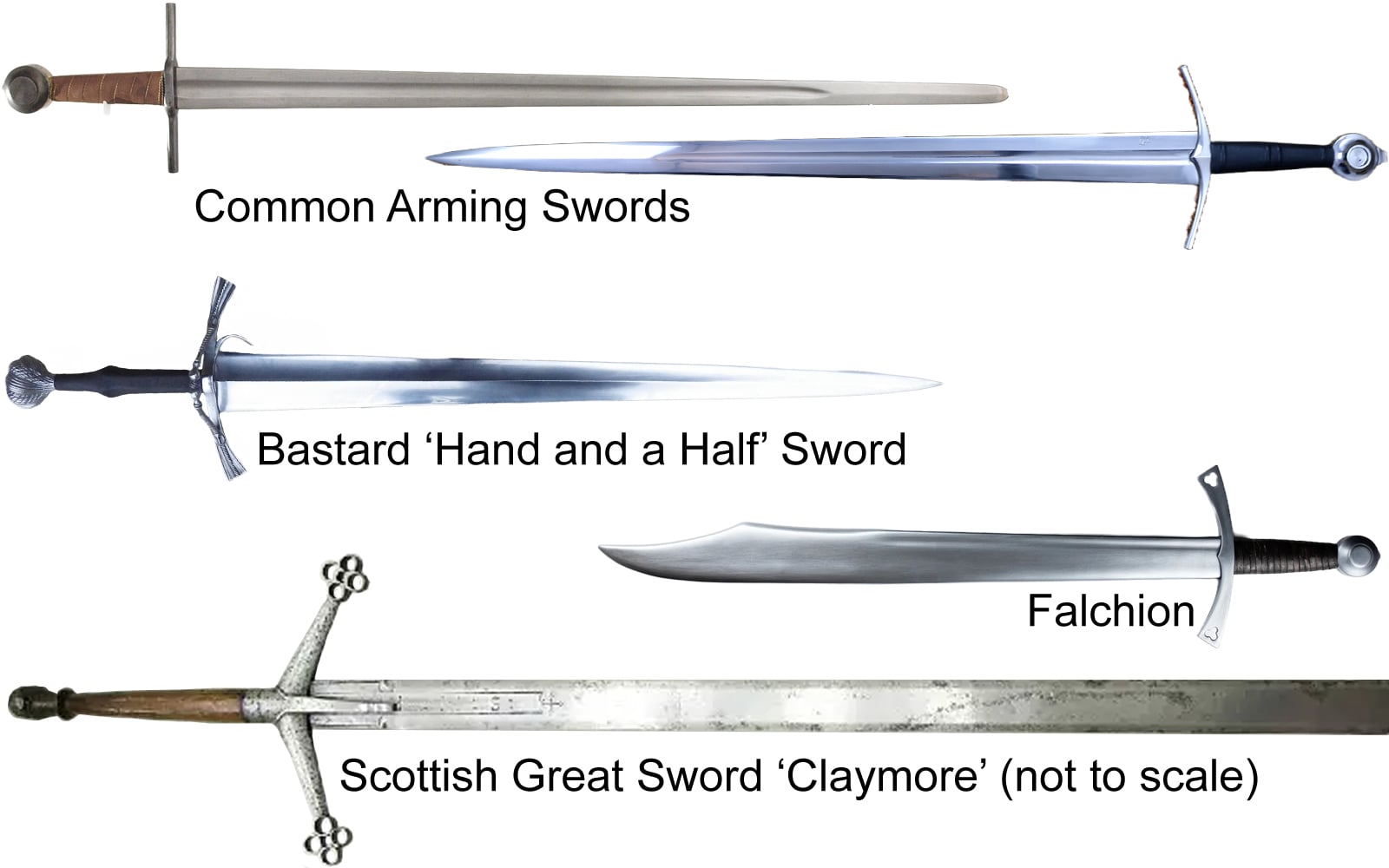
Most likely, a typical knightly arming sword.
These single-handed swords generally featured straight double-edged blades around 28 to 31 inches long and weighed only two to two-and-a-half pounds. They descended directly from Viking swords and were designed for use alongside a shield, whether fighting on foot or horseback.
Wallace may even have carried a falchion, a broad chopping sword popular during the period.
Did William Wallace Ever Use a Two-Handed Sword?
There is a very small possibility Wallace could have owned an early longsword or "hand-and-a-half" sword, as those weapons begin appearing toward the end of the 13th century.
But the giant two-handed Claymore so often associated with Wallace belongs to a much later era.
Claymores became popular in the Highlands during the 16th and 17th centuries. Influenced in part by German two-handed swords known as Zweihanders, they were designed for battlefield conditions that simply did not exist during Wallace's lifetime.
In short, William Wallace almost certainly never fought with the weapon displayed in the monument today.
The Sword Displayed at the Wallace Monument
So let's examine the famous sword itself.
Size and Dimensions
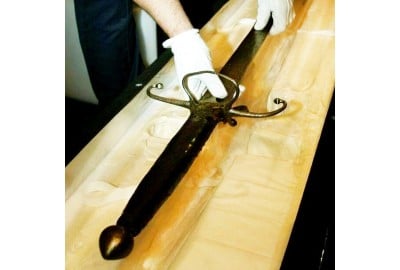
The Wallace Monument sword is enormous.
It measures 5 feet 4 inches overall with a blade 4 feet 4 inches long.
Blade
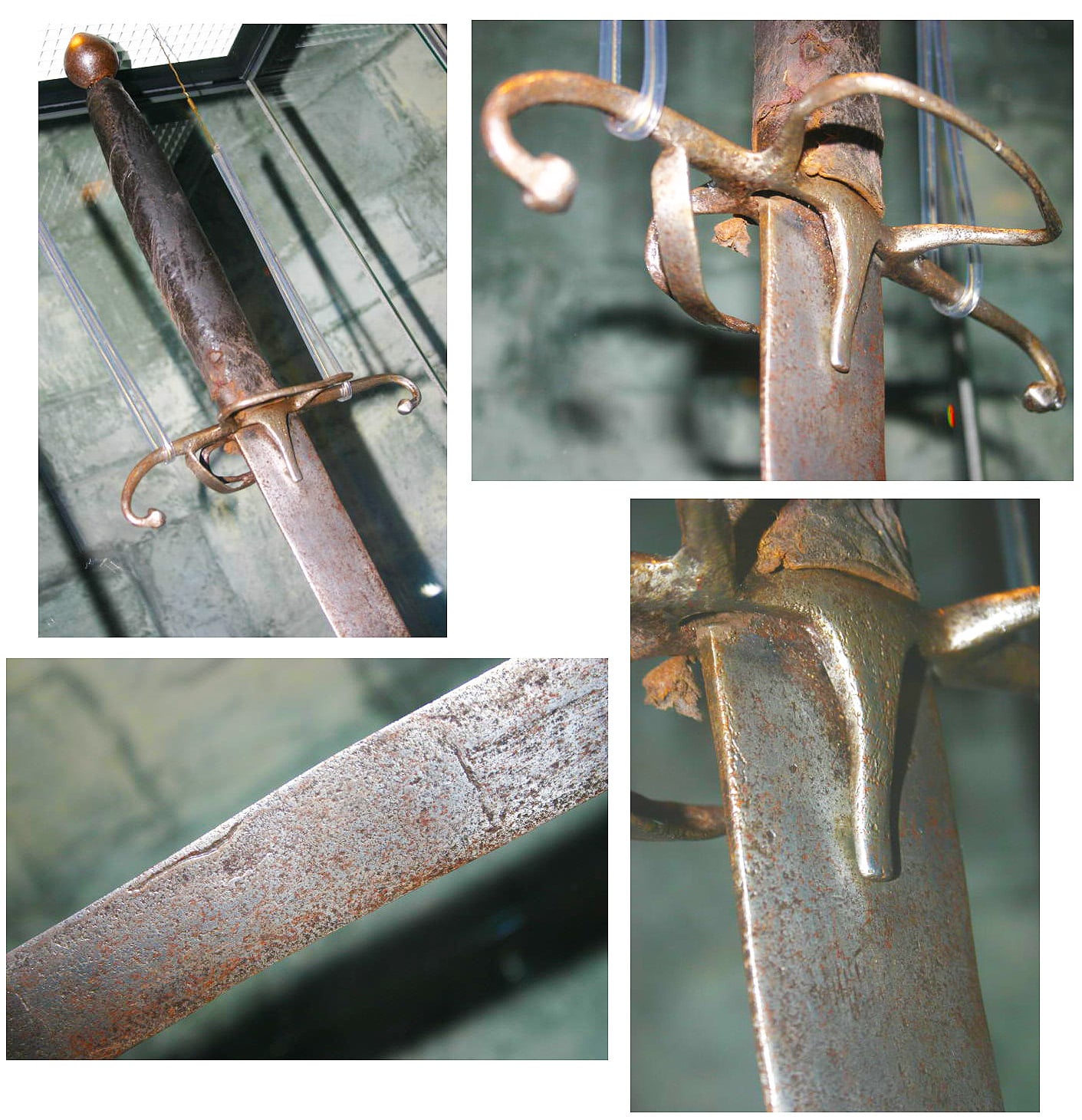
The blade is straight, double-edged and tapers toward the tip. It also contains a fuller that appears to have been added later.
Modern examination suggests the blade itself is made from three separate pieces of steel forge-welded together into one much larger weapon.
Interestingly, the lowest portion of the blade has a flattened diamond cross section more typical of late 13th-century swords. That has led some historians to wonder whether a fragment of an earlier medieval weapon survives within the present blade.
Hilt and Guard
The long grip was clearly intended for two-handed use and is characteristic of the 16th century rather than Wallace's lifetime.
The crossguard, complete with ring and acorn finials, is also unmistakably Renaissance in style.
Weight
Perhaps most surprising is its weight.
At nearly six pounds, the monument sword is dramatically heavier than most functional medieval swords. (BTW, as someone who has done medival martial sports I really can not imagine fighting effectively with such a beast)
Popular culture often imagines historical warriors carrying massive blades, but genuine fighting swords throughout history rarely weighed much more than two or three pounds.
The Wallace Monument sword is unquestionably a real sword. It just isn't one William Wallace himself would likely have recognized. (or even wanted to use if you ask me)
Is the Wallace Sword Authentic?
According to tradition, Wallace's actual sword remained at Dumbarton Castle after his capture in 1305.
Legends surrounding both Wallace and his sword began almost immediately after his death. Blind Harry's epic poem The Wallace, completed around 1477, helped elevate Wallace into Scotland's national hero.
Actual documentary evidence is surprisingly scarce.
The first written reference to Wallace's sword appears only in 1505 during the reign of King James IV.
The Treasurer's Accounts record payment:
"Item, for bynding of ane riding sword, ane rappyer, and binding of Wallas sword with cordis of silk, new hilt and plommet."
In other words, James IV ordered extensive restoration work including a new hilt, pommel and scabbard wrapped in silk.
Notice what is missing? The record says nothing about replacing the blade.
That has led some historians to speculate that at least part of Wallace's original blade may have survived.
Others point out that we cannot even prove this was the same sword supposedly preserved at Dumbarton Castle.
Could Part of the Blade Really Date to Wallace's Lifetime?
The blade's construction raises fascinating possibilities.
Because it consists of three welded sections, some researchers believe only its lowest portion may preserve metal dating from the late 13th century.
If true, then the sword really would resemble the Ship of Theseus: a genuine medieval relic rebuilt so extensively that very little of the original survives.
If not, then the connection to Wallace becomes far weaker.
Either possibility remains unproven.
The Wallace Monument and the Victorian Search for National Relics
The biggest hole in the story comes after 1505.
There is virtually no documentary evidence tracing the sword's existence for nearly three centuries.
The first clear account comes from Dorothy Wordsworth's memoirs in 1803, where she describes seeing a sword believed to belong to Wallace at Dumbarton Castle.
That belief may have been sincere.
It was not proof.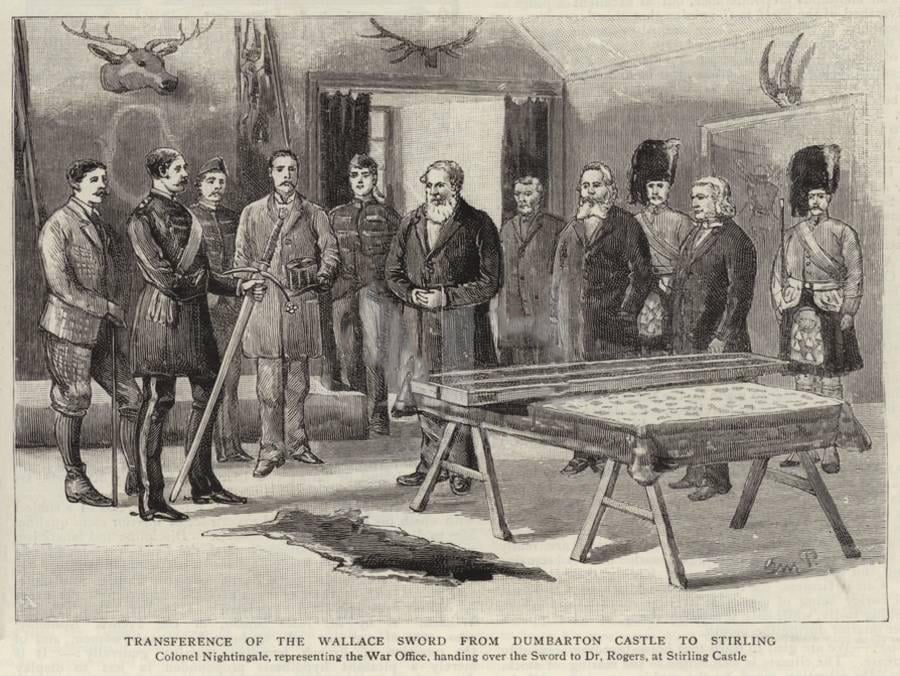
During the Victorian era, Scotland experienced a tremendous revival of national identity.
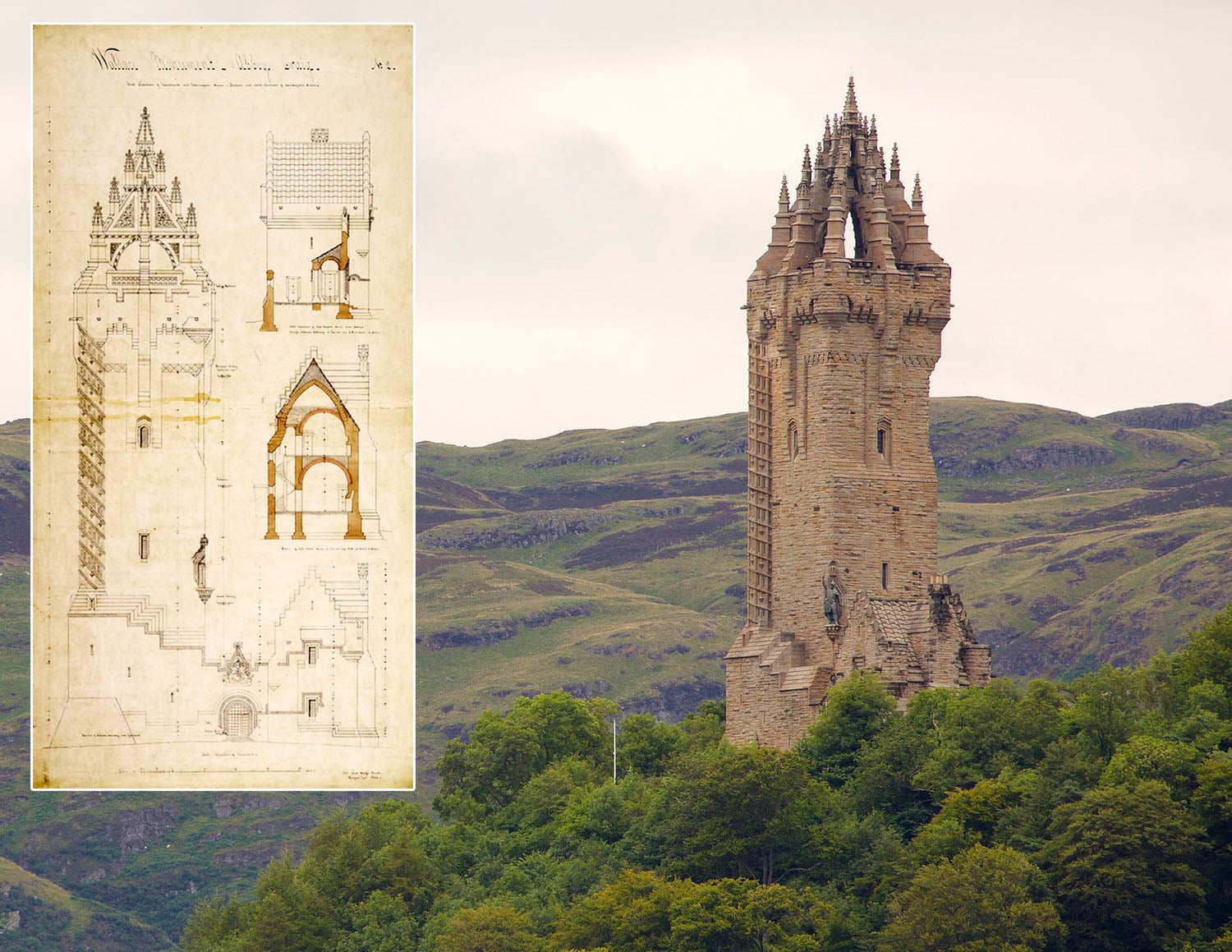
The National Wallace Monument itself grew out of that movement. Designed by architect John Thomas Rochead, construction began in 1861 and the tower opened in 1869 atop Abbey Craig overlooking Stirling Bridge.
Finding authentic relics worthy of Scotland's national hero proved extremely difficult.
When Dumbarton finally transferred its Wallace Sword to the monument in 1888, the decision was controversial. Many local residents believed the sword rightly belonged in their town after guarding it for centuries.
What Do Historians Think About the Wallace Sword?
Former Society of Antiquaries of Scotland president Dr. David Caldwell has been particularly skeptical.
He has stated plainly that the monument sword had "nothing to do" with William Wallace.
According to Caldwell, it is not even an especially good example of a sixteenth-century two-handed sword, suggesting it was acquired largely because the monument desperately needed an object to display. That may sound harsh. Yet even Caldwell's assessment does not diminish the sword's cultural importance.
Why the Wallace Sword Still Matters
So what do you think?
Is the sword at Stirling really a Ship of Theseus?
Does a fragment of Wallace's original blade survive inside it? Or is the entire object a later creation preserved through centuries of patriotic tradition?
Here's the real question. Does it actually matter?
Personally, I suspect that some portion of the lower blade may indeed date to Wallace's era. Perhaps someone long ago genuinely believed it had belonged to him, whether that belief was correct or not. Later generations rebuilt it into the magnificent weapon we see today.
But even if every single piece were replaced, the sword would still carry enormous meaning.
Today it stands not simply as a monument to William Wallace, but as a monument to Scottish identity, pride and perseverance.
Like the Athenians who continued sailing the Ship of Theseus, people are inspired not merely by steel, but by what it represents.
If visitors leave the Wallace Monument feeling proud of Scotland, its history and its culture, then perhaps the Wallace Sword has fulfilled its purpose after all.
Recap: Frequently Asked Questions About the Wallace Sword
Was the Wallace Sword really used by William Wallace?
There is no conclusive evidence that the sword displayed today belonged to William Wallace. Historians remain divided, and the surviving documentary record begins only in 1505.
Where is the Wallace Sword today?
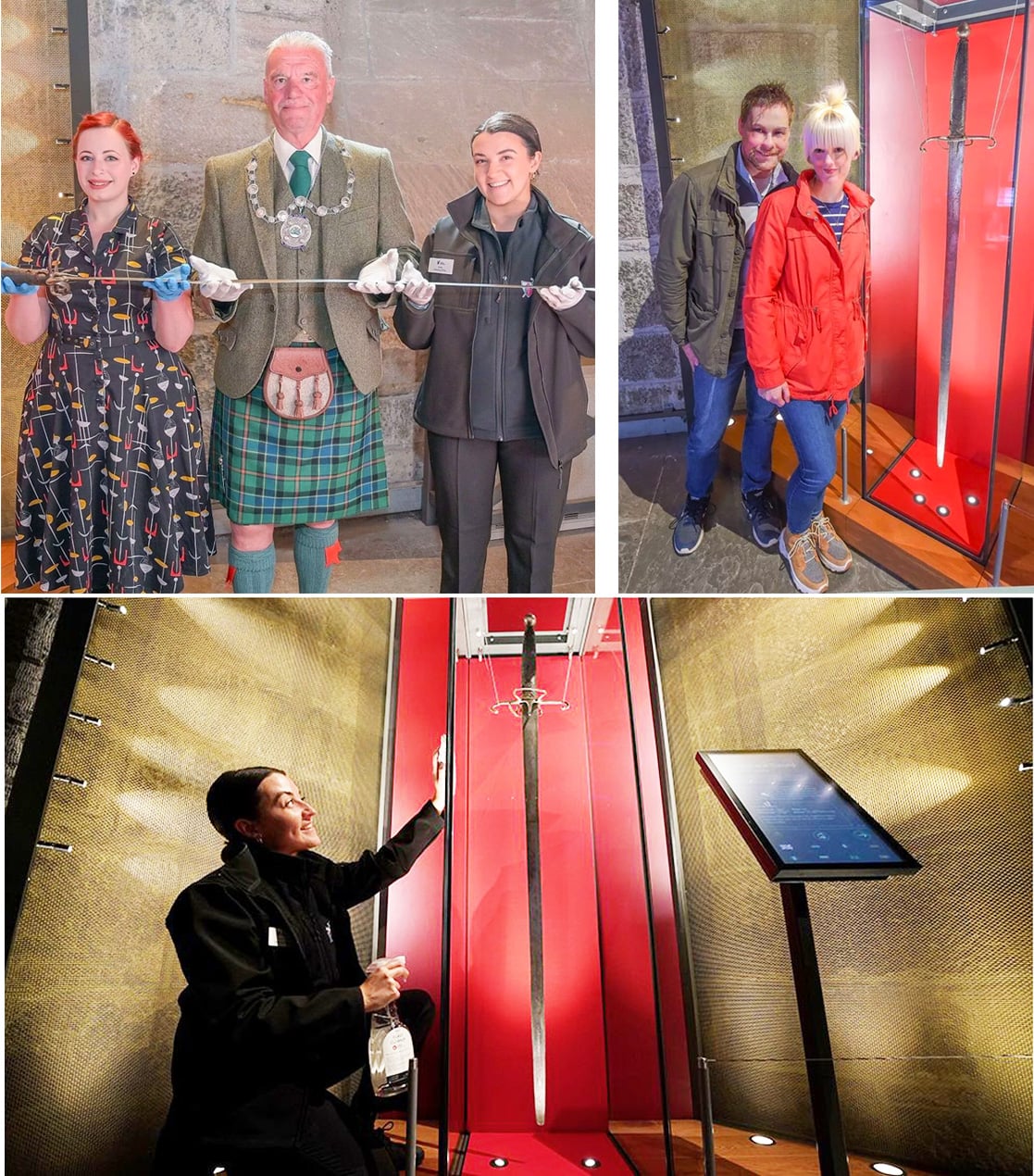
The sword is displayed at the National Wallace Monument in Stirling, Scotland.
How long is the Wallace Sword?
The sword measures approximately 5 feet 4 inches (163 cm) overall, with a blade 4 feet 4 inches (132 cm) long.
How much does the Wallace Sword weigh?
The monument sword weighs approximately 5.95 pounds (2.7 kg).
Is the Wallace Sword a Claymore?
In its present form, yes. Its design closely resembles a 16th-century Scottish Claymore, even though Wallace lived more than 250 years earlier.
Did William Wallace really fight with a Claymore?
Almost certainly not. The Claymore developed centuries after Wallace's lifetime. He would most likely have fought with a one-handed knightly arming sword and shield.
Why do historians question the sword's authenticity?
The surviving sword contains features from multiple periods, documentary evidence is sparse, and several respected historians believe the object was substantially altered or even assembled long after Wallace's death.
